

Birding In Uganda
Uganda is not just Africa’s gorilla country. Tucked inside the equatorial heart of the continent, this relatively small nation holds one of the most extraordinary concentrations of birdlife on the planet. With 1,068 confirmed bird species recorded within its borders more than the entire North American continent.
Birding In Uganda: Uganda has quietly earned a reputation among serious birders as one of the greatest bird watching destinations in the world. Whether you are a seasoned twitcher chasing a life list or a first-time safari goer who simply wants to witness something magnificent in the wild, birding in Uganda will exceed every expectation you arrive with.
Why do Birding in Uganda ?
The numbers alone are staggering. Uganda is a home to plenty of over 1050 species across the African continent than any other place. Uganda sits at the convergence of three major African ecosystems, West African rain forest, East African savannas, and the Albertine Rift highlands and the result is a mosaic of habitats found nowhere else on the continent in such close proximity.
The Albertine Rift, which runs along Uganda’s western border, is the most biodiverse freshwater region in Africa and harbours more endemic bird species than any other region on the continent.
Uganda protects the largest section of this globally important zone, which is why so many rare and range-restricted species exist here and nowhere else. Add to this the vast papyrus wetlands of Lake Victoria, the open savannas of Queen Elizabethand Kidepo, and the montane forests of Mount Elgon, and you have a birding landscape of almost unimaginable variety.
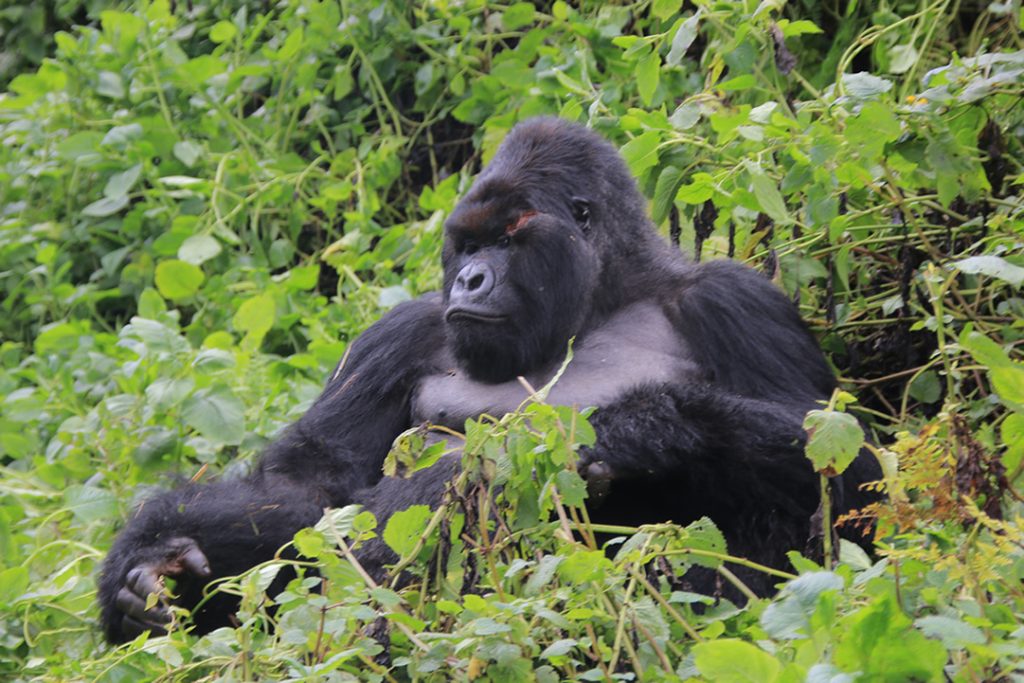
For travellers already visiting Uganda to trek mountain gorillas in Bwindi Impenetrable Forest, the birding is not a side attraction it is an equally compelling reason to be there.
The Best Birding Destinations in Uganda
Bwindi Impenetrable National Park
Bwindi is famous worldwide for its mountain gorillas, but among birders it carries equal prestige for its forest birds.
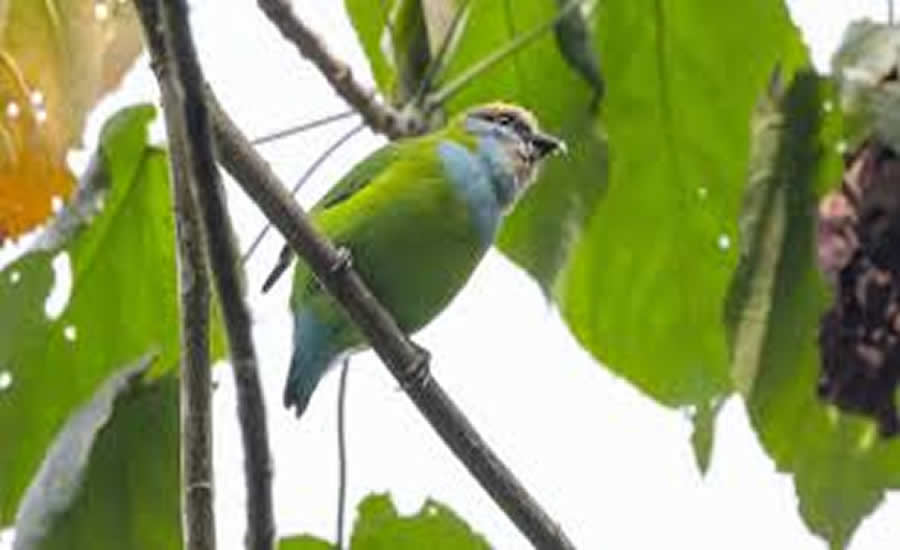
The park is home to more than 350 bird species, including 23 Albertine Rift endemics species found only within this narrow highland corridor. Notable targets here include the African Green Broadbill, the Grauer’s Broadbill, the Short-tailed Warbler, Shelley’s Crimsonwing, and the African Green Pigeon.
The forest trails used for gorilla trekking double as exceptional birding routes, and early morning walks before the gorilla groups depart offer some of the most rewarding birding hours you will find anywhere in Africa.
Queen Elizabeth National Park
Queen Elizabeth is Uganda’s most visited park for wildlife, and with good reason. Its bird list exceeds 600 species, making it one of the richest individual birding sites on the continent.
The Kazinga Channel is a natural waterway linking Lakes George and Edward is one of Africa’s great birding spectacles. Boat trips along the channel offer close encounters with plenty of bird species such as African Skimmers, Pink-backed Pelicans, Goliath Herons, Pied Kingfishers and many more.
The Maramagambo Forest within the park adds forest species including the Nkulengu Rail and several hornbill species, while the Ishasha sector in the south draws birders chasing the rare and elusive Papyrus Gonolek.
Semuliki National Park and Semuliki Valley
Semuliki is Uganda’s most westerly park, and it protects a genuine extension of the Congo Basin rain forest the largest tropical forest in the world outside the Amazon. This makes it biologically unique within Uganda.
Over 400 bird species have been recorded here, including more than 40 that are found nowhere else in East Africa. Semuliki is the only place in Uganda where you can reliably find the White-crested Hornbill, Lyre-tailed Honeyguide, Maxwell’s Black Weaver, and the extraordinary African Piculet. The hot springs trail through the forest floor is a birding experience unlike anything else in the country.

Mgahinga Gorilla National Park
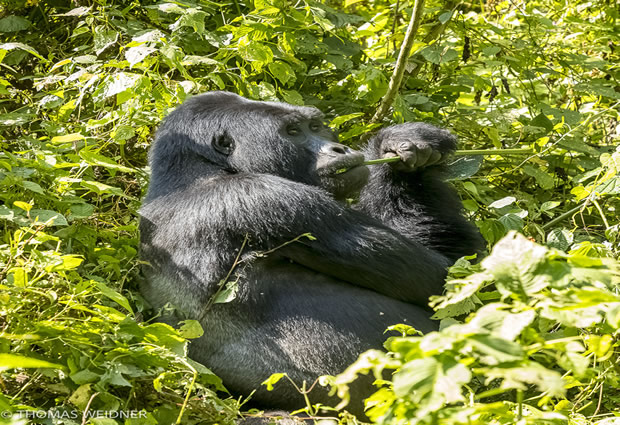
Perched on Uganda’s southernmost volcanic peaks, Mgahinga protects an important section of the Albertine Rift montane zone. The park is smaller than Bwindi but no less rewarding for birders seeking high-altitude specialists.
The Rwenzori Turaco, Kivu Ground Thrush, Dusky Crimsonwing, and Stripe-breasted Tit are among the sought-after targets here. Combine a golden monkey tracking permit with a full day of forest birding and you have an itinerary that very few places in Africa can match.
Lake Mburo National Park
Lake Mburo offers something entirely different from Uganda’s forest parks. Its acacia savannas, rocky hillsides, and papyrus swamps create ideal conditions for species rarely found elsewhere in the country.
The African Finfoot, the Papyrus Gonolek, Blue-headed Coucal, Red-faced Barbet, and the Tabora Cisticola are among the specialities. Evening walking safaris along the lakeshore consistently produce rewarding sightings, and the park’s manageable size makes it a perfect one-night addition to a broader Uganda safari itinerary
Kibale National Park
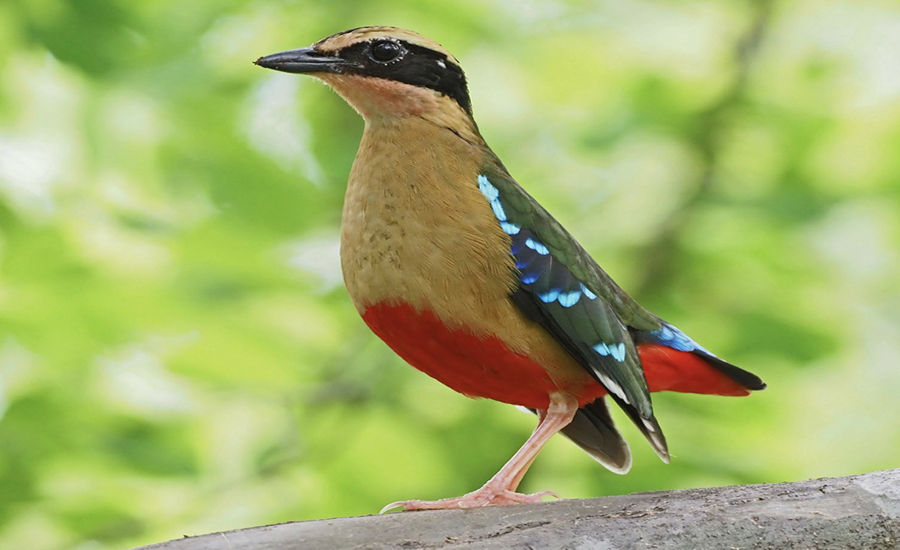
Kibale is best known for chimpanzee tracking, but it harbours one of Uganda’s finest forest birding environments. The park’s moist lowland and montane forests support over 375 species, including the African Pitta one of the most vibrant and difficult-to-see birds on the continent alongside Green-breasted Pitta, the Nahan’s Francolin, and an exceptional variety of sunbirds. The Bigodi Wetland Sanctuary on the park’s edge is a community-managed site widely regarded as one of the best single birding spots in Uganda, regularly producing 100-plus species in a single morning walk.
The Shoebill ( Uganda’s Most Wanted Bird)
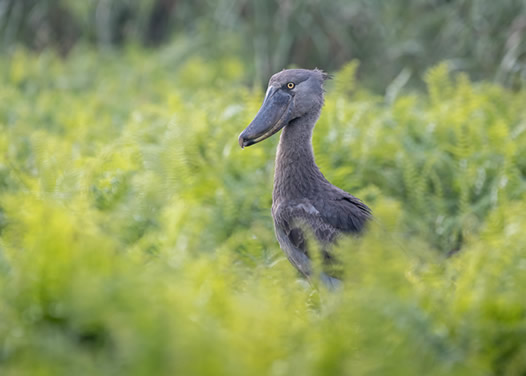
No discussion of birding in Uganda is complete without the Shoebill. This prehistoric-looking bird, with its enormous shoe-shaped bill and towering stance, has become something of a symbol for Uganda’s exceptional wildlife.
The Shoebill is classified as vulnerable, with fewer than 5,000 individuals remaining in the wild. Uganda holds the largest single population, and the Mabamba Swamp on the northern shores of Lake Victoria is the most reliable and accessible Shoebill site in Africa.
Early morning canoe trips through the papyrus give eye-level encounters with this extraordinary creature that consistently rank among the most memorable wildlife moments travellers have ever experienced. Other reliable sites include the Ziwa Rhino Sanctuary wetlands and sections of the Victoria Nile near Murchison Falls.
Our Birding Safaris
5 days gorillas & birding safari
Have an epic 5 days gorillas & birding safari as you enjoy plenty of bird species.
8 Days birding and lake Bunyonyi
Enjoy the 8 days birding safari as you view plenty of bird species as well as you relax on the lakes
9 days Uganda birding safari
The 9 days Uganda safari is an exciting safari that leads you to Uganda and view plenty of animal species.
10 days amazing birding safari
spend a 10 days amazing birding safari as you discover every kind of bird species, wildlife as well as gorillas.
12 days Ultimate birding safari
This is one of the best safaris to take as you discover plenty of adventures with in the pearl of Africa
15 Days Uganda birding safari
Do a 15 days Uganda safari and see varieties of bird species as well as plenty of creatures
The Best Time to Go Birding in Uganda
Uganda sits on the equator and birds can be found throughout the year, which gives it an advantage over more seasonal destinations. That said, two periods stand out as particularly productive.
The dry seasons June to August and December to February are the most popular for general wildlife viewing and offer excellent birding conditions. Vegetation is lower, birds are easier to spot, and forest trails are more passable. The period from June to August also coincides with the arrival of Palearctic migrants from Europe, which adds species to the list and brings extra activity to open water habitats.
The wet season, particularly March to May and October to November, brings its own rewards. Resident birds are in full breeding plumage, dawn choruses reach extraordinary intensity, and the landscape becomes dramatically lush. Many birders actually prefer the wet season for its light quality and the sheer volume of bird activity, though some trails become more challenging. For the Shoebill specifically, the wet season concentrates birds in predictable locations as water levels rise across the papyrus swamps.
What to Expect on a Uganda Birding Safari
Guided Walks and Forest Trails Most serious birding in Uganda is done on foot. Professional birding guides who know the specific calls, feeding habits, and microhabitats of individual species make an enormous difference to what you see. Most parks have trained birding guides who can be hired at the gate or pre-arranged through specialist operators.
Boat Trips The Kazinga Channel boat cruise in Queen Elizabeth and the Mabamba Swamp canoe experience are among the most productive birding excursions in East Africa. Water birds, wading birds, and papyrus specialists are all accessible in ways that are simply impossible on foot.
Night Birding Uganda’s forests come alive after dark with a remarkable diversity of owls, nightjars, and frogmouths. Guided night walks in Kibale, Bwindi, and Semuliki regularly produce Fraser’s Eagle Owl, African Wood Owl, and Pennant-winged Nightjar, among others.
Combining Birding With Other Activities One of Uganda’s great advantages is that its prime birding locations are also home to its most compelling wildlife experiences. Bwindi offers both gorilla trekking and forest birding. Kibale combines chimpanzees and forest birds. Murchison Falls pairs boat safaris with Shoebill sightings. Queen Elizabeth delivers big mammal viewing alongside one of Africa’s richest bird lists. A well-designed itinerary can deliver all of this within ten to fourteen days without compromise.
Essential Packing List for Uganda Birding
- Binoculars: A quality pair of 8×42 or 10×42 binoculars is non-negotiable. Invest in the best pair you can afford.
- Field Guide: Birds of East Africa by Terry Stevenson and John Fanshawe, or Birds of Uganda by Jonathon Rossouw, are the standard references.
- Clothing: Neutral colours olive, khaki, brown are ideal. Avoid bright colours and white, which disturb birds and other wildlife. Light layers are best, as mornings are cool and afternoons warm.
- Waterproofs: A compact rain jacket is essential year-round. Forest interiors can be wet regardless of season.
- Camera: Make sure you have a telephoto lens of 400mm or longer is ideal for bird photography. A teleconverter can extend reach further in forest settings.
- Insect Repellent and Sunscreen: DEET-based repellent is recommended. Apply before entering forests and wetlands.
- Notebook or eBird App: Recording sightings adds meaning to the experience and contributes to citizen science databases that help protect these species long-term.
Practical Travel Information for Uganda
Getting There: Uganda’s main entry point is Entebbe International Airport, located 40 kilometres south of Kampala on Lake Victoria’s shores. Direct flights operate from several European cities, as well as connections through Nairobi, Addis Ababa, and Dubai.
Visa: Most nationalities can obtain an East Africa Tourist Visa on arrival or online in advance, which covers Uganda, Kenya, and Rwanda under a single permit. Check current requirements before departure.
Health: Yellow fever vaccination is mandatory for entry into Uganda. Malaria prophylaxis is strongly recommended, and travellers should consult a travel health clinic at least six weeks before departure.
Currency: The Ugandan Shilling is the local currency. US Dollars are widely accepted at lodges and for park fees. ATMs are available in Kampala and Entebbe.
Getting Around: Internal charter flights connect Entebbe to Kihihi (for Bwindi), Kasese (for Queen Elizabeth), and Pakuba (for Murchison Falls). Road travel between parks is possible but distances are significant; a 4WD vehicle is essential on unpaved tracks.
Why Book Your Uganda Birding Safari with a Specialist
Uganda’s birding richness rewards those who plan well. The difference between a generic safari that happens to include some birding and a dedicated birding safari with specialist guides is profound.
Local operators with deep knowledge of specific sites, seasonal movements, and the locations of rare species will consistently outperform generalised itineraries. At Gorilla Safaris Africa, we design birding itineraries that combine Uganda’s most productive sites with the gorilla and chimpanzee experiences that make this country unlike anywhere else on earth.
From a three-day Shoebill and forest birding extension to a full fourteen-day Albertine Rift endemic sweep, every itinerary is built around what you want to see and the time you have available.
Uganda is ready. Your life list is about to change permanently.