

The one who has seen enough lion photographs from the Masai Mara, who wants something rawer, quieter, and more intimate than the well-worn safari circuits. If that sounds like you, Lake Mburo National Park is going to feel like a discovery you made yourself even though it has been waiting here in southwestern Uganda all along.
Tucked between the rolling hills of Kiruhura and Mbarara districts, Lake Mburo is Uganda’s smallest savannah national park, covering approximately 370 square kilometres.
But size, as every seasoned traveler quickly learns, tells you almost nothing about depth of experience. What this park lacks in acreage it more than compensates for with intimacy, accessibility, diversity, and a kind of unhurried wildness that is increasingly rare on the African continent.
This guide is designed for travellers who wants the full picture not just a list of animals, but an honest account of what it is like to move through this landscape, what the best time to go actually looks and feels like, how to get there without confusion, where to sleep without regret, and why, when your travel companions are planning a Uganda safari, you should be the one insisting that Lake Mburo earns a place on the itinerary.
Where Is Lake Mburo National Park?
Lake Mburo National Park sits in the Ankole region of southwestern Uganda, roughly 228 kilometres from Kampala along the Masaka–Mbarara highway. The park straddles the equator in a landscape defined by open savannah, bushy thickets, rocky ridges, papyrus swamps, and a cluster of five lakes the largest and most accessible of which gives the park its name.
gazetted in 1983, Lake Mburo national park is a surrounding area carries the unmistakable imprint of the Ankole people, whose legendary long-horned Ankole cattle you will see grazing on the hills just outside the park boundaries. It is a place where wildlife and pastoral culture have existed side by side for generations, and that layering gives the destination a cultural richness that purely wild spaces sometimes lack.
Wildlife at Lake Mburo National Park
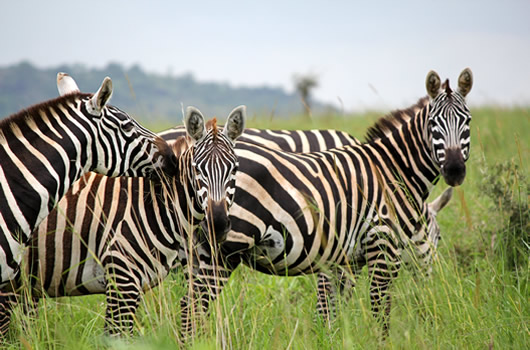
Lake Mburo is the only national park in Uganda where you will find impalas, and the Ankole region’s most iconic antelope is here in significant numbers, moving across the open grasslands in loose herds that seem entirely unbothered by the presence of humans. It is also one of the best places in Uganda to encounter zebras the Burchell’s zebra thrives in the park’s savannah terrain, and their bold black-and-white patterning against the golden grass makes for some of the most striking wildlife photography in the country.
The park is home to a robust population of hippos that are best appreciated from a boat on Lake Mburo itself, where they surface, snort, and submerge in the unhurried rhythm of animals that have never needed to hurry. Nile crocodiles share the same waters, and the contrast between a basking croc and the papyrus swamp reflected in the still surface of the lake is something that stays with you.
Activities at Lake Mburo National Park
What makes Lake Mburo especially compelling is the sheer range of activities available. This is not a park where you simply sit in a vehicle and wait for animals to appear in front of you. It is a park where you can get out, move around, and experience the ecosystem at a human pace.
Game Drives
The classic safari activity remains deeply rewarding at Lake Mburo. The park’s road network covers enough terrain to deliver excellent wildlife encounters, and the landscape a mix of open savannah, acacias, rocky outcrops, and swampy depressions ensures that the scenery shifts constantly.
Morning and late afternoon drives are the most productive, as the midday heat drives most animals into shade. The park operates both self-drive and guided game drives, and if this is your first time here, a guide is worth every shilling. They know the roads, they know the animals’ seasonal patterns, and they know the spots where leopards have been seen.
Boat Cruises on Lake Mburo
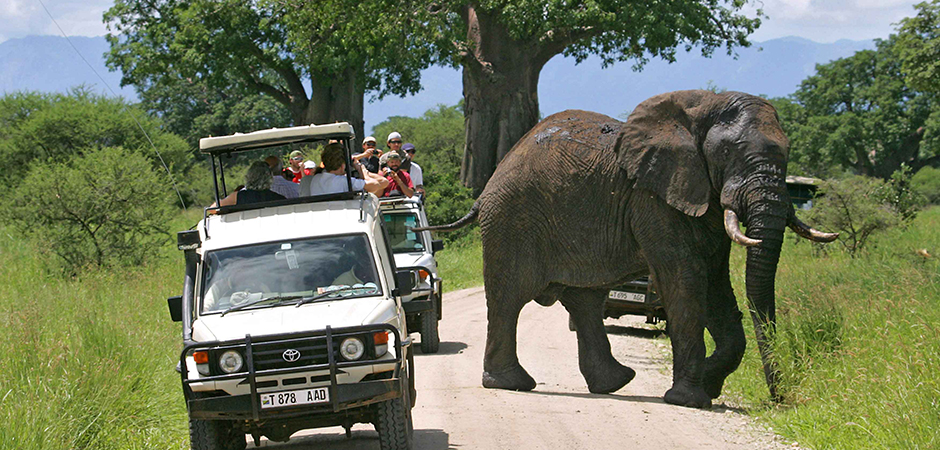
A boat cruise on Lake Mburo is arguably the highlight of any visit. The lake is placid and beautiful, and the experience of drifting slowly past pods of hippos, watching crocodiles slide off banks into the water, and scanning the papyrus edges for birds is unlike anything available from a vehicle.
Early morning cruises are particularly atmospheric the mist lifts slowly off the water, the birds are at their most active, and the light is the kind that makes photographers quietly emotional.
cruises offer a different experience entirely: the sky turns extraordinary shades, the hippos become more vocal as the evening light fades, and the whole scene has a cinematic quality that requires no filter.
Nature Walks and Bird watching
Beyond the structured walking safaris, the park offers a number of marked nature trails where visitors can walk independently or with a guide specifically focused on birding.
The Warukiri Trail and the Lakeside Trail are particularly popular with birders, and the guides who specialise in this area have a knowledge of vocalisations, microhabitats, and seasonal bird movements that elevates the experience from pleasant to genuinely instructive.
Visiting a Local Ankole Cultural Village
The communities living around Lake Mburo are predominantly Ankole pastoralists, and community tourism visits offer insight into a cattle culture that has shaped this landscape for centuries.
You can visit a traditional homestead, learn about the significance of the long-horned Ankole cattle whose horns can span nearly two and a half metres and understand how local communities coexist with the park and its wildlife.
Horseback Safaris
Among all the activities at Lake Mburo, horseback safaris occupy a uniquely special position. They are offered by a handful of operators based near the park, and they represent one of the most immersive ways to move through African bush anywhere on the continent.
On horseback, you can approach wildlife far more closely than you can on foot, because animals do not register horses as threats in the way they process human beings on foot or in vehicles.
Riding through the savannah with zebras grazing thirty metres away, or watching a herd of impalas part around you without alarm, is the kind of experience that reorients your entire understanding of what a wildlife encounter can be.
No prior riding experience is necessary for the gentler trails, though more experienced riders can access longer and more adventurous routes.
Best Time to Visit Lake Mburo National Park
Lake Mburo can be visited year-round, which is one of its considerable advantages over some of Uganda’s other protected areas. However, understanding the seasonal patterns will help you plan a visit that aligns with your specific priorities.
Dry Season: June to August and December to February
The two dry seasons represent the most popular and generally most rewarding times to visit. In the dry months, vegetation thins and animals congregate around the permanent water sources hence easy wildlife viewing .
e. Roads are in good condition, boat cruises operate without weather-related interruptions, and walking safaris are comfortable.
The June-to-August dry season coincides with summer holidays in the northern hemisphere and therefore sees the highest visitor numbers, though the park never feels crowded by the standards of more famous East African reserves.
December and January offer a pleasant alternative dry season window that sees fewer tourists, lower accommodation rates at some lodges, and equally good wildlife viewing conditions.
Wet Season: March to May and September to November
The two rainy seasons transform the park into a lusher, greener landscape. The long rains of March to May can make some tracks challenging for standard vehicles, and game drives are sometimes disrupted by heavy afternoon showers.
However, the wet season brings its own rewards: migratory bird species arrive in significant numbers, the landscape is genuinely beautiful with the saturated greens and dramatic cloud formations, and newborn animals appear frequently, which creates some extraordinary wildlife viewing moments.
Accommodation rates drop during the rainy season, and the park is noticeably quieter.
For birding specifically, the wet season particularly October and November is often cited as the most productive period, when both resident and migratory species are present simultaneously.
Lake Mburo National National Park
How to Get to Lake Mburo National Park
By Road from Kampala
The most common route is by road from Kampala, a distance of approximately 228 kilometres along the well-maintained Masaka–Mbarara highway
The journey takes 4 to 5 hours, making Lake Mburo one of the most accessible national parks in Uganda from the capital.
The drive itself passes through the scenic Ankole countryside, and the sight of Ankole cattle grazing on the hillsides.
By Scheduled Bus
Public buses operate between Kampala and Mbarara on a regular schedule, and the journey takes approximately three to four hours depending on stops.
Travelers arriving by bus should disembark at Sanga junction, from where boda-bodas (motorcycle taxis) or special hire taxis can be arranged to the park gate.
This is a perfectly viable option for travellers willing to travel on a budget.
By Chartered Flight
For travellers combining Lake Mburo with other destinations in western Uganda — Bwindi Impenetrable Forest, Queen Elizabeth National Park, or Kibale — chartered flights offer a time-efficient alternative to long road transfers.
Aerolink Uganda and other regional charter operators can arrange flights into the small airstrip near the park. Costs are significant compared to road travel but reasonable when shared across a group.
Where to Stay at Lake Mburo National Park
Accommodation at Lake Mburo ranges from rustic camping to elegant luxury lodges, and the standard of the options has improved considerably in recent years.
Mihingo Lodge
Perched on a rocky hillside with sweeping views across the savannah and the lake, Mihingo Lodge is consistently regarded as one of the finest small lodges in Uganda. The stone-and-thatch cottages are individually designed, with private terraces where it is not unusual to watch zebras grazing below at sunset. The lodge offers horseback safaris, guided walks, and an outstanding dining experience that draws on locally sourced produce. This is the property for travellers who want genuine luxury in a setting that feels entirely integrated with the landscape.
Rwakobo Rock
Built into and around a granite outcrop with 360-degree views of the surrounding plains, Rwakobo Rock offers one of the most dramatically situated safari camps in Uganda. The cottages are stylishly simple, the atmosphere is relaxed and genuinely warm, and the rooftop terrace is the kind of spot where you sit down to read and find yourself still there three hours later, watching the light change over the savannah. The camp organises walking safaris, boat cruises, and birding excursions.
Arcadia Cottages
For travellers seeking comfortable mid-range accommodation with a welcoming family atmosphere, Arcadia Cottages is a perennial favourite. Located near the park entrance, the property offers clean, well-maintained cottages, reliable home-cooked meals, and a genuinely helpful team who can arrange all park activities. The garden attracts an impressive range of birds, making birdwatching possible without leaving the property.
Eagles Nest
Located on a ridge outside the park with panoramic views, Eagles Nest is a mid-range property that offers great value and an enthusiastic team committed to providing genuine safari experiences. The atmosphere is convivial, the food is consistently good, and the property’s position makes for superb sunrise viewing.