

Kibale National Park, Uganda– Chimp Trek, & Activities
Kibale national park: If there is one place in East Africa where the forest speaks back to you, it is Kibale National Park. Hidden in the foothills of the Rwenzori Mountains in western Uganda, this 766-square-kilometer stretch of tropical rain forest holds a secret that draws researchers, photographers, and travelers from every corner of the world the highest concentration of primates on the African continent. Thirteen primate species. One extraordinary park. And an experience that, once lived, never fully leaves you.
But Kibale is far more than chimpanzees. It is a destination layered with activity, texture, and wildlife richness that few national parks anywhere in Africa can honestly match. From swamp walks and night safaris to birding expeditions and cultural encounters with the Batoro people, Kibale offers a safari experience that is both intimate and astonishing.
This guide covers everything you need to know before you go the activities, the best time to visit, how to get there, where to sleep, practical tips, and the reasons why Kibale deserves a permanent spot on your Uganda itinerary.
About Kibale National Park.
Kibale National Park was gazetted as a national park in 1993, though its forests had been a government forest reserve since the 1930s. Situated at elevations between 1,100 and 1,590 metres above sea level, the park straddles a range of vegetation types from moist evergreen forest in the north to woodland and savanna in the south, where it shares an open corridor with Queen Elizabeth National Park through the Kyambura Gorge.
The park sits in the Kabarole and Kamwenge districts of western Uganda, roughly 26 kilometres south of Fort Portal town. Its position on the edge of the Albertine Rift makes it one of the most biologically diverse forests in all of Africa. Over 70 mammal species, more than 375 bird species, 250 tree species, and an almost incomprehensible tangle of plant and animal life fill this forest.
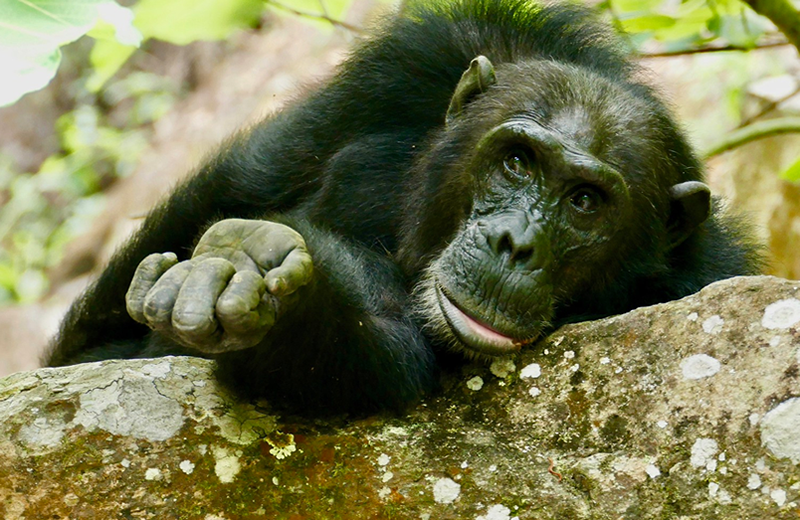
Kibale Forest is more defined as an international identity by chimpanzees. More of these live here than in any other protected area in Uganda, and they share the forest with red-tailed monkeys, grey-cheeked mangabeys, olive baboons, black-and-white colobus monkeys, and L’Hoest’s monkeys, among many others.
In terms of primates, Kibale is unrivaled in the region. The park shelters 13 distinct primate species, hence being referred to as the primate capital of the world. The park has a thriving population of over 500 chimpanzees; the largest group of black-and-white colobus monkeys in Africa (sometimes forming troops of up to 400 individuals), grey-cheeked mangabeys, blue monkeys, L’Hoest’s monkeys and olive baboons. It is also home to a remarkable range of other fauna, including forest elephants, African golden cats, and hundreds of butterfly species.
Activities in Kibale National Park.
Chimpanzee Trekking
This is the headline act, and for excellent reason. Chimpanzee trekking in Kibale is consistently ranked among the top wildlife experiences in Africa. The main departure point is Kanyanchu, the park’s visitor center, where you will receive a detailed briefing before setting off into the forest with a trained ranger guide.
Uganda Wildlife Authority has habituated several chimpanzee communities to human presence, which means the animals go about their business feeding, grooming, playing, and calling with little concern for the small group of humans watching them. You get one hour with the chimps once they are located, and it is a full hour. An hour in which you watch them crack open figs with their teeth, carry infants on their backs, perform social hierarchies you almost recognize.
Chimpanzee Trekking Fees (per person, per trek):
Visitor Category | Fee |
International (Non-Resident) | USD 250 |
Foreign Resident | USD 150 |
Ugandan / EAC Citizen | USD 50 |
Kibale National Park offers one of the most diverse activity portfolios of any forest park in East and Central Africa. Below is a detailed overview of what visitors can enjoy.
Chimpanzee Habituation Experience
For those who want more than one hour with the chimps, the Chimpanzee Habituation Experience is the answer. This full-day program allows you to join researchers and Uganda Wildlife Authority rangers in the ongoing process of habituating a new chimpanzee community to human presence.
You enter the forest at 6:00 a.m., before the chimps leave their night nests, and you stay with them until evening. You see them wake up, travel, feed, rest, play, and settle for the night. You are not watching a highlight reel. You are watching a full day in the life of a wild chimpanzee family.
It is demanding the terrain can be steep and the hours are long but the depth of connection it offers is unmatched by any other primate experience in the country.
Bigodi Wetland Sanctuary Walk
A short drive from Kanyanchu, the Bigodi Wetland Sanctuary is managed by the Kibale Association for Rural and Environmental Development (KAFRED), a community-based organization that channels tourism revenue directly back into local schools, healthcare, and conservation. Walking here is a choice with a clear conscience.
The sanctuary protects a papyrus swamp and fringe forest surrounding the Magombe swamp, and it is one of the finest birding spots in western Uganda. Over 200 bird species have been recorded here, including the rarely seen African pitta, the papyrus gonolek, and the great blue turaco. Primates are also common red-tailed monkeys, black-and-white colobus, and grey-cheeked mangabeys are frequently seen from the boardwalk trail.
The walks are guided by local community members, and the combination of natural history and human story that emerges during a Bigodi walk is genuinely compelling. It takes about two to three hours and covers roughly four kilometres of trail. The permit fee goes directly to the community.
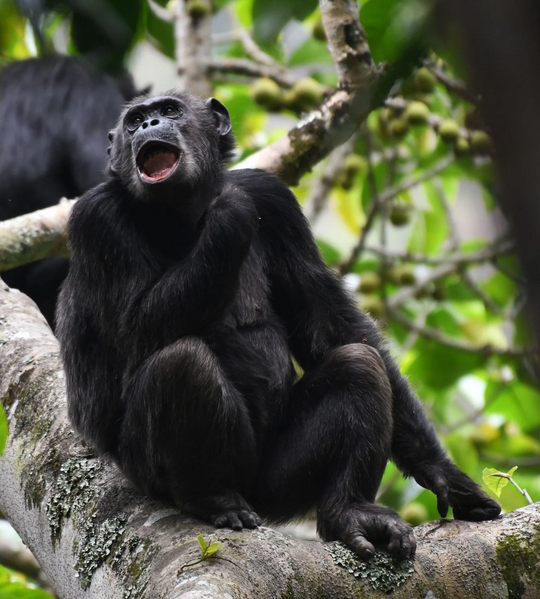
Bird Watching:Kibale is a world-class birding destination, and serious birders know it. The park holds 375 recorded bird species, including a remarkable number of Albertine Rift endemics species found nowhere else on earth. The African pitta, the green-breasted pitta, the purple-breasted sunbird, the black bee-eater, the red-faced woodland warbler, and the handsome francolin are among the more sought-after species.
Birding Fees (per person, per day):
Visitor Category | Fee |
International Visitor | USD 50 |
EAC Foreign Resident | USD 40 |
Ugandan Citizen | shs 20,000 |
EAC citizen | USD 15 |
Guided Nature Walks and Primate Walks
Beyond chimpanzee trekking, Kibale offers guided nature walks of varying duration — two hours, three hours, or half-day options that cover the forest trails around Kanyanchu. These walks focus on general forest ecology: tree identification, medicinal plants, insect life, and whatever primates happen to cross your path.
The primates you encounter on a general walk are often more relaxed than on a formal trekking experience because the trails cover a wider range of forest. Red-tailed monkeys are almost always present. Olive baboons are common along the forest edge. Grey-cheeked mangabeys — large, powerful monkeys with a booming call are regularly spotted in the canopy.
For families with children or anyone looking for a gentler introduction to the forest before the main chimpanzee trek, these walks are excellent.
Cultural Encounters with the Batoro Community
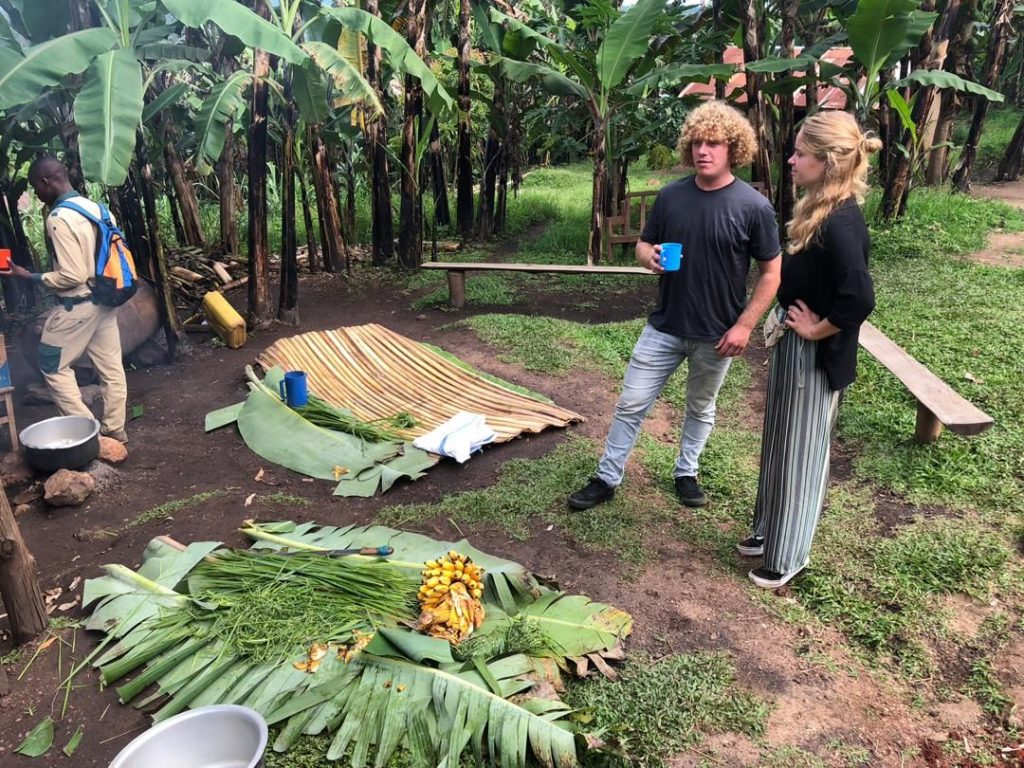
No visit to Kibale is complete without some engagement with the people who have lived alongside this forest for generations. The Batoro kingdom one of Uganda’s traditional kingdoms — is centered on Fort Portal, just north of the park. Local community programs around Kibale allow visitors to share meals, watch traditional dance performances, visit local markets, and learn about the relationship between forest communities and wildlife conservation.
A particularly meaningful activity is visiting a local homestead where you can participate in cooking a traditional Batoro meal, hear stories about the forest from community elders, and understand the complex balance between wildlife protection and human livelihoods. These experiences are arranged through lodges and community organizations rather than through the Uganda Wildlife Authority.
Park Entry Fees
All visitors must pay park entry fees in addition to specific activity fees. Entry fees cover access to the park and its trail system.
General Park Entry Fees (per person):
Visitor Category | 1 Day | 2 Days | 3 Days |
International Visitor | USD 40 | USD 80 | USD 120 |
Foreign Resident | USD 20 | ||
Ugandan Citizen (Adult) | shs 20,000 |
Guides and Porters
Park guides are mandatory for specific activities including monkey tracking, night walks, canopy walks, and guided birding. Guides and porters picked up from reception before 9:00 a.m. and returned within 5 hours are considered a half-day engagement. Those hired after 9:00 a.m. are charged for a full day unless returned before midday. For every 8 tourists, one guide is required by park rules. Multi-day trail guides incur an additional RWF 15,000 for accommodation and meals per night.
Kibale National Park
Best Time to Visit Kibale National Park
Kibale is a year-round destination, and chimp trekking permits are available every day of the year. That said, seasons do affect the experience in ways worth understanding.
Dry Seasons (June to August and December to February) are widely considered the best times to visit.
During these months, the forest trails are drier and easier to navigate, chimp tracking is generally more straightforward because the animals tend to stay in areas with fruiting trees, and the overall wildlife-watching conditions are better.
June through August is the peak safari season across Uganda and East Africa. Kibale is busy during this window, and permits especially for chimpanzee trekking and habituation experience .this is why we advise advancebooking of permits.
December and January offer similar dry-season conditions with slightly fewer crowds. This is an excellent window for travelers who want the quality of the dry season.
Wet Seasons (March to May and September to November) bring heavy rains that turn the forest trails muddy and make the terrain more challenging. That said, many experienced travelers argue that the wet season Kibale is a different and equally beautiful experience.
The forest is lush and intensely green. Waterfalls appear that are dry for the rest of the year. Bird activity is high. And permits are more readily available at shorter notice.
If budget is a factor, many lodges offer significantly reduced rates during the wet season, and the park itself is quieter, giving you a more private experience with the forest and its inhabitants.
Birding is excellent year-round but reaches a particular intensity between November and April when migratory species are present alongside resident birds
How to Get to Kibale National Park
By Road from Kampala: The most common route is the drive from Kampala to Fort Portal, a distance of approximately 320 kilometres. On a good road with minimal traffic, this journey takes between four and five hours.
The road passes through Mubende and climbs steadily into the Rwenzori foothills. From Fort Portal, the drive south to Kanyanchu the main entry point into the park takes around 35 to 40 minutes.
The road from Kampala to Fort Portal is tarmacked
By Road from Other Parks: Many travelers visit Kibale as part of a wider western Uganda circuit that includes Queen Elizabeth National Park, Bwindi Impenetrable Forest, or both.
From Queen Elizabeth, the drive to Kibale takes approximately three hours via Kasese and Fort Portal. From Bwindi Impenetrable Forest (Buhoma), expect a drive of five to six hours depending on road conditions. This circuit — Kibale, Queen Elizabeth, and Bwindi — represents one of the finest multi-destination safari routes in Africa
By Air:
You can book with Aerolink Uganda. it operates scheduled flights between Entebbe International Airport and Kasese Airstrip, which is the closest commercial airstrip to Kibale at approximately 80 kilometres.
Chartered flights can also land at Kasese. From Kasese, a road transfer to Kibale takes about two hours. Flying saves considerable time and allows you to enjoy the aerial view of the Rwenzori Mountains.
Tips to Follow While Visiting Kibale National Park
Walking into a tropical rainforest to spend time with wild primates requires both preparation and respect. The following guidelines will improve your experience and ensure that the forest and its inhabitants are not harmed by your presence.
- Book your permits early. This cannot be overstated. Chimpanzee trekking permits, and especially the habituation experience permits, are limited by daily quotas. During peak season, they sell out months in advance. Secure your permits before you book your flights.
- Wear appropriate clothing. Long trousers and long-sleeved shirts protect against insect bites, scratches from vegetation, and the chilling effect of the forest at altitude. Neutral colors, khaki, olive, grey blend better into the environment. Avoid bright colors and strong perfumes, which can disturb the animals.
- Wear good boots. Forest trails are uneven, sometimes steep, and often wet. A pair of proper hiking boots with ankle support will make a significant difference to your comfort and safety. Rubber boots (gumboots) can be rented at Kanyanchu and are particularly useful during the wet season.
- Do not approach the chimpanzees. Your guide will set the distance, which is a minimum of eight metres. This protects you from potential aggression and, more importantly, protects the chimpanzees from diseases they can contract from humans.
- Do not eat or drink near the chimpanzees. Again, this reduces disease risk and prevents food-related aggression.
- If you are unwell, do not trek. This is not merely a suggestion — it is a Uganda Wildlife Authority regulation. If you have flu symptoms, a cold, or a gastrointestinal illness, you will be asked to remain behind. Carry proof of your permit to ensure you receive a refund or a permit transfer.
- Carry insect repellent and sunscreen. Mosquitoes and other biting insects are present, and while Kibale is not a high-malaria-risk area by regional standards, the risk is not zero. Consult your doctor about malaria prophylaxis before traveling to Uganda.
- Bring a good camera and extra batteries. The forest light is often low, particularly under the canopy. A camera with good low-light performance, a fast lens, and image stabilization will serve you far better than a basic point-and-shoot. Pack extra batteries, as cold forest air and heavy use drain them quickly.
- Keep your voice low. This is about respect as much as wildlife management. The forest has its own sounds, and quiet visitors experience it more fully.
- Engage your guide. The rangers at Kanyanchu are extraordinarily knowledgeable — about primates, birds, plants, and the history of the park and its communities. Ask questions. The information you receive will transform your experience from observation into genuine understanding.