

Murchison Falls National Park.
Murchison Falls National Park :There is a moment, somewhere on the northern bank of the Victoria Nile, when everything goes quiet except the roar of water. You watch the entire force of Africa’s longest river squeeze through a gap just seven metres wide and plunge 43 metres into a churning red gorge below. The mist rises. The air smells of wet rock and river grass. A Goliath heron stands stone-still on a boulder to your left, completely unbothered. This is Murchison Falls and no photograph has ever quite done it justice.
Uganda’s largest and oldest national park covers 3,840 square kilometres of savannah, tropical forest, and riverine woodland in the country’s northwest. It has been drawing wildlife enthusiasts since the 1950s, and yet it remains refreshingly off the radar compared to East Africa’s more celebrated destinations. That is both its charm and its greatest advantage for travellers who are willing to look a little further.
Why You Should Add Murchison Falls to Your Uganda Safari
The honest answer is simple: few places on the continent give you this much wildlife, this much drama, and this much authenticity at once.
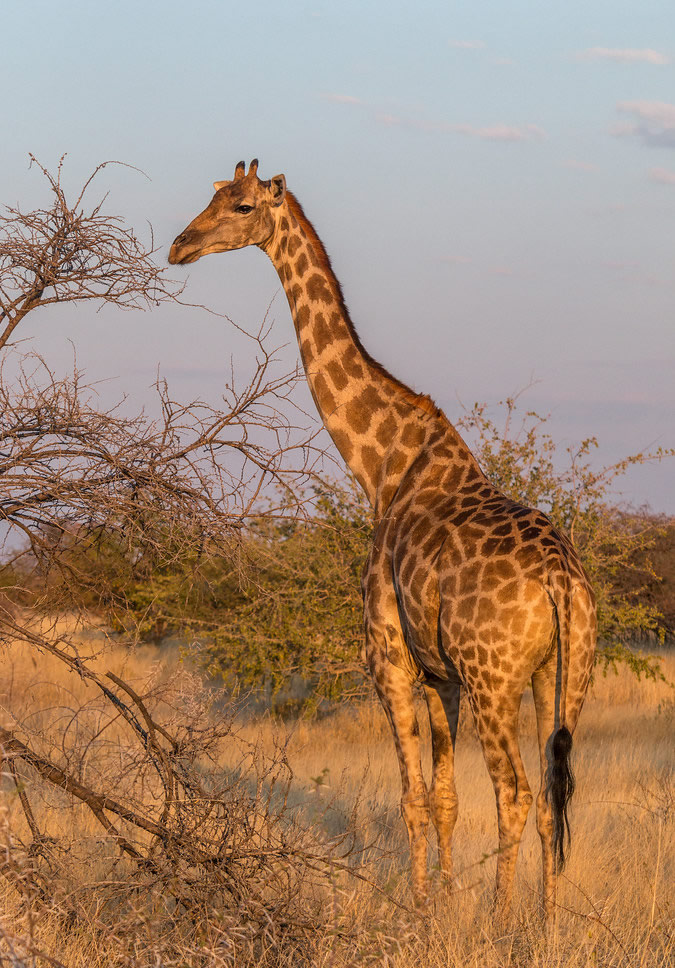
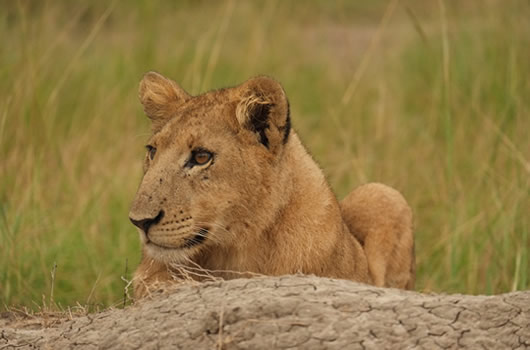
Murchison sits at the intersection of East African savannah and Central African rain forest, which means the biodiversity here is staggering. Expect to see plenty of wildlife such as lions, leopards, elephants, buffaloes, and hippos all in the same park.
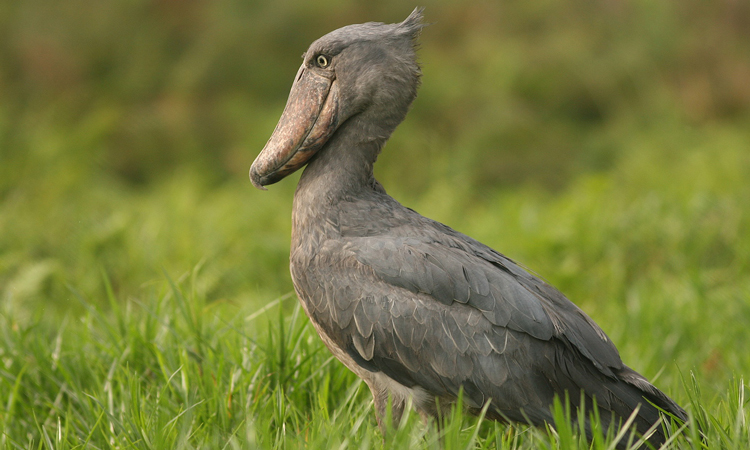
You have shoebill storks, one of the world’s most sought-after birds, nesting in the papyrus swamps of the Albert Delta. You have chimpanzees in the Budongo Forest to the south, just a short drive from the main game circuit.
Beyond the animals, the landscape itself tells a story. The Albertine Rift escarpment drops into the park from the west, the Nile cuts through the middle, and the falls punctuate it all with a display of raw geological power that stays with you long after you leave. This is not a polished, manicured safari experience. It is wild in the best sense of the word.
And practically speaking, park fees and accommodation here are considerably more affordable than comparable destinations in Kenya or Tanzania. You get more for less without sacrificing quality.
Activities at Murchison Falls National Park
What makes Murchison falls national park especially compelling is the sheer range of activities available. This is not a park where you simply sit in a vehicle and wait for animals to appear in front of you It is a park where you can get out, move around, and experience the ecosystem at a human pace.
Game Drives
The northern bank of the Nile is where majority of the park’s large mammals concentrate, and a morning game drive here rarely disappoints. Herds of Uganda kob the national antelope graze on open floodplains in their hundreds. Jackson’s hartebeest and oribi dot the ridge lines. Buffaloes gather in massive aggregations near the water. And if you sit quietly at a well-known kopje on the Buligi circuit just after dawn, you have a reasonable chance of spotting a lion.
Elephant sightings are almost guaranteed. Murchison holds one of Uganda’s largest elephant populations, and they frequently cross the road between waterholes with the kind of casual confidence that only comes from being the largest thing in the landscape.
Game drives run in the early morning and late afternoon, which is the right call midday in Murchison is hot, and animals tend to disappear into shade.
Boat Cruise to the Base of the Falls
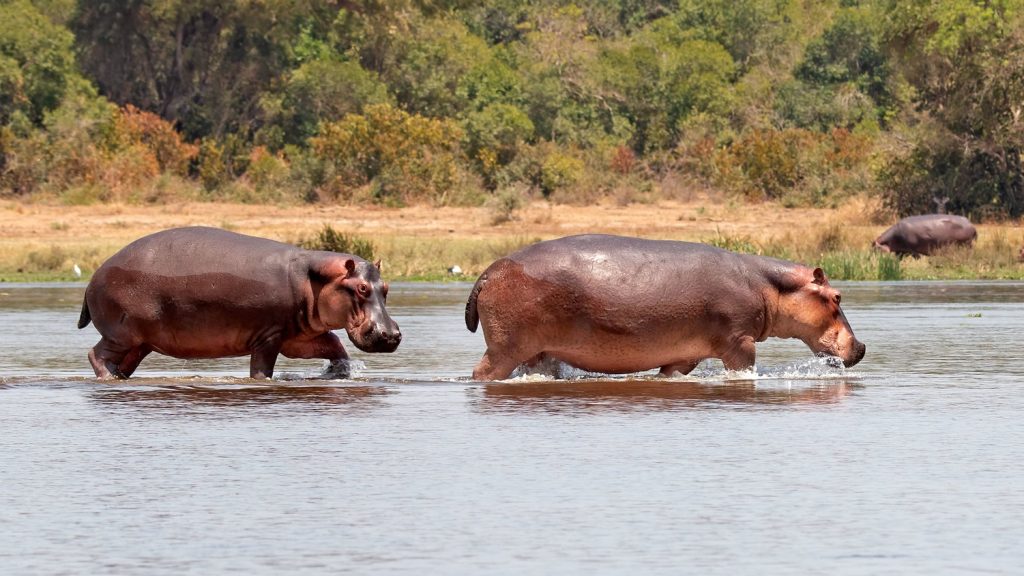
This is the activity that defines a Murchison visit. A two-to-three-hour cruise up the Nile from Paraa ferry crossing takes you past enormous pods of hippos, Nile crocodiles sunning on the banks, and an extraordinary density of waterbirds African fish eagles, pied kingfishers, marabou storks, and yellow-billed storks among them.
The further upstream you go, the more the river narrows and the current picks up, until you reach the base of the falls and stare straight up at the column of white water descending from above. It is genuinely one of the great river experiences in Africa. Boats run in the morning and afternoon.
Hiking to the Top of the Falls
If you want to stand at the point where the Nile splits and compresses into that famous seven-meter cleft, a short-guided hike from the top car park takes you along the rim of the gorge to the falls’ edge.
The path is manageable for most fitness levels, and the reward looking straight down into the churning pool at the base is worth every step. Rangers escort visitors, and they are remarkably knowledgeable about the geology and history of the site.
Chimpanzee Trekking in Budongo Forest
The Budongo Forest Reserve sits on the southern edge of the park and holds one of East Africa’s largest mahogany forests. It is home to over 600 chimpanzees, habituated communities of which can be tracked on foot with a guide.
This is a completely different experience from the open savannah game drives you are moving through dense forest, listening for chimp calls above you in the canopy, then suddenly finding yourself five metres from a large male feeding on figs. Permits should be booked well in advance.
Shoebill Watching in the Albert Delta
The shoebill stork is one of the most prehistoric-looking birds alive. It stands over a metre tall, barely moves, and stares at you with an expression of ancient indifference.
The marshy wetlands where the Nile fans into Lake Albert are among the most reliable places in all of Africa to find them. Most lodges in the Murchison area can arrange guided boat or canoe excursions into the delta. Early morning departures give you the best light and the greatest chance of a close encounter
Best Time to Visit Murchison Falls National Park
Murchison falls national park can be visited year-round, which is one of its considerable advantages over some of Uganda’s other protected areas. However, understanding the seasonal patterns will help you plan a visit that aligns with your specific priorities.
Dry Season: June to August and December to February
The dry seasons (December to February and June to September) are the most popular and productive for wildlife viewing. Vegetation thins out, animals concentrate around permanent water sources, and road conditions across the northern circuit are at their best. June through August in particular combines good weather with high game density and coincides with the peak chimpanzee trekking season in Budongo.
December and January offer a pleasant alternative dry season window that sees fewer tourists, lower accommodation rates at some lodges, and equally good wildlife viewing conditions.
during this period the roads are in good condition, boat cruises operate without weather-related interruptions, and walking safaris are comfortable.
Wet Season: March to May and September to November
The wet seasons (March to May and October to November) transform the landscape. The park turns dramatically green, bird diversity peaks as migratory species arrive, and accommodation rates drop significantly.
Roads on the northern bank can get muddy and occasionally impassable after heavy rain, which is worth factoring in. That said, the wet season visitor who accepts some inconvenience often has the park almost entirely to themselves, and the light for photography is extraordinary.
The months of April and May see the heaviest rainfall and are generally considered the low season. Some lodges close or reduce operations during this period. If you are flexible, shoulder months like October or December offer a compelling balance of reasonable conditions, lower prices, and thinner crowds.
Murchison falls National National Park
How to Get to Murchison falls National Park
By Road: Murchison is approximately 305 kilometres from Kampala, which translates to a drive of five to six hours depending on road conditions and traffic leaving the capital.
The most common route heads northwest through Gulu or via Masindi. The road is tarmac for most of the distance, though the final stretch into the park involves gravel. A four-wheel-drive vehicle is strongly recommended, particularly in the wet season.
By Air: Charter flights operate between Entebbe International Airport and Pakuba Airstrip (inside the park) or Bugungu Airstrip (near the park boundary).
Flight time is roughly one hour. Several operators including Aero link Uganda run scheduled and charter services. Flying in eliminates travel fatigue and is worth the cost on a short trip.
Getting Around Inside the Park: The Nile divides Murchison into two distinct zones. The Paraa ferry crossing connects the south bank (where most lodges are based) to the north bank game circuit.
The ferry runs at scheduled intervals throughout the day. Having your own vehicle or arranging a lodge safari vehicle is essential, as there is no public transportation inside the park.
Where to Stay in Murchison Falls?
The park accommodates a wide range of budgets without forcing significant compromises on experience.
Paraa Safari Lodge sits directly on the riverbank at Paraa and remains the most established property in the park. It offers comfortable rooms, a pool, and direct access to both game drives and boat cruises from the same point.
Chobe Safari Lodge, slightly downstream near Wanseko, provides a quieter alternative with excellent views over the Nile and strong community engagement initiatives.
Baker’s Lodge, run by Wild places Africa, occupies a beautiful position above the river on the southern bank and appeals to travellers who want a more intimate, boutique experience.
For budget-conscious travellers, there are many campsites and lodges such as red chilli rest camp etc.
Booking accommodation directly or through a reputable Ugandan tour operator is advisable, particularly for peak season visits between June and September.