

Top Things to Do on Lake Bunyonyi, Uganda
Tucked into the folds of the Kigezi Highlands in southwestern Uganda, Lake Bunyonyi has a way of slowing visitors down. If you’re searching for things to do on Lake Bunyonyi, you’re in the right place this guide covers the terraced hillsides that rise straight out of the water like green staircases, the mist that sits on the surface every morning before the sun burns it off, and everything in between.
Either way, most people who plan a quick overnight stop here end up staying two or three nights instead. This guide walks through exactly what there is to do on and around the lake, what it costs, when to go, and a few things most travel blogs leave out.
Quick Facts About Lake Bunyonyi
Before getting into the activities, here’s the essential orientation:
Location: lake Bunyonyi is situated in Kabale District, southwestern Uganda, near the Rwanda border
Meaning of the name: “Bunyonyi” translates roughly to “place of many little birds” in the local Rukiga language
Size: Roughly 25 km long and 7 km wide, sitting at about 1,960 meters (6,430 feet) above sea level
Depth: Officially measured around 40 to 44 meters, though local tradition while some tourist literature claim depths closer to 900 meters in parts if true, that would make it the second-deepest lake in Africa. Either figure puts it among the deepest lakes on the continent
Islands: 29 islands scattered across the lake, several with their own histories and legends
Origin: Formed roughly 18,000 years ago when a volcanic eruption dammed a valley in the Rukiga mountains
Distance from Bwindi Impenetrable Forest: About 2–3 hours by road, which is why most travelers visit Bunyonyi right before or after gorilla trekking
Now, onto what you can actually do here.
- Canoe the Lake in a Traditional Dugout
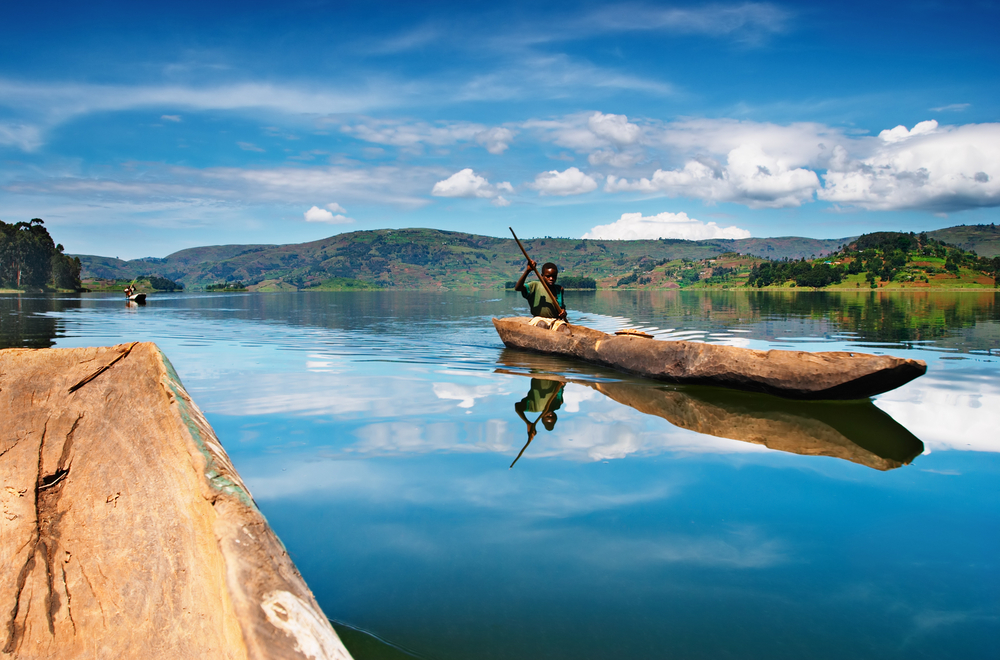
This is the single most iconic Lake Bunyonyi experience. Local wooden dugout canoes can be rented directly from the shore at Rutinda, or arranged through your lodge, and paddling yourself between islands gives a completely different perspective than a motorboat ride.
Because the lake has no hippos or crocodiles, canoeing feels relaxed rather than nerve-wracking you can drift close to the shoreline, watch fishermen at work, and hear almost nothing but water against wood and birdsong.
For something more atmospheric, ask about an early morning paddle, when mist hangs low over the water, or a night canoe trip, when crickets and frogs take over the soundtrack. Motorized boat rides are also available for travelers short on time or with mobility concerns, and they cover more ground if you want to visit several islands in one outing.
- Go Island Hopping
Lake Bunyonyi is undoubtedly one of the best lakes in Uganda with plenty of islands. Over 29 islands can be traced, each with its own character and, in several cases, a genuine local legend attached. A few worth prioritizing:
- Akampene Island (“Punishment Island”) Uganda’s most talked-about island story. Generations ago, unmarried Bakiga girls who became pregnant were reportedly left here to fend for themselves as a form of social punishment. The practice ended decades ago, but guides still share the history, and it’s one of the most requested stops on the lake.
- Bwama Island : Once home to a leprosy treatment center established by missionary Leonard Sharp in the early 20th century. The old facility has since been converted into a school, and the island offers a quieter, more reflective visit than most.
- Kyahugye Island: Unusual among Bunyonyi islands because it actually has land animals impalas, zebras, and Ugandan kobs roam a flat-topped section that also gives sweeping views across the water, and on a clear day, a glimpse of Mount Muhabura on the horizon.
- Bushara Island: A privately developed island with walking trails, a small forest, and simple accommodation, popular for day visits and picnics.
- Bucuranuka (“Upside Down Island”) : Named for a local folk tale about an island that flipped over after its residents refused to help an old woman, drowning everyone on it.
Most lodges can arrange a half-day or full-day island-hopping itinerary that combines two or three of these with a lunch stop.
- Swim in One of the Few Bilharzia-Free Lakes in the Region
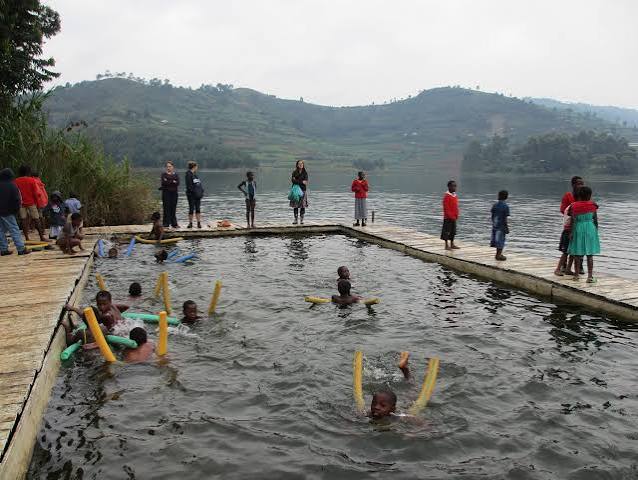
Unlike many East African lakes, Bunyonyi is free of bilharzia (schistosomiasis), and has no hippos or crocodiles, which makes it genuinely safe to swim in a rarity travelers appreciate after being warned off swimming in most other Ugandan lakes. The main caution is the water’s depth and the cold mountain temperature rather than any wildlife risk, so it’s best suited to confident swimmers, or those sticking close to shore with a canoe nearby.
Several lodges also have shallow, roped-off swimming areas or pools for anyone who’d rather skip open water altogether.
- Birdwatch Along the Shoreline and Wetlands
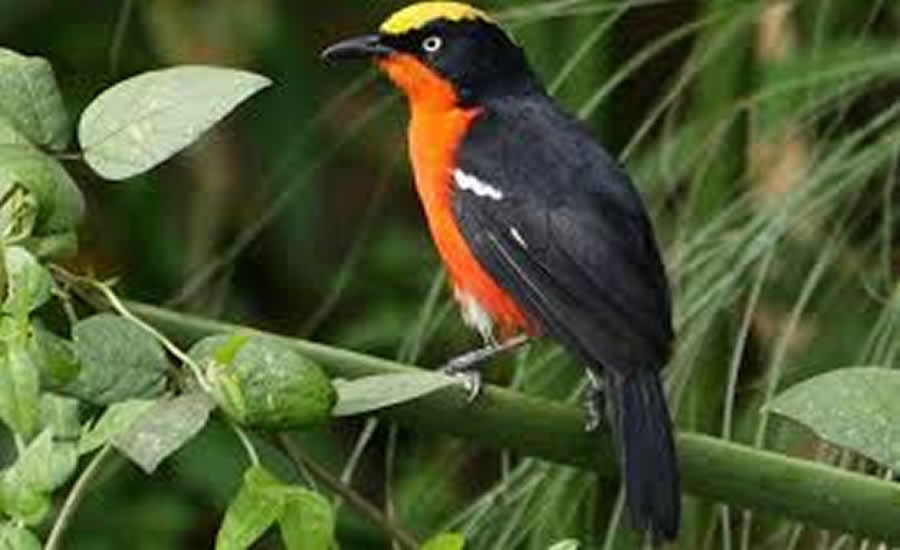
With over 200 recorded bird species, Lake Bunyonyi genuinely earns its “place of many little birds” name. Grey-crowned cranes, pied kingfishers, red-chested sunbirds, and various herons and weavers are commonly spotted, alongside seasonal migrants that arrive from Europe during the northern winter. The Nyombi swamp on the lake’s edge is a particularly productive spot, best explored by canoe with a local birding guide early in the morning when activity peaks. June to August and December to February tend to be the strongest birding windows.
- Hike the Terraced Hills for Panoramic Views
The hills ringing Lake Bunyonyi climb to around 2,200–2,478 meters, and hiking even partway up rewards you with some of the best views in Uganda layered terraces, scattered islands, and the lake stretching out below. Guided hikes pass through farming communities, giving you a natural excuse to stop, chat, and see how the terraces are worked by hand.
Arcadia Cottages, perched on a hilltop above the lake, is widely regarded as having the single best panoramic viewpoint in the area; you don’t need to be a guest to stop by its restaurant or coffee bar and take in the view.
- Take a Community and Cultural Walk
The lake’s shores are home to two main communities: the Bakiga, the region’s original agricultural settlers known for their terrace farming, and the Batwa, a community with roots in the nearby Echuya and Bwindi forests.
Cultural walks typically include visits to local homesteads, a chance to try hoeing a garden the traditional way, stops at village schools, and if arranged in advance traditional dance and music performances. It’s also common to be introduced to marwa and obushera, two traditional banana-and-millet drinks brewed locally, alongside factory-bottled options for anyone less adventurous.
- Try Ziplining Across the Lake
For a different kind of view, a few operators around Bunyonyi run zipline courses that send you soaring above (and in some sections, just over) the water. It’s a short but genuinely thrilling add-on, usually preceded by a safety briefing, and works well as a half-hour activity slotted between other plans.
- Visit the Rutinda Market
On Mondays and Fridays, the trading center at Rutinda fills with locals buying and selling produce, and it’s worth timing a visit around one of these market days if your schedule allows. It’s a low-key but genuine way to see daily life in the area, away from the tourist-facing activities.
- Cycle the Lakeside Trails
Several lodges rent mountain bikes for exploring the trails around the lake’s edge and through nearby villages. It’s a good option for travelers who want more ground covered than a walk allows, but still want to move slowly enough to take in the scenery and stop for photos.
- Simply Relax
For many visitors particularly those arriving straight from gorilla trekking in Bwindi or chimpanzee trekking in Kibale the main draw of Lake Bunyonyi isn’t a single activity at all. It’s the cool climate, the quiet, and the chance to sit on a lodge veranda with a book and watch the light change over the water.
Accommodation on the islands and shoreline ranges from simple backpacker lodges to higher-end retreats, and the food generally mixes local vegetables and fruit with international dishes. Sunset over the lake, watched from almost any vantage point, is reliably one of the most photographed moments of a Uganda itinerary.
Mountain Biking
In Uganda you can ride a mountain bike around the lake and enjoy the nature, communities, people and get a feel for true Africa. The elevation means the temperature and weather is excellent here and a bike ride will be most pleasurable and you will not be beaten down by the Equatorial sun. A bike ride can be a full day or just a few hours long. A guide with a vehicle will be around to aid you if necessary.
Visit the Bakiga Cultural Museum
A short distance from the lake, this museum documents traditional Bakiga life, tools, and customs, and pairs well with a community walk for travelers who want more context before or after meeting local families.
Explore the Echuya Forest Nearby
For travelers with an extra day, the Echuya bamboo forest sits within reach of the lake and offers a quieter alternative to Uganda’s bigger parks, with small primates and forest birds among the highlights.
The Unique Reason to Build Lake Bunyonyi into Your Uganda Itinerary
Here’s something most guides don’t mention: Lake Bunyonyi elevation, at nearly 1,960 meters, is close to the altitude of Bwindi Impenetrable Forest itself. For travelers flying in from sea level and heading straight into gorilla trekking a hike that can involve several hours of steep, high-altitude walking spending one or two nights at Bunyonyi beforehand acts as a natural, low-effort acclimatization stop.
You get the scenery and the rest, and your body gets a gentler introduction to the thinner air before the real physical test begins. It’s a practical reason to build Bunyonyi into the front end of a gorilla safari itinerary rather than treating it purely as a post-trek reward.
Getting to Lake Bunyonyi
By road from Kampala or Entebbe, the drive runs via Masaka and Mbarara to Kabale town, taking roughly 7–8 hours, followed by a short 20–30-minute drive to the lake itself. Travelers coming from Rwanda have it easier: Kigali to Bunyonyi is about 3 hours by road. For those short on time, flying from Entebbe to Kisoro airstrip cuts the journey to around 1 to 2 hours in the air, followed by a drive along the Kisoro–Kabale road.
Practical Tips for Visiting Lake Bunyonyi
- Pack for cool evenings. The altitude keeps nights noticeably chilly even though days are warm; a light jacket goes a long way.
- Budget for canoe rental separately. Many lodges include activities in package rates, but independent canoe or boat hire is usually paid per trip.
- Combine it with gorilla trekking. Most itineraries pair Bunyonyi with Bwindi Impenetrable Forest, roughly 2–3 hours away, either before or after a gorilla trekking permit day.
- Book island accommodation early during June–September and the December holidays, when lodges fill up quickly.
- Bring cash. ATM access is limited near the lake itself; Kabale town is the more reliable option for withdrawals.