
8 Amazing Facts About Gorillas Every Traveler Should Know
8 Amazing Facts About Gorillas Every Traveler Should Know: Few animals on Earth command the kind of quiet awe that gorillas do. Stand ten feet from a 200-kilogram silverback in the misty forests of Bwindi or Volcanoes National Park, face to face is the reason why why gorilla trekking has become one of Africa’s most sought-after wildlife experiences.
Yet for most travelers, gorillas remain misunderstood painted in old films as aggressive beasts when, in reality, they are gentle, family-oriented, and remarkably close to us in biology and behaviour.
Whether you’re researching your first gorilla safari or simply curious about these extraordinary primates, here are eight amazing Facts About Gorillas Every Traveler Should Know that go beyond the usual trivia along with the practical details you’ll need to actually plan a trip to see them in the wild.
8 Amazing Facts About Gorillas Every Traveler Should Know:Gorillas Share Around 98% of Their DNA With Humans
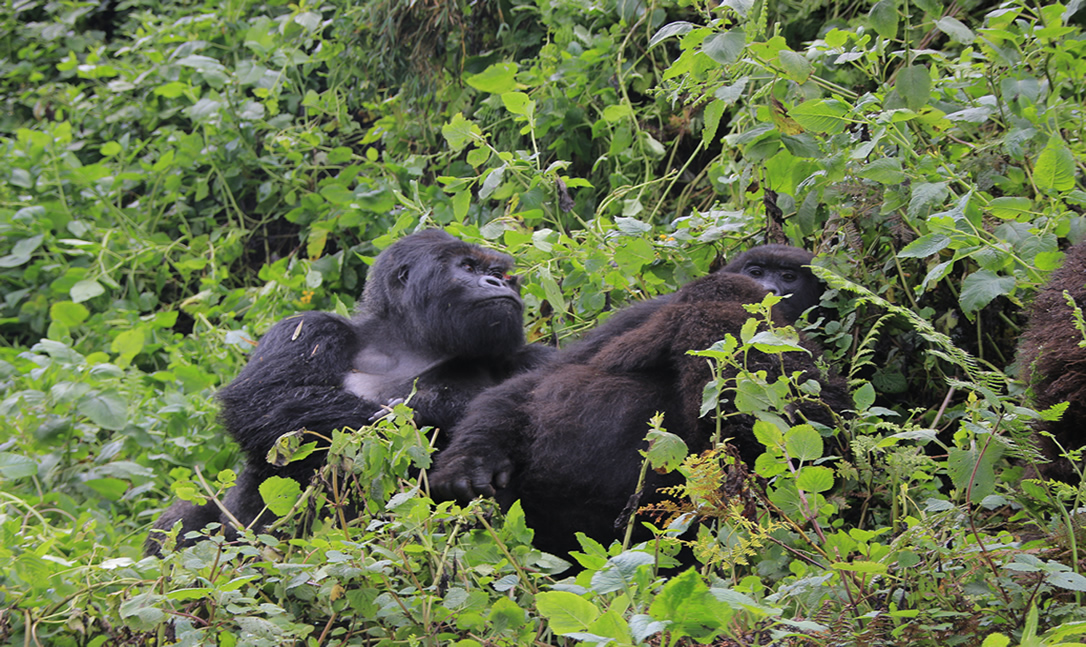
This is one of the popular fact about gorillas.Of all the great apes, gorillas are among our closest living relatives, trailing only chimpanzees and bonobos in genetic closeness to humans. This shared ancestry shows up in ways that are hard to miss once you’ve watched a gorilla family up close: the way infants cling to their mothers, the way juveniles wrestle and play, the way a silverback rests a hand on a troubled youngster. Researchers who study gorilla cognition have documented tool use, problem-solving, and even grief-like behaviour when a group member dies traits once thought to be uniquely human.
There Are Two Species and Four Subspecies And They’re Not All the Same.
Gorillas are split into two species: the Eastern gorilla and the Western gorilla, each with two subspecies. Mountain gorillas and Grauer’s (Eastern lowland) gorillas fall under the Eastern species, while Western lowland gorillas and Cross River gorillas fall under the Western species. Mountain gorillas the ones travelers trek in Uganda, Rwanda, and the Democratic Republic of Congo live at elevations of 8,000 to 13,000 feet and have thicker, longer fur than their lowland cousins, an adaptation to the cold volcanic highlands they call home. Western lowland gorillas, by contrast, are smaller, browner in color, and found in the dense rainforests of Central Africa, including Gabon, Cameroon, and the Republic of Congo.
8 Amazing Facts About Gorillas Every Traveler Should Know:Mountain Gorillas Exist Nowhere Else on Earth But Two Small Region
This is one of the facts about gorillas that surprises most travelers: mountain gorillas cannot survive in zoos or captivity anywhere in the world. Every mountain gorilla alive today lives in the wild, split between the Virunga Massif (spanning Rwanda, Uganda, and the DRC) and the Bwindi Impenetrable Forest in southwestern Uganda. That means the only way to ever see a mountain gorilla is to travel to one of these two regions a rarity that makes gorilla trekking fundamentally different from almost any other wildlife encounter on the planet.
Silverbacks Are Named for a Literal Physical Change
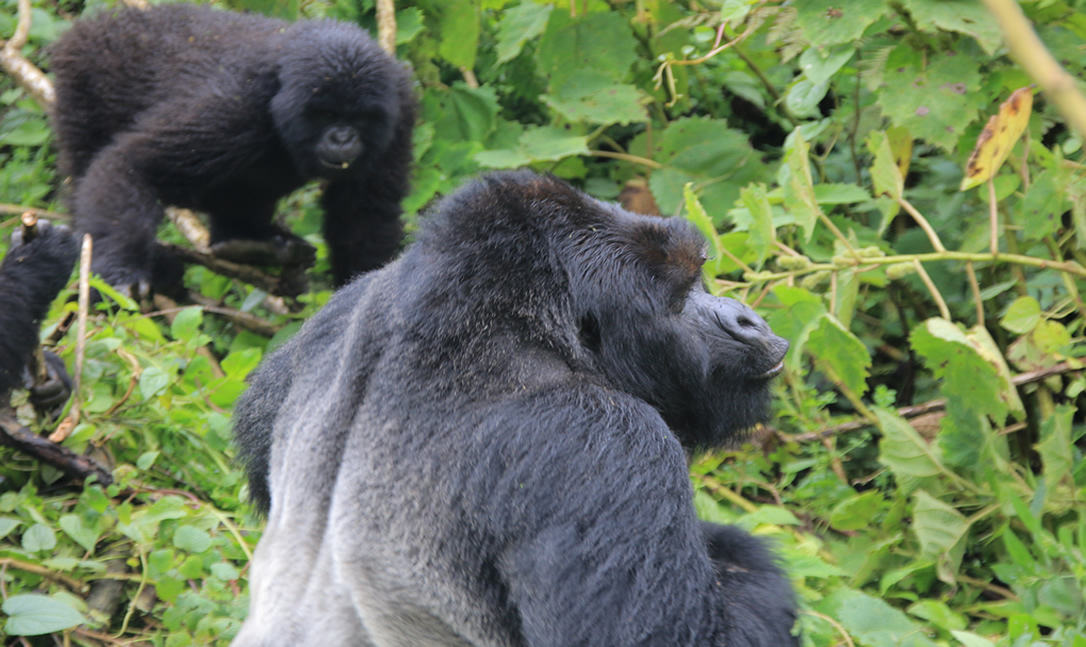
A “silverback” isn’t a separate type of gorilla it’s a mature male, typically aged 12 years or older, whose back hair turns a distinctive silver-grey as a sign of full adulthood. A silverback leads the family group, decides where it forages and sleeps, and defends it from rival males and threats.
Despite their intimidating size adult males can weigh up to 400 pounds (180 kilograms) and stand nearly six feet tall when upright silverbacks are overwhelmingly gentle with their own families. Aggressive chest-beating displays are almost always about deterring a threat, not initiating one.
Gorilla Conservation Has Produced One of Africa’s Greatest Comebacks.
One of the unique facts about gorillas:Its on record that gorilla trekking is one of those activities that fully support conservation. Through vast community engagement, enforced regulations the great apes are one of those creatures that have increased at a high rate and not declining at any extent.
Every gorilla trekking permit sold in Uganda and Rwanda funds this ongoing conservation work which means travelers who go gorilla trekking are directly contributing to the survival of the species.
Gorilla Families Are Surprisingly Peaceful and Deeply Social
Gorilla troops, typically made up of one dominant silverback, several adult females, and their offspring, function on cooperation rather than conflict. Members groom each other for hours, sleep in a fresh nest of woven leaves and branches every single night, and communicate through more than 25 distinct vocalizations, including grunts, hoots, and belches that signal contentment. Infants stay close to their mothers for up to four years and are cared for communally, with older siblings often helping to watch over the young.
Gorillas Are Almost Entirely Vegetarian And Eat Constantly
An adult male gorilla can consume up to 18 kilograms (roughly 40 pounds) of vegetation a day, feeding on wild celery, bamboo shoots, thistles, roots, and fruit. Because their diet is so bulky and low in calories, gorillas spend nearly a third of their day eating and much of the rest resting to digest. This near-constant foraging is also why trekking guides can often predict, based on the previous day’s feeding trail, roughly where a gorilla family is likely to be found the next morning.
You Can Spend Real Time With Them But Only With a Permit
True facts about gorillas:Unlike most wildlife viewing in Africa, gorilla trekking is tightly regulated to protect both the animals and the ecosystem. Each habituated gorilla family can only be visited by a small group of trekkers per day, for a strictly limited window of time. That regulation is exactly what has kept gorilla populations recovering while still allowing people to experience them safely in the wild.
facts about gorillas :Gorilla Trekking Permit Prices in 2026
If you’re planning an actual trip, the permit is the single biggest cost to budget for, and prices vary significantly by country.
Destination | Standard Permit (Foreign Non-Resident) | Trekking Time | | Notes |
Uganda (Bwindi & Mgahinga | US$800 | 1 hour | Most affordable option; 23+ habituated families | |
Rwanda (Volcanoes National Park) | US$1,500 | 1 hour | No seasonal discount; positioned as a premium, low-volume experience |
DR Congo (Virunga National Park) | US$400 | 1 hour | Cheapest option; fewer habituated families and its not safe |
A gorilla permit covers park entry, a ranger-led trek, and one regulated hour (or four, for the habituation experience) with the gorillas. It does not include accommodation, transport, or an optional porter hiring one is inexpensive and directly supports the local community.
Booking tip: Permits for peak season (June–September and December–February) can sell out six to twelve months in advance, especially in Rwanda’s Volcanoes National Park, which limits access to roughly 96 permits a day across its habituated families. Booking three to six months ahead is the safe minimum; for Christmas and New Year, book closer to a year out.
Facts about gorillas:When Is the Best Time to Go Gorilla Trekking?
The dry seasons June to September and December to February offer firmer trails and lower rainfall, making the trek physically easier. The green seasons of April, May, and November bring lower crowds, discounted Uganda permits, and lusher scenery, at the cost of muddier, more demanding terrain. Neither season affects your chances of finding the gorillas; sightings are close to guaranteed year-round once you’ve been assigned a family.
What to Pack for Gorilla Trekking
here is an essential packing list for gorilla trekking that you need to follow in order to have a very successful gorilla safari.
Waterproof hiking boots with strong ankle support
Gardening gloves (for gripping vegetation on steep sections)
A lightweight rain jacket, even in dry season Long trousers and long sleeves tucked in, to guard against nettles and safari ants
A daypack with water, snacks, and a dust mask
A camera with a strong zoom flash photography is prohibited near the gorillas
Frequently Asked Questions
How long can you spend with gorillas once you find them?
One hour for a standard permit, or up to four hours with Uganda’s gorilla habituation permit.
Is gorilla trekking safe?
Yes. Treks are led by experienced armed rangers, and gorilla families used for tourism are fully habituated to human presence. Visitors must stay at least seven meters away and are screened for illness before the trek, since gorillas are highly susceptible to human respiratory diseases.
How fit do you need to be?
The trek can range from a gentle one-hour walk to a strenuous five-to-eight-hour hike through steep, muddy terrain, depending on the location
Of that gorilla family is that day. Hiring a porter is strongly recommended for all fitness levels.
What is the minimum age for gorilla trekking?
15 years old, strictly enforced by both the Uganda Wildlife Authority and the Rwanda Development Board
Planning on a gorilla trekking safari in Uganda, Rwanda, or Congo? Speak with our team at gorilla safaris africa to check permit availability and build a custom itinerary around your travel dates.
Company
Gorilla Safaris Africa is one of the leading experts to trust while you are seeking for unforgettable and gorillas safaris with in Africa.
Features
Most Recent Posts
- All Post
- Combined Safaris
- East Africa
- Gorillas
- Luxury Safaris
- Primates Safaris
- Wildlife