

Unlike other safari experiences, gorilla trekking is one of the most breathtaking and ideal safaris in Africa. It involves walking, climbing, and sometimes crawling through dense rain forest at altitudes that can leave even fit travelers breathless.
Terrains in Bwindi Impenetrable National Park, Mgahinga Gorilla National Park, Volcanoes National Park, and Virunga National Park are steep, muddy, and unpredictable. The weather conditions are un reliable can shift from blazing sunshine to downpours within minutes.
Because of this, what you pack matters more for a gorilla trek compared to any type of safari. Bringing the wrong items could spend your one trek of a lifetime cold, soaked, blistered, or sidelined by something as simple as a sunburn.
Bring the right ones and you’ll barely notice the discomfort because you will be too busy watching a silverback chest-thump twenty feet away.
This guide breaks down exactly the essential packing list and what to wear for gorilla trekking, why each item matters, and a few details that most packing lists leave out entirely.
Why Gorilla Trekking Packing Is Different from Regular Safari Packing
A standard African safari involves long drives and short walks. Gorilla trekking flips that completely. You might hike anywhere from thirty minutes to seven or eight hours passing through thick vegetation, volcanic soil or steep ridgelines before you find the gorilla family you’re tracking. Trackers go ahead of tourists each morning to locate the gorillas, but the group still has to walk to wherever the animals have settled that day, and gorillas don’t stay in one place for your convenience.
This means your packing list needs to account for physical exertion, sudden rain, biting insects, slippery slopes, and several hours without access to a vehicle, shop, or bathroom. Comfort and preparation aren’t luxuries here. They’re the difference between enjoying the hike and enduring it.
Clothing: The Foundation of a Good Trek
Long-sleeved shirts and long trousers
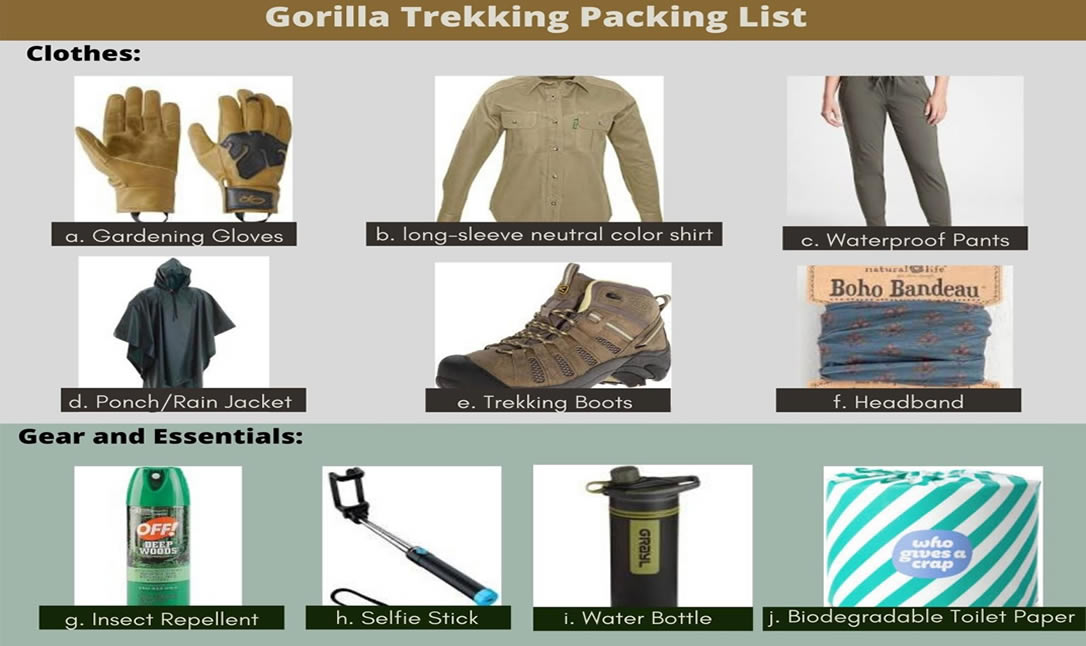
And you will need excellent protection for your hands too. It can be warm on the trek, but it is definitely cold at the upper levels, so long-sleeved clothing are great. Stinging nettles, thorny vines, and biting ants are part of the rainforest experience. Long sleeves and trousers made from lightweight, quick-drying fabric protect your skin without overheating you. Avoid cotton, which stays wet once it’s soaked through with sweat or rain. Convertible hiking trousers that zip off into shorts are popular, but most trekkers keep the legs on throughout the hike for protection rather than convenience.
Neutral, earthy colours
Wear clothes that are free from bright colours like white, pink, red and many more. This is done to protect you more from visibility of insects and easier to spot in the forest, but loud colours can also be seen as unsettling by the gorillas themselves. Pack clothes with dull colours such as Khaki, olive, brown, and grey.
A waterproof, breathable rain jacket
Essentail packing list and what to wear for gorilla trekking: Rainfall in Bwindi or Volcanoes is frequent and often arrives without warning, even outside the official rainy seasons of March to May and September to November. A packable rain shell that you can stuff into your daypack is one of the most important things you’ll carry.
Gaiters
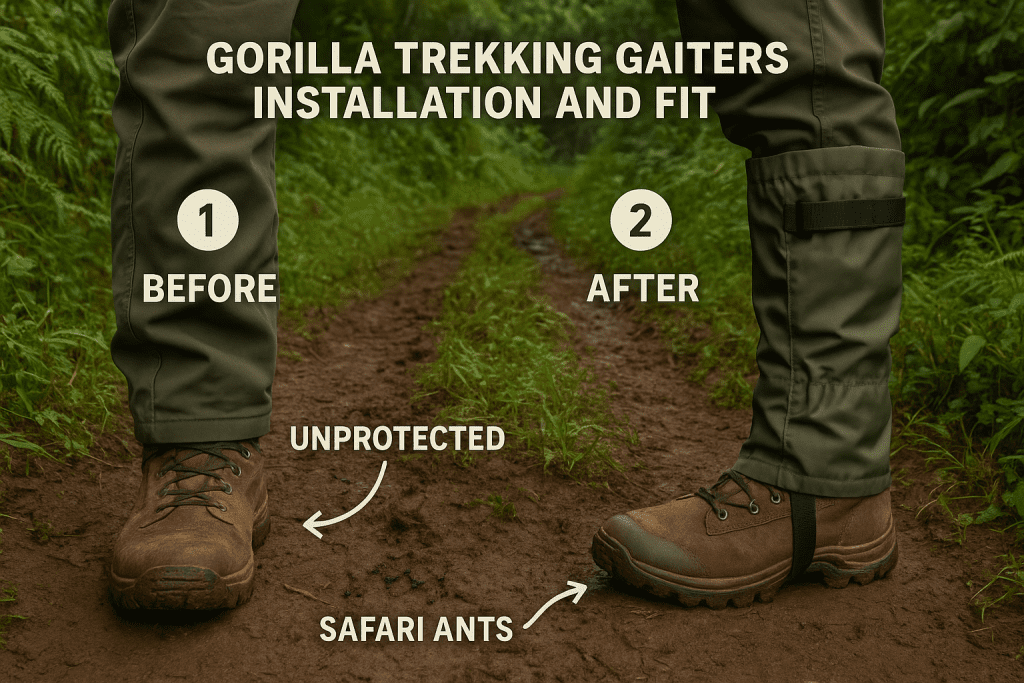
These are one of the most overlooked items on most packing lists, yet guides in Bwindi and Volcanoes National Park recommend them constantly. Gaiters wrap around your lower leg and the top of your boot, sealing out mud, biting ants (notoriously aggressive in this region), and moisture. Without them, safari ants can climb inside your boots within seconds of you brushing past the wrong branch, and you will know about it almost immediately.
Sturdy, broken-in hiking boots.
This is not the trek to test out brand-new boots. You need ankle support, a solid grip, and boots that have already been worn enough to avoid blisters. Waterproofing matters as much as grip, since the forest floor is frequently muddy regardless of season.
Thin moisture-wicking socks, plus a spare pair
Wet feet on a multi-hour hike lead to blisters fast. Pack at least one spare pair to change into if your boots take on water.
A warm mid-layer
Essentail packing list and what to wear for gorilla trekking:Mornings at the briefing points, usually around 7 a.m., can be cold, especially in Rwanda’s Volcanoes National Park, which sits at a higher base altitude than Bwindi. A fleece or light insulated jacket that can be removed and packed away as the day warms up is ideal.
Footwear and Hand Protection
Gardening or hiking gloves
Essential packing list a what to wear for gorilla trekking :Many seasoned trekkers consider gloves just as essential as boots. You’ll be grabbing onto vines, branches, and nettle-covered plants to keep your balance on steep sections. A simple pair of gardening gloves protects your hands from thorns and stings without limiting your grip.
A walking stick
Most parks provide wooden walking sticks at the trailhead, often for a small tip to the person who carved or maintains them. If you have your own collapsible trekking poles, they’re equally useful, particularly on the descent, which is often harder on the knees than the climb up.
Protecting Yourself From the Elements
Sunscreen and a hat
Even in dense forest, UV exposure adds up, especially at the higher elevations of Rwanda and Congo’s volcanic slopes. A wide-brimmed hat or cap also helps keep rain and branches out of your face.
Insect repellent
A DEET-based repellent applied to exposed skin and clothing is non-negotiable in this environment. Combined with long sleeves and gaiters, it dramatically reduces your exposure to biting insects.
A reusable water bottle, at least one liter
Hydration is critical given the altitude and exertion involved. Most lodges and tour operators provide bottled or treated water, but carrying your own bottle, refilled before departure, keeps you from generating plastic waste in a conservation area you’re visiting specifically to protect.
What Goes in Your Day pack?
Essential packing lit and what to wear for gorilla trekking: Porters are available at every trekking starting point in Uganda, Rwanda, and Congo at modest fee. we highly recommendhiring one since its genuinely worth it, both for the physical help as well as it supports the local community living alongside the park. Even so, you will want a daypack of your own for the items you need within reach.
- A rain cover or dry bag for your camera and phone
- Energy snacks or an energy bar, since treks can run long
- A basic first aid kit with blister plasters, antiseptic wipes, and any personal medication
- Hand sanitizer
- Tissues or toilet paper, since there are no facilities on the trail
- Your trekking permit and a form of identification, both of which rangers will check before you’re allowed to start
Camera Gear and the One Rule Everyone Forgets
A telephoto lens is unnecessary for gorilla trekking. Once you reach the gorilla family, you’ll typically be standing seven to ten meters away, sometimes closer if a juvenile decides to wander toward the group. A standard zoom lens, somewhere in the 24-105mm range, or even a good smartphone camera, captures the experience well.
What trips people up is flash photography. Flashes are banned across all three countries’ gorilla parks because they can startle the animals and, with repeated exposure, potentially affect their eyesight over time. Turn your flash off before you leave the lodge so you don’t fumble with camera settings once you’re standing in front of a four-hundred-pound silverback.
Money Matters: What to Carry and Why It’s Different Here
Trekking permits, currently priced at 800 US dollars per person in Uganda’s Bwindi and Mgahinga parks, 1,500 US dollars in Rwanda’s Volcanoes National Park, and roughly 400 US dollars in Congo’s Virunga National Park, are typically arranged and paid for in advance through your tour operator. On the day itself, you’ll still want small denominations of US dollars in cash for tipping porters, guides, and trackers, since card payment and ATMs are not available at trailheads.
Documents You Cannot Forget
- Your passport, matching the name on your trekking permit
- A printed or digital copy of your trekking permit confirmation
- Travel insurance details, ideally a policy that covers medical evacuation, given the remote location of these parks
- Yellow fever vaccination certificate, required for entry into Uganda, Rwanda, and the Democratic Republic of Congo
A Detail Most Packing Lists Miss: Altitude and Fitness Preparation
Gorilla trekking in Rwanda’s Volcanoes National Park happens at altitudes between 2,500 and 4,000 meters. In and Bwindi the terrains are low, as well as steep enough to challenge unprepared hikers regardless of elevation. Most generic packing lists focus entirely on gear and ignore the physical preparation side of things.
Essential packing list and what to wear for gorilla trekking: If you have a few weeks before your trip, build up your cardiovascular fitness with stair climbing, hill walking, or a treadmill set to an incline. This matters more than almost any item on this list, because no amount of gear compensates for being physically unprepared for several hours of uphill hiking at altitude. Travelers who arrive even moderately fit consistently report enjoying the trek more and recovering faster afterward than those who didn’t prepare at all.
The Physical Fitness Levels and What They Mean for Your Packing
Park authorities in Uganda and Rwanda group trekkers into fitness categories before assigning them to a gorilla family, since some families live higher up the mountain than others.
If you mention a knee or back condition, or general fitness concerns, during your briefing, rangers can assign you to a closer, more accessible group. This is worth knowing in advance because it affects how much gear you genuinely need to carry versus what you can leave with your porter or at the lodge.
A Sample Packing Checklist
Essentail packing list and what to wear for gorilla trekking here are the items that you must have with you.
- Long-sleeved moisture-wicking shirt and trousers in neutral colors
- Waterproof rain jacket, packable
- Warm fleece or mid-layer
- Broken-in waterproof hiking boots
- Gaiters
- Thin hiking socks plus a spare pair
- Gardening or hiking gloves
- Wide-brimmed hat
- Sunscreen
- DEET insect repellent
- Reusable water bottle
- Daypack with rain cover
- Energy snacks
- Basic first aid kit and personal medication
- Hand sanitizer and tissues
- Passport, permit confirmation, insurance documents, yellow fever certificate
- US dollars in small denominations for tipping
- Camera with flash disabled
- Walking stick or trekking poles (often provided at the trailhead)
Final Thoughts
Gorilla trekking rewards preparation in a way few other travel experiences do. The hike itself can be demanding, the weather is genuinely unpredictable, and there are no shops or shelters once you’re on the trail. But pack the right layers, protect your hands and feet, prepare your fitness in advance, and carry the right documents, and the physical challenge fades into the background the moment you spot your first gorilla settling into the undergrowth ahead of you.
Every item on this list exists because past trekkers learned the hard way what they wished they’d brought, or left behind. Pack accordingly, and the only thing you’ll be thinking about on the trail is the family of gorillas waiting somewhere ahead in the mist.