

If there is one safari on the African continent that truly delivers on every front are birds, ancient forest, and face-to-face moments with mountain gorillas it is a birding and gorilla tour through Uganda.
This small, landlocked country in the heart of East Africa holds more bird species than any country on the continent north of the equator, and it shelters nearly half of the world’s remaining mountain gorillas inside a single forest so dense and ancient it has earned the name “Impenetrable.”
This guide walks you through every day of our signature 9-Day Uganda Birding and Gorilla Tour, covering exactly what you will see, where you will sleep, how to prepare, and why this particular itinerary consistently ranks among the finest wildlife journeys available on earth.
Whether you are a serious lister chasing Albertine Rift endemics, a wildlife lover dreaming of gorilla trekking, or a traveller who simply wants an experience unlike anything else, read on. Everything you need to know is right here.
Why do a birding safari in Uganda?
Uganda sits at the convergence of three major African ecosystems the East African savanna, the West African rain forest, and the Albertine Rift highlands. That collision of habitats is the reason this country punches so far above its weight in biodiversity.
Over 1,060 bird species have been recorded within its borders, including 24 of the 25 Albertine Rift endemics found anywhere in Uganda a statistic that draws dedicated birders from Europe, North America, and Asia every single year.
Beyond the birds, Uganda’s forests are home to chimpanzees, mountain gorillas, colobus monkeys, forest elephants, and the elusive sitatunga antelope. Add the open savannas of Lake Mburo, the vast papyrus swamps of Mabamba, and the misty montane ridges of Bwindi, and you begin to understand why seasoned safari-goers call Uganda one of Africa’s last true wilderness jewels.
Tour Highlights at a Glance
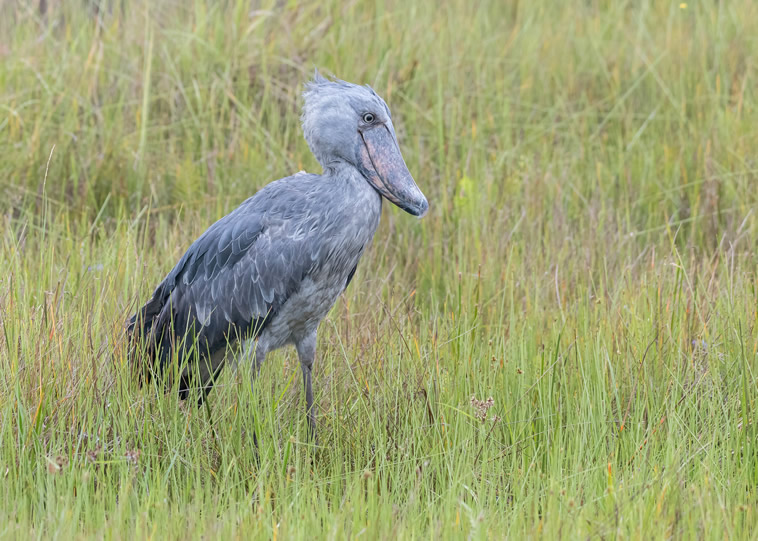
- Shoebill stork sightings at Mabamba Wetland
- Chimpanzee trekking in Kibale National Park, the primate capital of the world
- Bigodi Wetland Sanctuary and over 200 bird species including the Great Blue Turaco
- Mountain gorilla trekking in Bwindi Impenetrable National Park
- Mubwindi Swamp birding — home to the African Green Broadbill and other rare Albertine endemics
- Lake Mburo National Park for savanna birds and game viewing
- The Equator crossing on the return to Entebbe
Detailed Day-by-Day Itinerary
Day 1: Arrival in Entebbe .
Your Uganda adventure begins the moment you land at Entebbe International Airport. Your dedicated guide will be waiting for you in the arrivals hall, ready to help with your luggage and brief you on the remarkable journey ahead. The drive from Entebbe to your lodge takes you through lush equatorial countryside, giving you your first taste of Uganda’s extraordinary greenery.
This evening is yours to settle in, enjoy dinner, and get a good night’s rest. Birdwatchers will already notice sunbirds in the garden and herons on the lake Uganda’s wildlife does not wait for you to finish unpacking.
Day 2: Bird watching in Mabamba swamp.
Few mornings in African birding match the experience of sliding silently through the papyrus channels of Mabamba Swamp in a wooden canoe before the heat of the day arrives.
Situated along the northern shores of lake Victoria lies a true birding habitat Mabamba Wetland, home to ones of the most sought-after birds anywhere in the world.
The shoebill is a prehistoric-looking creature standing well over a metre tall, with a massive boat-shaped bill and an almost reptilian stillness. Seeing one emerge from the papyrus at close range is an experience that stays with a birder for life.
Beyond the shoebill, Mabamba rewards visitors with papyrus specialists that cannot be found just anywhere. Watch for the Papyrus Gonolek, with its vivid red and black plumage, and the hard-to-find White-winged Warbler, a papyrus endemic that draws twitchers from across Europe.
The swamp also supports sitatunga a shy, spiral-horned antelope specially adapted to life in flooded vegetation and a healthy population of African jacanas walking delicately across the lily pads.
After a morning on the water, you leave Mabamba and drive west toward Kibale National Park, stopping for lunch along the route. The journey itself is a birding opportunity, with roadside trees and open farmland offering views of weavers, sunbirds, hornbills, and raptors. You arrive at your Kibale lodge in the evening, ready for the next day’s primates.
Day 3: Chimpanzee Trekking in Kibale and Birding at Bigodi Wetland Sanctuary
Early in the morning, take an early breakfast before heading to Kibale National Park, the primate capital of the world, this park is a home to a large concentration of chimpanzees and rich biodiversity
After the briefing at the visitor center, embark on your guided chimpanzee tracking adventure through the lush forest. You will spend a full hour in their presence, watching them feed, groom one another, play, dispute territory, and navigate the forest with breathtaking agility.
The afternoon brings a quieter pleasure: birding at Bigodi Wetland Sanctuary, a community-run conservation area adjacent to Kibale’s southern boundary. Bigodi is justifiably famous among birders. Over 200 species have been recorded here, including the spectacular Great Blue Turaco a large, turquoise and crimson bird that moves through the canopy with the unhurried confidence of a creature that knows it has no real predators.
Other species frequently encountered at Bigodi include the African Grey Parrot, Yellow-billed Barbet, Black-and-white Casqued Hornbill, and a variety of warblers and sunbirds. Red-tailed monkeys and black-and-white colobus are also regularly seen along the boardwalk trail.
Day 4: Transfer to Bwindi Passing through Ishasha.
Today’s drive south to Bwindi Impenetrable National Parkis one of the great overland journeys in Uganda. The route takes you through rolling tea estates, traditional villages, and eventually into the dramatic landscapes of southwestern Uganda, where volcanic hills rise steeply from the valley floors and the air turns noticeably cooler.
The road passes through Ishasha, the southern sector of Queen Elizabeth National Park. On a lucky day you will be able to view the tree climbing lions in this place.
Bwindi Impenetrable National Park is a UNESCO World Heritage Site and one of the most biologically rich places on the planet. The park is home to nearly 400 gorillas almost half of the total world population of mountain gorillas. It also holds an extraordinary concentration of birds, including 23 of Uganda’s 24 Albertine Rift endemic species.
Arriving at your lodge in Bwindi, you are surrounded by the forest on all sides. The sounds at dusk tree hyraxes calling, nightjars churring, Rwenzori turacos calling across the valley are a reminder of just how deep into the wild you have come. An optional evening birding walk can extend your day list considerably before dinner
Day 5: A Full Day birding in Mubwindi Swamp
Today is the day you have been waiting for on your 9 day Uganda birding and gorilla tour . located within the Ruhija sector of Bwindi Impenetrable National Park you will go to Mubwindi swamp one of the best single birding locations in all of East Africa.
The swamp sits at an altitude of around 2,300 metres, surrounded by ancient montane forest, and the combination of habitats papyrus beds, open water, forest edge, and dense canopy creates conditions where rare birds occur in unusual concentration.
you will spot the African Green Broadbill, a tiny, rounded, almost impossibly green bird that ranks among the most coveted species on any serious East African birding list.Other bird species to see include Grauer’s Rush Warbler ,Rwenzori Turaco ,Mountain Masked Apalis , Dwarf Honeyguide Shelley’s Crimsonwing floor, Strange Weaver
Your guide will take you slowly and methodically through the different habitat zones, stopping at every promising area, calling in skulking species, and ensuring you make the most of every birding hour available.
Day 6: Birding the “Neck” of Bwindi — Transferring to Buhoma
Today’s journey takes you through the narrow central section of Bwindi Impenetrable National Park, known among birders as “the neck.” This elevated corridor of forest connects the southern and northern sections of the park and offers productive birding in a different part of the forest, exposing you to species and microhabitats not encountered in the Ruhija sector.
The Black Bee-eater is one of the standout species to look for along this section a stunning, deep-blue and red bird that perches conspicuously on forest edges and open branches. Other species likely along the neck route include various forest robins, greenbuls, flycatchers, and sunbirds.
By afternoon you arrive at Buhoma, the northern sector of Bwindi and the park’s original tourism hub. Buhoma has its own excellent bird community, and the lodges here sit right on the forest boundary, meaning birds come to you even before you leave for the trails in the morning. This evening is a good time to relax, review your checklist, and mentally prepare for tomorrow’s gorilla trekking.
Day 7: Gorilla Trekking in Bwindi Impenetrable National Park
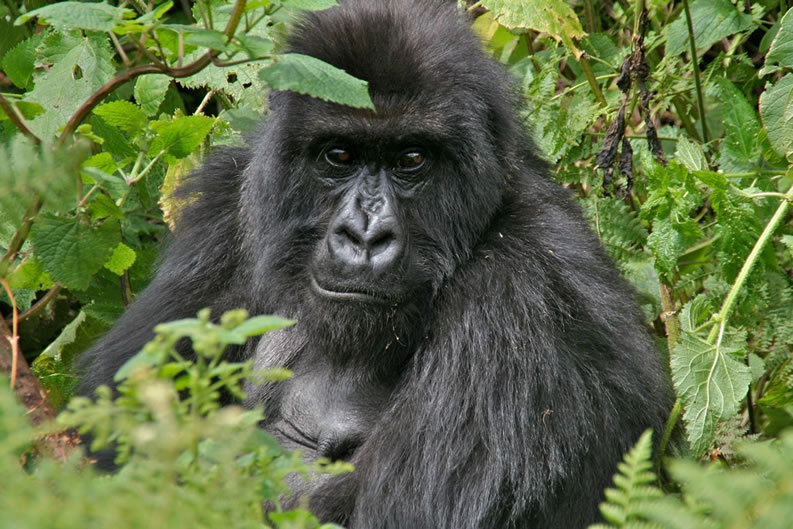
There are very few wildlife encounters in the world that genuinely change you. Gorilla trekking in Bwindi is one of them. on your 9 days Uganda birding and gorilla tour, expect to enjoy close encounters with the gorillas.
Your morning begins early with a briefing at the park headquarters , where you are assigned to a gorilla family group and given the rules that govern you as you trek the gorillas.
The trek itself can last anywhere from one hour to six hours, depending on where the gorilla family has moved during the night. Your group of eight visitors, accompanied by an armed ranger, a lead tracker, and a porter if you choose to hire one, pushes through some of the most dramatic forest terrain you will ever walk. The vegetation can be very dense, the ground is steep and often wet, and the forest interior with its moss-covered trees and cathedral-like canopy feels genuinely ancient and wild.
Then, suddenly, you find them.
A mountain gorilla family in the wild is one of the most extraordinary sights on earth. The silverback the dominant male is almost incomprehensibly large, moving with a kind of relaxed authority that makes you immediately understand why he is in charge. Around him, juveniles play and wrestle, females tend to infants, and adolescents test boundaries with the casual confidence of teenagers everywhere. The social dynamics on display during your hour with the group are rich, complex, and deeply moving.
Many visitors find themselves in tears during the encounter. This is not unusual. Something about seeing these great ape so closely related to us, living out their lives in one of the last intact forests on earth reaches a part of human feeling that is difficult to name and impossible to forget.
Your gorilla permit contributes directly to the conservation of mountain gorillas and to the community programmes that make coexistence between people and gorillas possible. The experience you pay for is, in a very real sense, the experience that keeps gorillas alive.
After trekking, the afternoon is available for a short rest or additional birding in the Buhoma forest trails.
Day 8: Birding in Buhoma
The Buhoma section of Bwindi offers its own excellent birding, distinct from the Ruhija experience .The lower-altitude forest here supports a slightly different community of species, and the park’s main trail network from Buhoma allows you to cover varied habitats riverine corridors, forest interior, and forest edge in a single morning’s walk.
Species regularly encountered in the Buhoma sector include the African Broadbill, Red-faced Woodland Warbler, Dusky Crimsonwing, Kivu Ground Thrush, and the spectacular Great Blue Turaco moving through the high canopy. Sunbirds are particularly diverse here, with Regal, Olive-bellied, and Blue-headed Sunbird all likely.
The afternoon provides time to review your full trip checklist, share photographs, and reflect on one of the most varied and rewarding birding safaris available anywhere in Africa.
Day 9: Return to Entebbe With a Stop at the Equator
This is the end of your 9 day Uganda birding and gorilla tour. After breakfast, you begin the long but scenic drive back toward Entebbe and the airport, with one memorable stop along the way.
The Equator crossing on the Kampala–Masaka highway is one of those travel experiences that sounds trivial and turns out to be genuinely fascinating. A local guide demonstrates the Coriolis effect using basins of water showing how water drains in different directions on either side of the line and you can stand with one foot in the Northern Hemisphere and one in the Southern for the requisite photograph.
From the Equator, the drive continues to Entebbe, where your guide bids you a warm farewell. You depart with a life list that has grown significantly, memories that will not fade quickly, and a legitimate connection to one of the world’s most endangered species.
Tour inclusions
A professional English speaking guide
A comfortable 4×4 safari vehicle
A gorilla permit
Birding fees
A Chimpanzee permits
all activities specified above
Tour exclusions
International fights
Tips and laundry
Any items not specified on the itinerary
personal items like souvenirs