

Planning a Uganda safari and want to complete the Big Five? There is one stop you cannot skip. Ziwa Rhino Sanctuary is the only place in Uganda and one of very few in East Africa where you can track wild white rhinos entirely on foot.
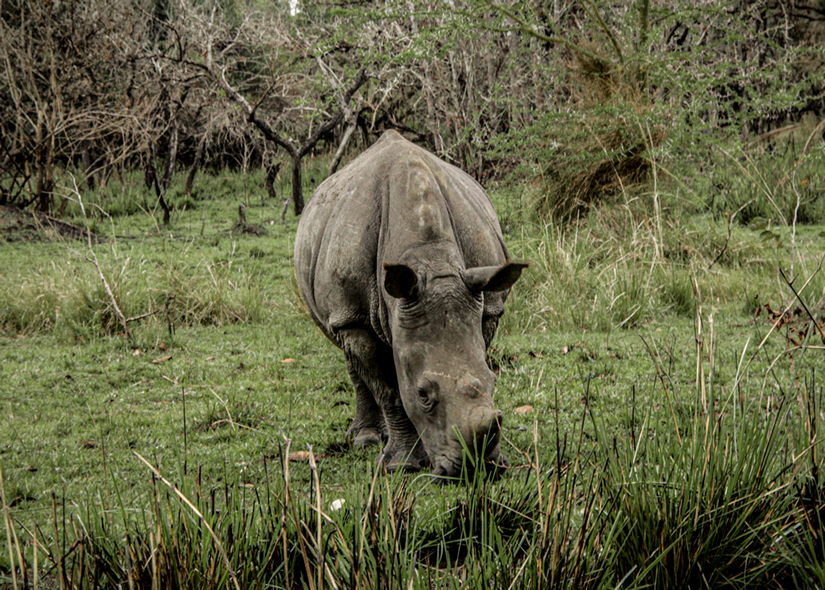
No vehicle. No window between you and the animal. Just open grassland, the sound of the bush, and a two-tonne rhino grazing about ten metres away.
This guide covers everything you need before you go: the history, what activities to expect, 2026 entrance fees, accommodation options, how to get there, and the best time to visit.
What Is Ziwa Rhino Sanctuary?
Ziwa Rhino and Wildlife Ranch commonly known as Ziwa Rhino Sanctuary , is a privately managed conservation area covering roughly 70 square kilometres of savannah, woodland, and swamp in Nakasongola District, northern Uganda.
It sits about 176 kilometres north of Kampala along the Kampala–Gulu Highway, more or less halfway between the capital and Murchison Falls National Park.
A Conservation Mission Born From Crisis
The sanctuary was established in 2005 as a joint project between Rhino Fund Uganda and the Uganda Wildlife Authority, with one clear goal: bring rhinos back to Uganda.
By the early 1980s, civil war, poaching, and habitat loss had wiped out every rhino in the country. Uganda was declared rhino-free by 1983 a quiet tragedy that barely registered outside conservation circles.
From Six Rhinos to Over Thirty-Five
Thereintroduction sparked off with just six southern white rhinos. These rhinos were both from Disney’s Animal Kingdom and four from Kenya. Ever since the population of rhinos increased grown steadily.
The sanctuary has recorded roughly 26 successful births between 2005 and 2025, and today Ziwa is home to over 35 southern white rhinos. Plans are already underway to eventually reintroduce populations into Uganda’s national parks one of the most ambitious wildlife recovery efforts anywhere on the continent.
Why Visit Ziwa Rhino Sanctuary Uganda?
Simple: nowhere else in Uganda can you see wild rhinos. If the Big Five lion, leopard, buffalo, elephant, and rhino) are on your list, Ziwa is the missing piece.
There is also a lot more here than just rhinos. The sanctuary protects over 40 mammal species and more than 350 bird species across a mix of habitats. It is a genuine conservation success story, and your visit directly funds the work keeping those animals alive.
This is the main event. Trained ranger guides take small groups out on foot, reading tracks, droppings, and broken vegetation to find where the rhinos have moved. Once located, you are brought to within seven to ten metres close enough to hear them breathe and watch calves nuzzle their mothers. Your guide will walk you through the history and personality of each individual animal.
Groups are kept small, so it feels nothing like a typical tourist experience.
Best Times for Rhino Tracking
Tracking usually takes one to two hours, depending on where the rhinos have wandered. Early morning (8:00 AM to 10:00 AM) and late afternoon (4:00 PM to 6:00 PM) are the best windows the animals are more active, and the light is far better for photography.
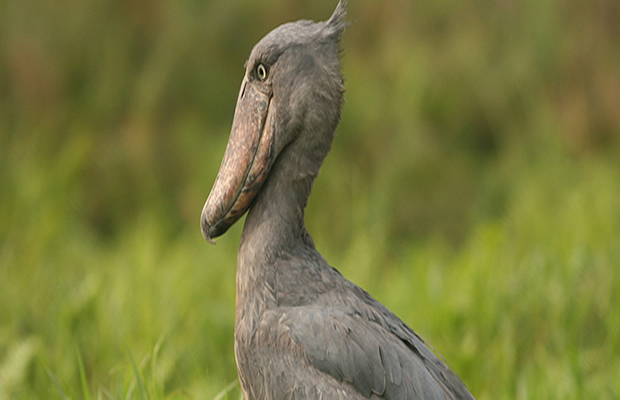
The Lugogo Swamp at the heart of the sanctuary is one of Uganda’s most reliable spots to find the shoebill stork a strange, prehistoric-looking bird with a bill shaped like a wooden clog that has fascinated birdwatchers for generations. A guided canoe ride through the papyrus channels brings you right into its world, quietly and up close.
Bird watching
With over 350 recorded species, Ziwa is worth visiting for birds alone. Watch out for the African fish eagle, Meyer’s parrot, martial eagle, fork-tailed kingfisher, African grey hornbill, Gabar goshawk, and the purple-banded sun bird, among many others. Guided birding walks can be arranged at any time of day.
Nature Walks
Guided nature walks take you through the sanctuary’s varied habitats acacia woodland, open grassland, and valley dams where you have a good chance of encountering Uganda kob, bushbuck, reed buck, warthogs, vervet monkeys, colobus monkeys, and mongooses. These walks are an excellent complement to rhino tracking and give you a broader sense of the ecosystem.
Night Walks
Once the sun drops, the sanctuary still gives a unique activity to take part in, the night walks. They are usually carried out with an armed guide and expect to spot leopards, porcupines, civets, genets, and bush babies and many more. This activity is best enjoyed if you are staying overnight at the sanctuary
Ziwa Rhino Sanctuary Entrance Fees and Rates (2026)
Fees are paid at the gate or through your tour operator. Children under 12 years enjoy a 50% discount on most activities.
Activity | Foreign non-resident | Foreign Resident | Ugandan Citizen |
Rhino Tracking (per person) | USD 50 it covers park entrance | USD 50 it covers park entrance | Ugx 10,000 |
Birding Walk | USD 25 to 30 | USD 25 to 30 | Ugx 20,000 |
Nature Walk | USD 20 | Usd 20 | Ugx 20,000 |
Shoebill Canoe Trip | USD 25 | Usd 20 | Ugx 20,000 |
Note: Fees are reviewed periodically. A USD 100 fine applies on the spot to anyone who deliberately breaks sanctuary rules rangers have full authority to end any activity if safety protocols are not followed.
Best Time to Visit Ziwa Rhino Sanctuary
Ziwa can be visited any time of year. Unlike gorilla trekking, which is heavily seasonal, rhino tracking runs every single day, the rhinos stay within the sanctuary’s fenced perimeter and rangers track their locations around the clock.
Dry Season (December–February and June–September)
The dry months are the most comfortable for walking. Vegetation is shorter and less dense, rhinos are easier to spot, and the ground is dry underfoot. These months also happen to be Uganda’s peak safari season, so expect more visitors.
Wet Season (March–May and October–November)
The wet season brings lush green landscapes and excellent birding as migratory species arrive. Rain in Uganda is rarely all-day showers mostly fall in the afternoon, so morning activities are hardly ever disrupted. If birds are your priority, the wet season actually has the edge.
Visiting hours: The sanctuary opens at 7:30 AM and closes at 7:00 PM. Guests who stay overnight can access activities outside these hours.
How to Get to Ziwa Rhino Sanctuary
The sanctuary is in Nakasongola District, on the Kampala–Gulu Highway, roughly 176 kilometres north of Kampala. Allow about three hours by road.
By Road From Kampala
Take the Northern Bypass onto the Gulu Highway. The sanctuary entrance is clearly signposted on the left side of the road near Nakitoma Village. The entire route is tarmac.
From Murchison Falls National Park
Ziwa sits almost exactly halfway between Kampala and Murchison Falls, making it the natural midway stop on any northern Uganda trip. Many travellers combine both in the same itinerary track rhinos in the morning and arrive at Murchison Falls by early afternoon.
By Public Transport
Buses and minibuses between Kampala and Gulu run regularly and most will drop you at the Ziwa junction. From there, a short boda-boda (motorbike taxi) ride gets you to the gate. This works well for independent budget travellers.
Rules and Safety at Ziwa Rhino Sanctuary
These are wild animals. The rangers know each rhino individually their moods, patterns, and quirks so follow every instruction without hesitation.
Key rules: no bright colours or strong perfume, keep your voice low, never run, and always stay behind your guide. These are not suggestions. They are the reason visits here have such a strong safety record. Deliberately breaking the rules carries a USD 100 fine on the spot.
Ziwa Rhino Sanctuary and the Uganda Big Five
Many travellers set out to complete Uganda’s Big Five. Lions and leopards are found in Queen Elizabeth and Kidepo Valley national parks. Elephants and buffaloes range widely across Murchison Falls, Queen Elizabeth, and the Bwindi area. The rhino, though, exists in the wild in Uganda in exactly one place: Ziwa.
That makes this sanctuary a non-negotiable stop for anyone chasing the Big Five. It fits perfectly into a Murchison Falls itinerary track rhinos on the drive north, and you are inside Murchison by early afternoon.
Accommodation at Ziwa Rhino Sanctuary Uganda
You do not have to rush in and out on a day trip. Staying overnight opens up evening and night walks, early-morning shoebill canoe trips, and the simple pleasure of waking up to birdsong inside a working rhino sanctuary.
Amuka Safari Lodge
The premium on-site option. Set in a small woodland inside the sanctuary, it offers unfenced chalets meaning wildlife can wander freely past your door. There is a restaurant with Ugandan and international food, a swimming pool, a bar, and wide verandas looking out into the bush.
Ziwa Rhino Ranch Guesthouses
Good mid-range rooms at more modest prices. The rooms are clean and comfortable for travellers who want to be right inside the sanctuary without paying lodge prices. Rates run from around USD 20 to USD 50 per person per night, bed and breakfast.
Camping
Budget travellers can camp within the sanctuary grounds for around USD 20 per night. You get access to shared washrooms, hot showers, a cooking area, and 24-hour security. Bring your own tent, sleeping bag, and mosquito repellent.
Frequently Asked Questions
Can you track rhinos on foot at Ziwa? Yes it is the only place in Uganda where you can do so, with trained ranger guides.
How many rhinos are at Ziwa Rhino Sanctuary? Over 35 southern white rhinos as of 2026, up from just six when the programme began in 2005.
How far is Ziwa Rhino Sanctuary from Kampala? About 176 kilometres north roughly a three-hour drive along the Gulu Highway.
Is it safe to visit? Yes. The sanctuary runs 24-hour armed ranger security and all tracking is guided by professionals who know each animal individually.
How long does rhino tracking take? Between one and two hours. Morning and late afternoon slots give you the best chance of seeing the rhinos actively feeding.
Do you need to book in advance? Yes especially during peak season (June–September and December–February). There are many tour operators in Uganda such as gorilla safaris africa that provide this package very well.