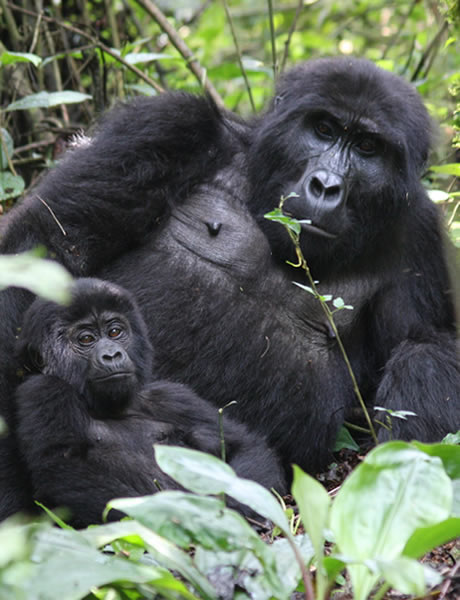
Gorilla Tours Africa: Uganda & Rwanda Gorilla Trekking Safaris
Few wildlife encounters on earth compare to sitting a few meters from a wild mountain gorilla. These gentle giants share roughly 98% of their DNA with humans and live in only a handful of highland forests in Central and East Africa.
There is no zoo, no enclosure, no substitute spending a permitted hour with a habituated gorilla family is one of the most profoundly moving experiences a traveler can have.Whether this is your first African safari or you’re adding gorilla trekking to a longer wildlife itinerary, here’s what you need to know before you book in 2026.
Why Gorilla Trekking Is in a Class of Its Own
Mountain gorillas (Gorilla beringei beringei) cannot survive in captivity. The only way to see them is to travel to the mist-covered forests of Uganda, Rwanda, or (in limited circumstances) the Democratic Republic of Congo. That exclusivity, combined with the intimacy of the encounter a strictly capped hour, just meters from a gorilla family is what makes the experience irreplaceable.
Travelers who have climbed Kilimanjaro, floated over the Serengeti in a hot-air balloon, or dived the Great Barrier Reef routinely describe gorilla trekking as the single greatest wildlife moment of their lives. Beyond the gorillas themselves, the region’s safari circuits offer extraordinary add-ons: chimpanzee trekking, golden monkey tracking, big-five game drives, Nile and lake boat safaris, and cultural visits with communities that have lived alongside these forests for generations.
Where to Go: The Three Gorilla Destinations.
Uganda Bwindi Impenetrable Forest & Mgahinga Gorilla National Park
Uganda holds just over half of the world’s remaining mountain gorilla population, making it the single most important gorilla country on earth. Bwindi Impenetrable National Park, a UNESCO World Heritage Site, protects dozens of habituated gorilla families spread across four trekking sectors Buhoma, Ruhija, Rushaga, and Nkuringo more than anywhere else in Africa.
Trekking in Bwindi is widely considered the most authentic wilderness experience of the three destinations: the terrain is steep, the forest is dense, and encounters feel genuinely wild. Treks can run anywhere from two hours to a full day depending on where a family has moved that morning.
Mgahinga Gorilla National Park, in Uganda’s southwestern corner, is smaller but equally compelling. Only one family the Nyakagezi group is habituated there, but the park also offers golden monkey trekking, volcanic hikes, and Batwa cultural experiences.
A discounted low-season rates now apply in April, May, and November though these dates are fixed and non-reschedulable once booked. For a deeper encounter, the Gorilla Habituation Experience, which allows up to four hours with a semi-habituated family in the Rushaga will allow you for an extended experience with the Gorillas.
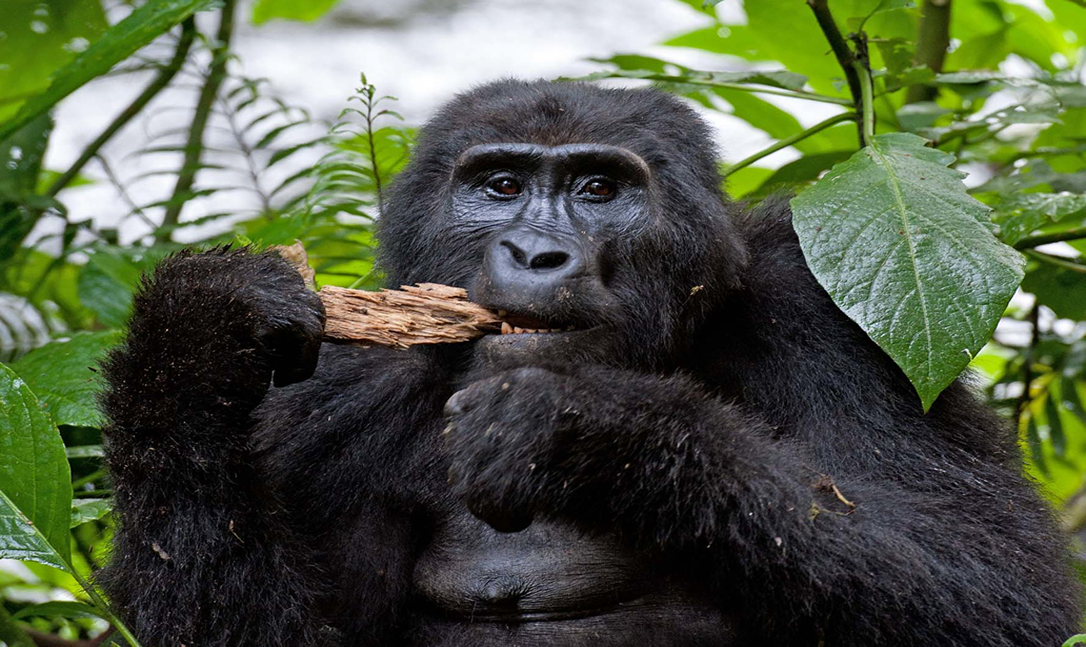
Rwanda ( Volcanoes National Park)
Rwanda remains the premium gorilla destination. Volcanoes National Park sits at the heart of the Virunga massif and offers the most logistically straightforward experience of the three countries: Kigali’s airport is roughly two to three hours away, and the country’s tourism infrastructure is excellent.
Rwandan gorilla families often live at somewhat lower elevations than some Bwindi groups, so treks average two to four hours round-trip on generally better-maintained trails. The country also offers the Gorilla Guardians Village cultural experience and visits to the Dian Fossey Research Centre for travelers who want to go deeper into the conservation story.
2026 pricing: The standard Rwanda permit remains USD 1,500 per person for international visitors. Discounted rates apply for Africans (around USD 500) and East African Community citizens (around USD 200), but these promotional rates do not apply during the June–October peak season, when everyone pays the standard rate.
Rwanda is the strongest choice for travelers pairing gorillas with a luxury lodge stay, a short trip window, or an onward connection to the Serengeti or Zanzibar.
How to Get a Gorilla Permit
Permits are the single most important booking item on any gorilla safari limited, in high demand, and best secured well in advance, ideally three to six months ahead for peak season (June–September and December–February).
- Uganda: Issued by the Uganda Wildlife Authority (UWA), USD 800 per person per trek (USD 600 in low season).
- Rwanda: Issued by the Rwanda Development Board (RDB), USD 1,500 per person.
- DRC (Kahuzi-Biega): Issued by the Institut Congolais pour la Conservation de la Nature (ICCN), roughly USD 200–400 per person.
Each permit grants one hour with a habituated gorilla family, accompanied by a ranger guide, in a group capped at eight visitors. This limit protects the gorillas from disease transmission and behavioral disruption. Booking through an experienced tour operator remains the easiest route they handle permit purchase, availability checks, and the logistics that follow.
Best Time to Go
Gorilla trekking is possible year-round, but the season affects trail conditions and difficulty.
Dry seasons (June–September and December–February) are the most popular: trails are firmer, forest paths are less slippery, and mornings often start clear. These are also peak photography months and, notably, the months when discounted permits are unavailable in both Uganda and Rwanda.
Wet seasons (March–May and October–November) bring lush, intensely green forests and far fewer visitors. Permits are easier to secure, lodge rates drop, and this is when Uganda’s low-season permit discount applies. Trails become muddier and more physically demanding, but many experienced travelers consider this the most atmospheric time to trek.
There is genuinely no bad time to go every month offers its own trade-offs.
What to Expect on a Gorilla Trek
Morning briefing: You arrive at park headquarters early for a briefing. Rangers assign each group of eight to a gorilla family based on fitness and experience. The briefing covers gorilla behavior, health protocols, and what to do if a gorilla charges. In 2026, parks enforce a strict 10-meter distance buffer to reduce the risk of respiratory illness passing between humans and gorillas.
The hike: Trackers who have been out since dawn locate the family, and your group sets off with an armed ranger. Treks last anywhere from 30 minutes to several hours depending on the terrain and where the gorillas have moved. Hiring a porter at the trailhead is inexpensive, supports local employment, and is well worth it on steep or muddy days.
The encounter: When trackers signal the family has been found, time seems to slow down. Silverbacks lounge, juveniles play-wrestle, and mothers nurse infants just meters away. The permitted hour passes in what feels like minutes.
After the trek: A certificate presentation follows at the trailhead, and most operators arrange a hot lunch, cultural visit, or afternoon activity before the next leg of the trip.
What to Pack
- Sturdy, broken-in waterproof hiking boots
- Long-sleeved shirt and long trousers (protection against stinging nettles and insects)
- Waterproof jacket or poncho
- Gardening gloves for gripping vegetation on steep slopes
- Gaiters for muddy conditions
- High-energy snacks and at least 2 liters of water
- A camera with a fast lens forest light levels are low
- Neutral, earthy colors (camouflage patterns are prohibited in some areas)
Combining Gorilla Trekking with a Broader Safari
Most travelers pair gorilla trekking with at least one other experience. Popular combinations include:
- Uganda gorillas + Queen Elizabeth National Park for tree-climbing lions and boat safaris on the Kazinga Channel
- Rwanda gorillas + Akagera National Park for big-five game drives and Lake Ihema boat trips
- Uganda gorillas + Kenya’s Masai Mara for the Great Wildebeest Migration (July–October)
- Rwanda gorillas + Tanzania’s Serengeti and Ngorongoro Crater for a classic East African circuit
- Bwindi gorillas + Kibale Forest chimpanzee trekking for a complete primate safari in Uganda
A well-designed 10–14-day itinerary can comfortably combine gorilla trekking with savanna wildlife, cultural experiences, and a beach finale on Zanzibar or the Kenyan coast.
Permit prices, seasonal discounts, and park access rules change; always confirm current rates and security guidance directly with UWA, RDB, or a licensed specialist operator before booking.
Uganda 2026: The standard gorilla permit rate applies, with a discounted rate available during the low season (April, May, November). Note the new rule taking effect in March 2026 requiring full payment upfront with no hold option, a stricter 10-meter distance buffer now in place, and a shift to sector-based booking rather than family-specific booking.
Rwanda 2026: The standard permit rate is confirmed, with discounted African/EAC resident rates available though these discounts don’t apply during the June–October peak season blackout.
Important correction on DRC: Virunga National Park has actually been closed to tourism since March 2020 due to security concerns it is not the open-for-business destination the original draft implied.
The realistic current option is lowland gorilla trekking at Kahuzi-Biega, which involves a different species and a different experience entirely. I’m flagging this clearly since it materially affects trip planning.
Safari Packages – Rwanda and Uganda
- 1 Day Rwanda Gorilla Trek
- 2 Days Rwanda Gorilla safaris
- 3 Days Gorillas & Golden Monkeys
- 4 Days Uganda Gorilla Trekking
- 5 Days Uganda Gorillas & Wildlife
- 5 Days Uganda Luxury Safari
Democratic Republic of Congo — an important update
Older guides often list Virunga National Park in eastern DRC as the budget gorilla option, historically priced around USD 400. This needs an important correction: Virunga has been closed to tourism since March 2020, initially due to COVID-19 and subsequently due to ongoing regional security concerns that show no sign of resolving in the near term.
Travelers should not plan a trip around Virunga gorilla trekking without first confirming its status directly with a specialist operator, as conditions can change with little notice.
It is currently possible to track eastern lowland gorillas (not mountain gorillas) at Kahuzi-Biega National Park, near Bukavu, at a lower cost of roughly USD 200–400 per person. This is a genuinely different species and experience from mountain gorilla trekking in Uganda or Rwanda, and it still requires careful, up-to-date security research and a Congo-specialist operator. For most travelers in 2026, the DRC is best treated as a niche add-on for experienced Africa hands rather than a default budget alternative to Uganda or Rwanda.