
Ntambara Gorilla Family:
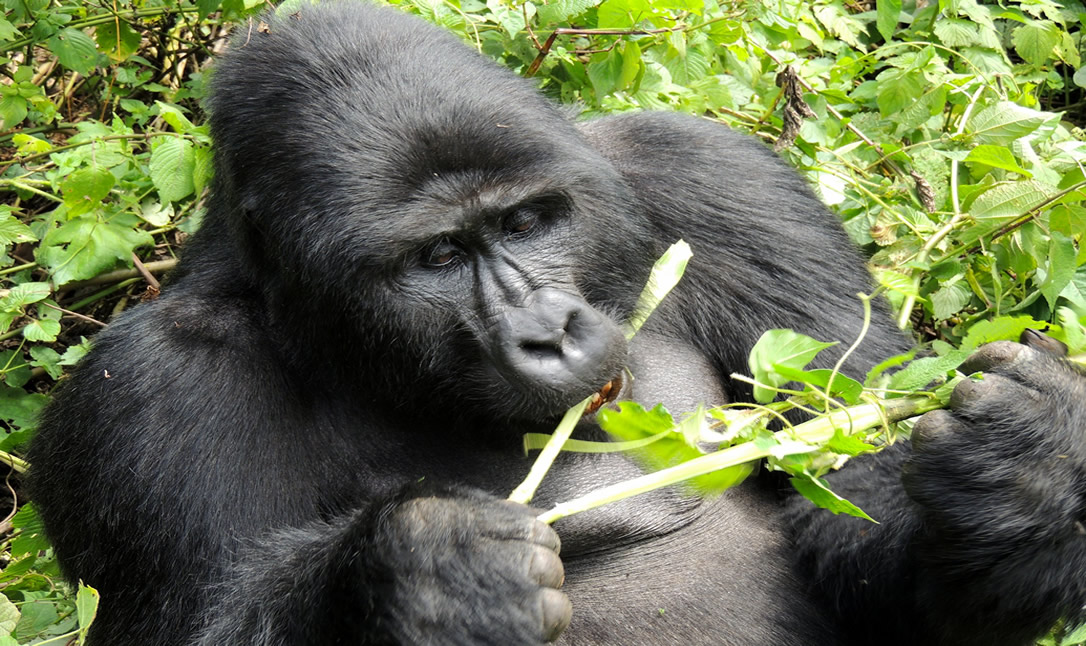
There is a moment, somewhere deep inside Volcanoes National Park, when the forest goes quiet in a way that feels deliberate. The birds stop mid-song. The undergrowth shifts. And then, through a break in the bamboo, you see him a silverback, broad-shouldered and ancient-looking, watching you with the calm authority of someone who has never once needed to prove himself. That silverback, today, is Twibuke.
And the family gathered around him is the Ntambara gorilla group one of the most compelling, historically rich, and emotionally rewarding families you can track anywhere in Africa.
If you are planning a gorilla safari in Rwanda and wondering which family to request, this guide covers everything you need to know about the Ntambara gorilla family their story, their dynamics, how to track them, what to expect on the trail, and how to book your permit.
Who Are the Ntambara Gorilla Family?
The Ntambara gorilla family takes its name from its founding silverback, Ntambara, a dominant male who led the group during its early years in Volcanoes National Park. After Ntambara’s death, leadership passed to his brother, Ugutsinda. When Ugutsinda also died, the group faced the kind of transition that often fractures gorilla families — but the Ntambara group held together. A young silverback named Twibuke, just 17 years old at the time and described by rangers as seemingly unbothered by the weight of responsibility, stepped into the role.
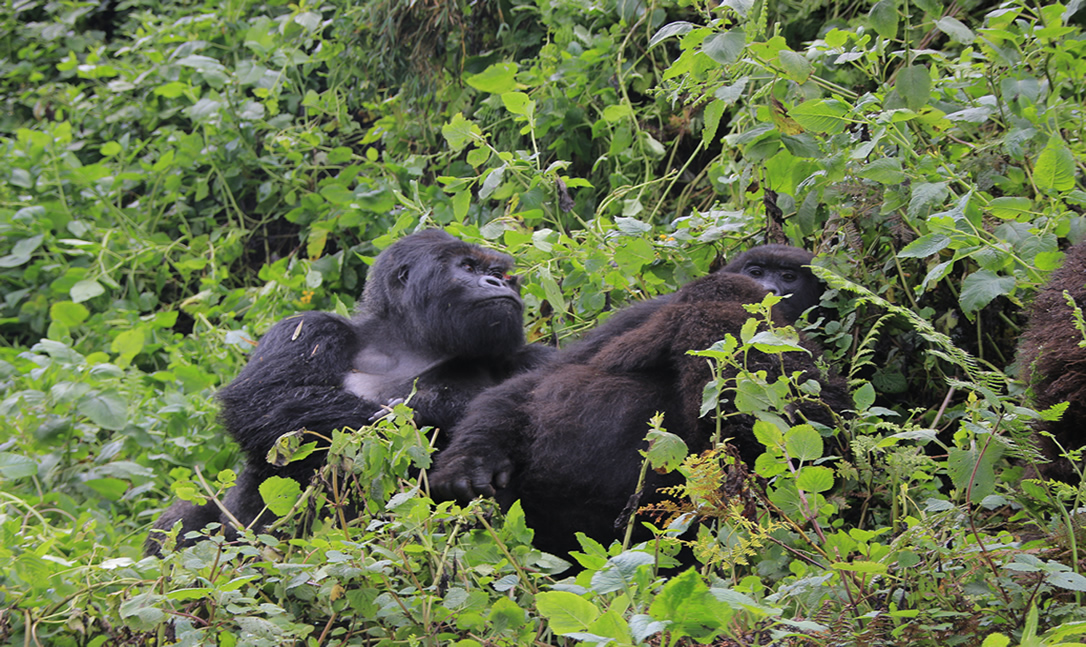
What looked like reluctance turned out to be confidence. Under Twibuke’s leadership, the Ntambara family has grown and stabilised. The group currently numbers around 14 members, including 3 silverbacks, multiple adult females, and at least 4 infants and juveniles. The presence of multiple silverbacks within a single stable family is unusual and speaks to the social cohesion that defines this group.
The Ntambara family is habituated meaning they have been carefully acclimatised to the presence of human observers over a period of years and they are now open to tourists as part of Rwanda’s official gorilla tracking programme.
The Ntambara Family’s Most Remarkable Trait: A Peaceful Friendship
Of all the facts that researchers and rangers share about the Ntambara gorilla family, none draws more genuine surprise than this: they have developed a rare, peaceful relationship with a neighboring gorilla group called the Umubano family.
In the wild, encounters between separate gorilla families are almost never calm. Silverbacks display, charge, and sometimes fight to protect their females and territory. Two groups meeting in the forest is usually a tense, high-stakes event.
The Ntambara and Umubano families are different. When they meet which happens occasionally as they move through overlapping ranges the interaction is peaceful. The females socialise.
The infants play together. The silverbacks coexist without aggression. Rangers who have witnessed these meetings describe them as genuinely unusual, a sign that the individuals in both groups likely grew up in proximity or share a social history that makes trust possible.
For travellers, there is a small but real chance that a tracking day with the Ntambara family could include witnessing one of these inter-group encounters an event that professional wildlife researchers would consider a career highlight.
Where to Find the Ntambara Gorilla Family
The Ntambara gorilla family lives within Volcanoes National Park in northwestern Rwanda, a compact but spectacularly beautiful protected area that sits at the foot of a chain of dormant volcanoes straddling the borders of Rwanda, Uganda, and the Democratic Republic of Congo. The park covers approximately 160 square kilometres and rises through bamboo zones, hagenia woodland, and high-altitude meadows before reaching the volcanic peaks above.
Gorilla trekking for the Ntambara family, like all families in the park, begins at the Volcanoes National Park headquarters in Kinigi, near the town of Musanze (also known as Ruhengeri).
Travellers gather here by 7:00 AM for a briefing before being assigned to their family group and heading into the forest with rangers and trackers.
The distance and difficulty of the trek to find the Ntambara group varies from day to day because mountain gorillas are wild animals that move continuously following food sources, resting spots, and the mood of the silverback. Professional trackers go ahead each morning to locate the family before tourists depart, which means you are never searching blindly. The actual trek can last anywhere from one hour to five or more, depending on where the gorillas have settled.
The terrain inside Volcanoes National Park is challenging in the most rewarding sense. Slopes are steep, vegetation is dense, and the altitude which ranges from around 2,400 to over 4,000 metres means the air is noticeably thin. Moderate physical fitness is genuinely required. Porters are available for hire at the park headquarters and are strongly recommended; they will carry your bag and can physically assist you on steep sections.
The Gorilla Permit: What It Costs and How to Book
Tracking the Ntambara gorilla family requires a valid gorilla trekking permit issued through booking with a trust worthy tour operator who will purchase them from the Rwanda Development Board (RDB).
Cost in 2026: USD 1,500 per person for international tourists. East African citizens pay USD 200, and foreign residents of Rwanda or other African nationals pay USD 500.
There is also a discounted permit rate of USD 1,050 available for travellers who combine their gorilla with visits to other Rwandan parks Nyungwe Forest National Park or Akagera National Park during the low season months of November through May.
What the permit includes: Park entry, ranger-guided tracking, and your one hour with the gorilla family.
Daily limits: Only 8 permits are issued per gorilla family per day across the park’s habituated families, keeping group sizes intimate and minimising disturbance to the gorillas.
How to book: Permits can be booked directly through booking with a reliable tour operator like gorilla safaris africa. We have expertise in handling permit logistics alongside your broader safari logistics. Because availability is genuinely limited and demand from travellers worldwide is high, booking 3 to 6 months in advance is strongly recommended for 2026 visits.
You cannot request a specific gorilla family in advance. Family assignments are made on the morning of your trek based on group fitness, logistics, and ranger assessment. However, if you clearly want to trek only the Ntambara family, we recommend prior, communication with your tour operator when booking they can sometimes accommodate preferences when liaising with park authorities.
What to Expect on the Day of Your Trek
The morning briefing at Kinigi is where your day truly begins. Park rangers explain gorilla tracking rules: maintain a minimum distance of seven metres from the gorillas at all times, do not eat or drink in the gorillas’ presence, do not use flash photography, and follow ranger instructions without question. These rules exist to protect both the gorillas and you.
The hike begins immediately after the briefing. Depending on where the Ntambara family has moved, you may enter the forest through farmland borders, push through dense bamboo thickets, or scramble up volcanic slopes covered in nettles and old-growth trees. The environment changes quickly as you gain altitude, and the forest sounds hornbills, colobus monkeys, the crack of branches create an atmosphere that few travel experiences can match.
Finding the family is the moment everything changes. Rangers signal when the gorillas are close. You slow down, crouch slightly, avoid direct eye contact with the silverback, and move into position. What unfolds over the next hour is difficult to describe adequately in words. Infants tumble over each other in play. Females sit with newborns pressed to their chests. The silverback Twibuke moves with slow authority, glancing at the group of watching humans with something that reads, unmistakably, as indifference earned through absolute confidence.
Photography is permitted and encouraged, though flash is strictly prohibited. A camera with a good lens in the 70–200mm range will serve you well, as will a wide-angle lens for the moments when gorillas wander close. Phones produce surprisingly good results in the filtered forest light.
The one-hour limit is enforced strictly. It feels short. Almost every traveller who has done this says the same thing: they were not ready to leave.
Best Time to Track the Ntambara Gorilla Family
Gorilla tracking in Volcanoes National Park is possible year-round, but conditions vary significantly by season.
June to September is the long dry season and considered the best overall period for trekking. Trails are drier, visibility through vegetation is better, and the weather is more predictable. This is also the busiest period, so permits book out earliest plan accordingly.
December to February is the short dry season and offers excellent conditions that are often overlooked by travellers. Fewer visitors compete for the same permits, and the park is lush and beautiful after the previous rains.
March to May and October to November are the wet seasons. Rain makes trails slippery and muddy, and the extra cloud cover can make photography more difficult. That said, the park is dramatically beautiful in wet weather, and travellers who are comfortable in rain sometimes prefer the solitude and the saturated green of the forest. Permits are easier to secure during these months, and the discounted rate of USD 1,050 applies in the longer wet season.
What to Pack for Your Gorilla Trek
Packing for the Ntambara gorilla trek is straightforward, but getting it right makes the difference between a comfortable experience and a miserable one.
- Hiking boots waterproof, ankle-supporting, and already broken in before your trip. New boots on volcanic terrain is a painful mistake.
- Long trousers and long-sleeved shirt The thick fabric protects against nettles, thorns, and the cold at altitude.
- Lightweight waterproof jacket: The forest creates its own weather, and even on dry days, you will encounter moisture.
- Gardening or work gloves Very essential for grabbing vegetation on steep sections and protecting hands from nettles.
- Insect repellent You can apply before entering the forest to protect your skin from insect bites.
- Small daypack: Please carry water, snacks, sunscreen, and your camera. Porters can take larger bags.
- Camera gear: The camera should have no flash, good low-light capability preferred.
- Cash in USD This money will be used to pay after you hire porter at the trailhead (around USD 15–20, plus a tip).
Getting to Volcanoes National Park
Volcanoes National Park is approximately 90 kilometres from Kigali, Rwanda’s capital city, and the drive takes around two to two and a half hours by road. Most travellers fly into Kigali International Airport, spend a night in the city, and then drive to Musanze the morning before their trek.
Domestic flights from Kigali to Musanze are available and reduce the road journey significantly. Most tour operators include road transfers as part of their safari packages, and this is the simplest option for most travellers.
Accommodation around the park ranges from budget guesthouses in Musanze town to mid-range lodges a short drive from the park headquarters, and a handful of luxury lodges — some of the most celebrated in Africa positioned directly on the park boundary with views of the volcanoes.
Conservation and What Your Permit Fee Supports
Mountain gorillas are one of only two great ape species to have increased in population in recent decades, rising from roughly 620 individuals in 2008 to approximately 1,063 recorded in the most recent census. This recovery did not happen by accident. It is the direct result of intensive conservation effort funded substantially by gorilla tourism revenue.
Every USD 1,500 permit fee contributes to anti-poaching ranger patrols, veterinary care for gorilla groups, community development programmes in villages surrounding the park, and the operational costs of the Rwanda Development Board’s wildlife management. When you track the Ntambara family, you are not simply watching gorillas. You are actively funding the conditions under which they continue to exist.
Final Thoughts
The Ntambara gorilla family is not just a wildlife attraction. They are a living social unit with a history a founder who gave them their name, two silverbacks who led and died, a young leader who stepped into responsibility and grew into it, and a network of relationships with neighboring gorillas that challenge what we think we know about primate behaviour.
Spending one hour with them in the forest of Volcanoes National Park is, by almost universal account, one of the most affecting experiences available to any traveller anywhere on earth. Plan carefully, book early, pack right, and go.
Company
Gorilla Safaris Africa is one of the leading experts to trust while you are seeking for unforgettable and gorillas safaris with in Africa.
Features
Most Recent Posts
- All Post
- Combined Safaris
- East Africa
- Gorillas
- Luxury Safaris
- Primates Safaris
- Wildlife