
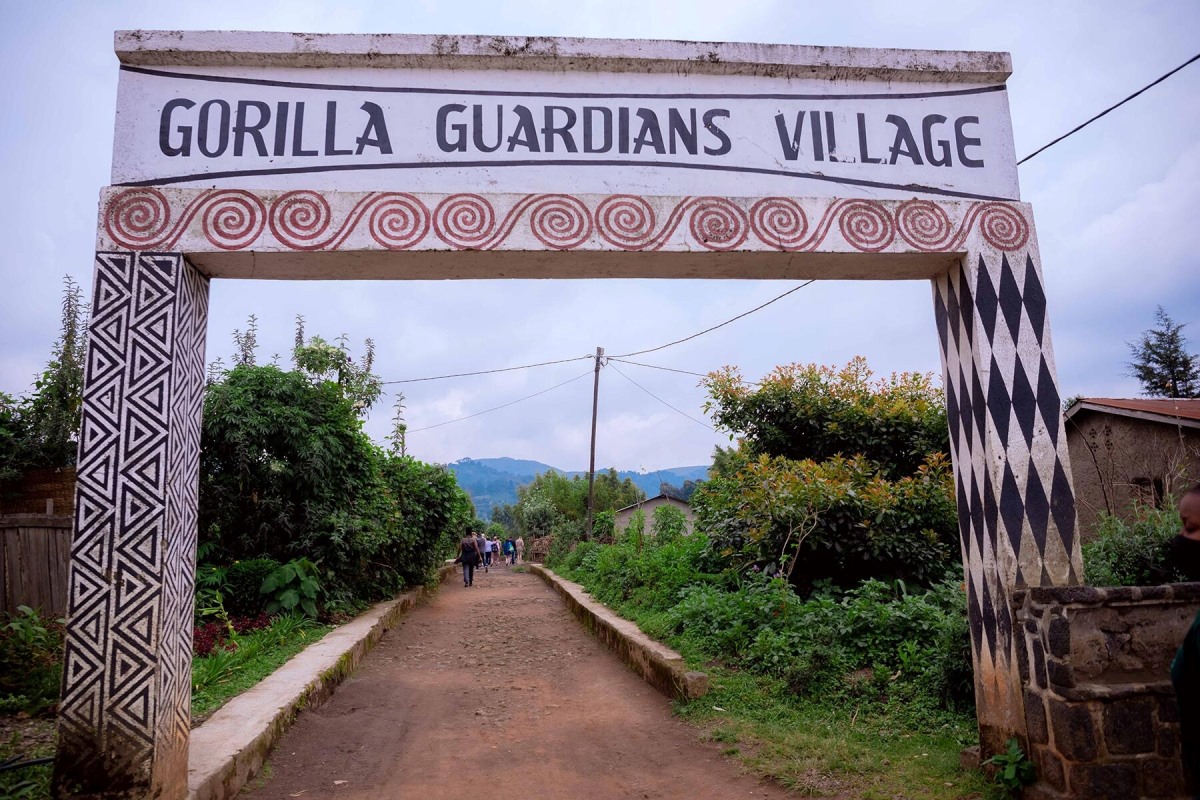
Gorilla Guardians Village
Gorilla Guardians Village:There is a moment, somewhere between watching an ex-poacher carve a wooden gorilla by firelight and listening to a former tracker sing traditional songs about the forest, when the full weight of what Rwanda has achieved in conservation hits you.
nestled at the base of the Virunga volcanoes just minutes from the entrance to Volcanoes National Park lies the gorilla guardian village. It’s not a museum, not a performance, and not a tourist trap dressed up as culture. It is something genuinely rare in African wildlife tourism: a community-led experience that tells the real, complicated, and ultimately triumphant story of how people and mountain gorillas learned to coexist.
For any visitor to Volcanoes National Park, it is the single most important cultural stop you will make.
What Is the Gorilla Guardians Village?
The Gorilla Guardians Village refers to a to community tourism initiative that brought up together remarkable groups of people such as former poachers who once hunted in the Virunga forests, ex-trappers who set snares that maimed or killed gorillas, reformed charcoal burners who once stripped the park’s edges bare, and the rangers and trackers who turned them around.
Together, these men and women, many of whom spent years on opposite sides of a conservation conflict now work as custodians of the very ecosystem they once threatened.
The village operates on a simple but powerful premise. Tourism revenue flows directly to the community. The people who tell the stories own the experience. And the gorilla, which was once a source of conflict and danger, has become the economic engine lifting the entire community out of poverty.
Every visit contributes to livelihoods, to children’s school fees, to healthcare, and to ongoing conservation work in the buffer zones between human settlement and park boundaries. This is not charitable tourism. It is a functioning economic model that makes gorilla protection the most rational choice for every family involved.
The Experiences
Meeting the Former Poachers
The centrepiece of the Gorilla Guardians Village experience is the opportunity to sit with men who once poached in the Virunga forests and hear their stories without sanitisation.
These are not rehearsed confessions designed to make visitors feel good. They are honest accounts of poverty, necessity, and the gradual realisation often through the work of conservation organisations like the Dian Fossey Gorilla Fund and the Rwanda Development Board that the gorilla alive was worth infinitely more than the gorilla dead or captured.
Former poachers speak through guides and interpreters about the snares they set, the animals they lost, the forest they damaged, and the turning points that brought them to where they sit today: proud, employed, and fiercely protective of the animals they once hunted. It is one of the most disarming conversations you will have in Rwanda, and one of the most memorable of any wildlife journey in Africa.
Traditional Dance and Music
The village comes alive with performance but performance rooted in genuine cultural tradition. Intore dancers in full regalia, the men with elaborate headdresses of white colobus monkey hair, perform the warrior dances that have defined Rwandan ceremony for centuries. Drummers build rhythms that seem to come up through the ground. Women sing in harmonies that carry across the volcanic hillside.
Visitors are not merely spectators here. The dancers pull you in, teach you steps, laugh when you get them wrong, and celebrate when you eventually find the rhythm. It is participatory, warm, and completely unselfconscious nothing like the stilted cultural demonstrations common at tourist-facing venues elsewhere.
Craft Demonstrations and the Village Market
Local artisans demonstrate traditional crafts with deep roots in Rwandan culture. Basket weavers work with patterns and techniques passed down through generations, each design carrying meaning fertility, protection, community, harvest. Wood carvers shape gorilla figures and forest animals from sustainable timber, tools moving with a confidence that comes from decades of practice. Potters work clay into forms that blend traditional shape with contemporary design.
The village market gives visitors the opportunity to purchase directly from the artisans not from a middleman, not from a souvenir shop in Kigali. The prices are fair and the quality of work consistently high. A hand-woven Rwandan basket purchased here will outlast almost anything else you bring home from the continent.
The Forest Walk and Garden Tour
Beyond the cultural encounters, the village offers a guided walk through the agricultural landscape that borders the park the fragile interface between human activity and protected wilderness.
Guides explain how families grow crops, manage livestock, and navigate the ever-present challenge of sharing land with animals that occasionally cross the park boundary. You see the buffer zones where native trees are being replanted, the beehive fences that deter elephants without harming them, and the small but consequential ways in which conservation and farming have been made to work side by side.
It is grounding after the intense emotion of a gorilla trek a chance to understand that protecting mountain gorillas is not an abstract conservation goal but a daily negotiation between people, land, and wildlife.
Cultural Meals and Local Cuisine
Many visits include a communal meal prepared by village women using ingredients grown in the surrounding gardens. Expect isombe (cassava leaves with dried fish), ugali, roasted sweet potatoes, bean stews, and fresh fruits.
The food is simple, honest, and deeply satisfying after a morning on the mountain. Eating together in this context with the volcanoes above you and the stories of the morning still fresh turns a meal into something closer to ceremony.
Best Time to Visit
The Gorilla Guardians Village is open year-round and functions beautifully in every season, making it easier to time than the gorilla trek itself.
The dry seasons ( June to September and December to February ) are the most comfortable for the outdoor elements of the visit. The courtyard spaces where dance performances take place are at their best in dry weather, the forest walk is more pleasant on firm ground, and the mountain views that frame the village are clearest in the dry months, particularly early morning.
The wet seasons ( March to May and October to November) bring rain that can interrupt outdoor performances and make the village paths slippery, but they also thin the crowds significantly. If you are visiting during the wet season, simply bring a rain jacket and embrace the atmosphere. The cultural experiences themselves are entirely unaffected by weather, and the artisans are almost always available for longer, more relaxed conversations when the village is quieter.
The ideal pairing and the one most guides recommend is to do the gorilla trek in the morning and visit the Gorilla Guardians Village in the afternoon of the same day. The emotional arc is perfect: the extraordinary encounter with the gorillas in the forest followed by the human story of how those gorillas came to be protected. Together, the two experiences form a complete picture of conservation in Rwanda that neither delivers alone.
Advance booking is strongly recommended, particularly in peak season. The village can accommodate groups of varying sizes but benefits from notice, especially for cultural meals and organised dance performances. speak to your tour operator in time.
What youneed to do?
The village is located in the Kinigi area, approximately five minutes by vehicle from the park headquarters where gorilla treks depart. Entry fees are modest and go directly to the community trust. Guides are provided and speak English, French, and Kinyarwanda. Photography is warmly welcomed throughout the visit the artisans, dancers, and community members are accustomed to cameras and almost universally at ease in front of them.
Tip generously. The guides and performers at the Gorilla Guardians Village are skilled professionals whose livelihoods depend on tourism revenue. A tip of $10–15 per person for a full afternoon visit is appropriate and genuinely appreciated.
Why It Matters
Rwanda’s gorilla conservation success is often told through statistics population growth, permit revenue, anti-poaching results. The Gorilla Guardians Village tells it through faces. Through the former poacher who now leads school groups through the forest. Through the artisan who feeds her children from basket-weaving income. Through the dancer who learned his steps from his grandfather and will teach them to his son.
This is conservation at its most human, and it is the experience that makes everything else about a visit to Volcanoes National Park make sense.
Company
Gorilla Safaris Africa is one of the leading experts to trust while you are seeking for unforgettable and gorillas safaris with in Africa.
Features
Most Recent Posts
- All Post
- Combined Safaris
- East Africa
- Gorillas
- Luxury Safaris
- Primates Safaris
- Wildlife