

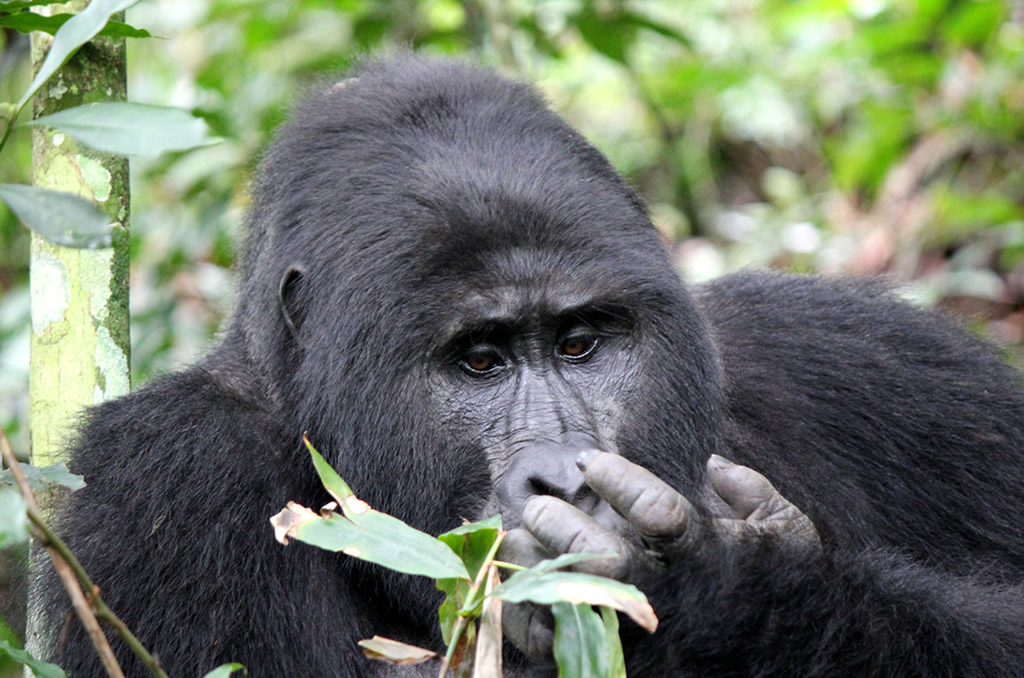
Best gorilla families to visit in Bwindi Impenetrable forest 2026 complete guide. Every year, thousands of travelers fly into Entebbe, make the long road journey southwest through Uganda’s rolling hills, and step into the ancient forest of Bwindi with one goal: to sit in silence, just a few meters from a mountain gorilla, and feel what it means to share this planet with another species so close to our own.
But here is what most booking sites never tell you not all gorilla experiences in Bwindi are the same. The gorilla family you are assigned to, or the one you specifically request, shapes everything about your trek. The difficulty of the hike.
The time you spend in the forest. The age mix of the gorillas you encounter. Whether you sit with a massive silverback ruling a family of thirty, or crouch quietly beside a newly habituated group of eight where the gorillas still show curiosity at the sight of humans.
This guide breaks down best gorilla families to visit in Bwindi impenetrable forestevery one , sorted by sector. If you are planning a gorilla safari in Uganda, this is the information that will help you choose wisely.
Understanding Bwindi’s Four Trekking Sectors
Bwindi Impenetrable National Park covers 321 square kilometres of montane rain forest in southwestern Uganda, straddling the border with the Democratic Republic of Congo. This park is a home to four main trekking sectors, with each baring its own set of habituated gorilla families, trail paths , and lodge options.
Buhoma: The original sector, in the north. The oldest trekking infrastructure, well-worn trails, and easy access from Kampala via Kabale.
Ruhija: In the northeast, at higher altitude. Cooler temperatures and some of the most challenging terrain in the park.
Rushaga: In the south, the largest sector with the most gorilla families and the only place offering gorilla habituation experiences.
Nkuringo : Also in the south, perched on a ridge above the forest with a famously steep descent to the gorillas.
Uganda Wildlife Authority (UWA) issues permits per sector, so knowing which family lives where determines where you need to be.
Mubare Group
One of the best gorilla families to visit in Bwindi impenetrable forest is Mubare. Mubare holds the distinction of being Uganda’s first habituated gorilla group, completing habituation in 1993. This historical weight alone makes visiting them a special experience these gorillas have been observed by researchers and tourists longer than any other group in the country.
The group has fluctuated in size over the decades, affected by illness and natural dispersal, and currently ranges between 6 and 10 members. Because of its smaller size, treks to Mubare feel intimate. You will not be overwhelmed by movement and noise; instead, you get quiet, close observation.
Best for: First-time trekkers and those who prefer a less physically demanding approach trail.
Trek difficulty: Moderate.
Habinyanja group
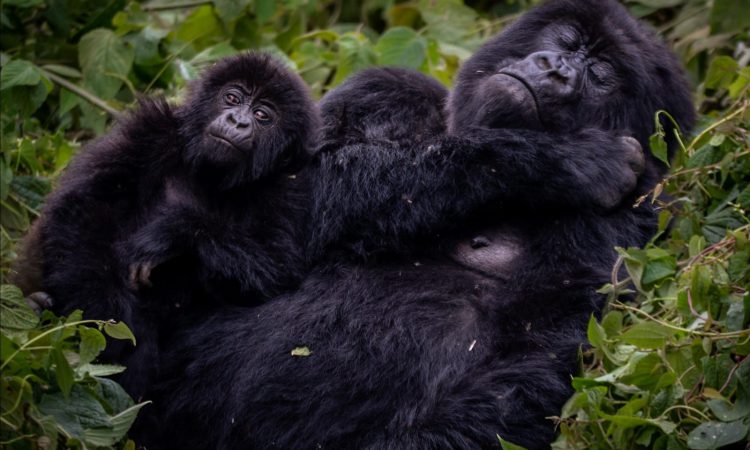
This is one of the best gorilla families to visit in Bwindi Impenetrable forest Habinyanja. It was habituated in 1997 and has grown steadily into one of Bwindi’s more sizable families with around 17 members. The group is led by a commanding silverback, and encounters frequently include young gorillas playing, juveniles testing boundaries, and blackbacks navigating the complex social hierarchy beneath the dominant male.
What makes Habinyanja memorable for many visitors is the sheer behavioral richness of a mid-to-large group. Foraging, grooming, mock charges, infant nursing the chances of witnessing multiple gorilla behaviours in your one-hour visit are higher than with smaller groups.
Best for: Wildlife enthusiasts who want to observe complex gorilla social dynamics.
Trek difficulty: Moderate to challenging depending on daily gorilla movement.
Rushegura Group
Rushegura split from Habinyanja and has developed into a stable, well-observed group of around 16 members. One characteristic that trekkers consistently mention is that Rushegura tends to spend time closer to the park boundaries and forest edges, which can translate into slightly shorter hiking times on some days.
The group has a relaxed temperament that rangers and guides describe as consistently calm around visitors, making it a strong choice for families with older children (the minimum age for gorilla trekking is 15 years) and for travelers who are cautious about the physical demands of the trek.
Best for: Families, older travelers, and those on tighter trekking time.
Trek difficulty: Moderate.
Bitukura Group
Bitukura is one of the most talked-about families in Bwindi for a simple reason it has multiple silverbacks living within the same group. Most gorilla families are led by a single dominant silverback, but Bitukura’s structure is more complex, with several adult males maintaining an unusual level of tolerance for one another.
For researchers this is fascinating; for visitors it means there is almost always dramatic display behaviour to witness.
The group numbers around 13 to 14 individuals. Ruhija sits at a higher elevation than Buhoma, which means cooler mornings and a distinctly different atmosphere in the forest denser, quieter, with more moss on the trees.
Best for: Experienced wildlife travelers and those with a particular interest in gorilla behaviour and social structure.
Trek difficulty: The trails are a bit challenging since they tend to have steep ridges and dense vegetation.
Kyaguliro Group
Kyaguliro is a research group, primarily monitored by the Dian Fossey Gorilla Fund and associated conservation partners. A limited number of permits are issued for this group, meaning smaller visitor numbers and an exceptionally undisturbed experience.
The group has around 16 members, and because they are habituated for research rather than high-volume tourism, their comfort level around humans is thorough and consistent. Rangers accompanying treks to Kyaguliro tend to have some of the deepest knowledge of individual gorillas in the park.
Best for: Conservation-minded travelers, researchers, and those who want the most exclusive trekking experience in Bwindi.
Trek difficulty: Challenging.
Rushaga Sector ( Gorilla Families)
Rushaga is the largest sector and the best choice for travelers who want the widest selection of gorilla families, including the opportunity to participate in gorilla habituation a four-hour experience rather than the standard one-hour visit.
Nshongi group
Nshongi group is one of the best gorilla families to visit in Bwindi Impenetrable forest. At its peak, Nshongi was one of the largest gorilla groups in the world, exceeding 30 members. After natural splits over recent years, the group is now smaller but still substantial.
The dominant silverback, Bweza, commands the group with authority, and encounters with Nshongi are often described as among the most visually dramatic in Bwindi partly because of the sheer number of individuals spread across the forest floor.
Best for: Travelers who want to witness the scale and complexity of a large gorilla family.
Trek difficulty: Moderate
Mishaya Group
Mishaya was created when a silverback of the same name known for his bold, independent personality broke away from Nshongi and established his own group. In the years since, Mishaya has grown steadily and occupies territory in Rushaga that requires a moderate hike to reach.
The way this group was created attracts a lot of attention especially to guides who enjoy giving context about gorilla social dynamics and how silverbacks establish dominance and independence.
Mishaya himself was a particularly feisty silverback, with obvious aspirations outside the family. He was born into story that translates well for guests that like natural history narrative on their walk.
Best for: Travelers interested in the social history and individual personalities of gorillas.
Trek difficulty: Moderate.
Busingye Group
Busingye, meaning “peace” in the local Rukiga language, lives up to its name. This is a calm, well-habituated group with an approachable nature that makes it particularly recommended for nervous trekkers or those visiting with older teenagers. The group is composed of 8 to 12 members, gorilla encounters tend to be relaxed, as they forage and rest with minimal agitation from the presence of visitors.
Best for: Its suitable for first-timers who are nervous, travelers with mobility concerns, and families.
Trek difficulty: The terrain is less strenuous thus being a moderate hike.
Kahungye Group
This is one of the best gorilla families to visit in Bwindi Impenetrable forest: Kahungye is a large and active group historically composed of 26 individuals with multiple silverbacks and a dynamic internal hierarchy. Encounters with Kahungye can feel energetic; there is almost always something happening, whether interactions between silverbacks, mothers managing infants, or juveniles playing in the canopy overhead.
The group occupies terrain in central Rushaga and involves a reasonable hike of two to three hours each way depending on their daily movement.
Best for: Adventurous trekkers who want maximum gorilla activity and behavior.
Trek difficulty: Moderate to challenging.
Bweza Group
Bweza split from Nshongi in the same period as Mishaya, led by a silverback who established his own distinct family. The group has stabilized and is now one of the more predictable families in terms of daily range, which can sometimes mean shorter hikes to find them.
Best for: Travelers on a tighter schedule who still want a full, quality experience.
Trek difficulty: Its moderate atleast.
Nkuringo Sector (Gorilla Families)
Nkuringo Group
The Nkuringo group is famous for two things: the extraordinary views from the Nkuringo ridge above the forest, and the notoriously steep descent to reach the gorillas. Rangers are honest with visitors the hike down is not too difficult, but the return climb is demanding, and trekkers should be in reasonable physical condition.
The reward is one of Bwindi’s most scenic gorilla experiences. The group has around 19 members, and the surrounding landscape on this southern edge of the park is particularly dramatic, with sweeping views toward the Congo border.
Best for: Fit, adventurous travelers who want the most scenic gorilla trek in Uganda.
Trek difficulty: Strenuous. The uphill return climb is the most challenging in any Bwindi sector.
What to Know Before You Book?
Here is some practical Information to follow while you are booking
Permits: You need to purchase gorilla permits in advance which cost USD 800 per person per trek as of 2026. Permits must be booked in advance through or a licensed tour operator such as gorilla safaris africa. Always book early especially during the peak season (June to September and December to February). Book at least six months ahead for these periods.
Age restriction: Gorilla trekking is eligible for people above 15 years..
Group size: Each gorilla family is given to 8 visitors are allowed per gorilla family per day. This is done to minimize stress on the animals.
Trek duration: The hike to find the gorillas takes anywhere from 30 minutes to 6 hours depending on where the group has moved. Once found, you have exactly one hour with them.
Physical fitness: Moderate fitness is sufficient for most families. Ruhija and Nkuringo sectors require better physical conditioning.
What to bring: Waterproof hiking boots, long trousers, long sleeves, a rain jacket, garden gloves (for grabbing vegetation on steep sections), plenty of water, snacks, and your camera without flash.
Best time to visit: The dry seasons June to September and December to February offer the most stable trekking conditions, drier trails, and easier movement through the forest. The wet seasons are also possible and often offer discounted lodge rates.
Gorilla Habituation Experience (Rushaga)
For travelers who want to go deeper experience with the gorillas, the Gorilla Habituation Experience is the top experience. gorilla habituation is carried out in Rushaga allowing you to spend four hours with a semi-habituated gorilla group rather than one hour. You trek alongside researchers and rangers as they continue the multi-year process of accustoming a gorilla family to human presence. Permits cost USD 1,500 per person.
This is a more demanding experience longer hours, less predictable behaviour, more raw and arguably the most immersive wildlife encounters available anywhere in Africa.
How to Choose the Right Gorilla Family for Your Trip
To select the right gorilla family you will consider three factors that is your fitness level, what you want to witness, and your budget for guides who can help request specific families.
If you want intimacy and ease, Mubare or Busingye in Buhoma and Rushaga respectively are the natural choices. If you want behavioral complexity and drama, Kahungye, Habinyanja, or Bitukura will not disappoint. If you want the most exclusive experience, Kyaguliro in Ruhija is in a category of its own. And if you want a scenic challenge, Nkuringo demands every step of it back.
No gorilla trek in Bwindi is a disappointing one. But knowing what each family offers before you arrive means you step into the forest already aligned with what the forest has to give.
Planning your gorilla safari in Uganda? Contact Gorilla Safaris Africa for expert permit booking, family-specific recommendations, and tailored itineraries across Bwindi’s four sectors.