
Where to See Tree Climbing Lions on a Self-Drive Safari in East Africa
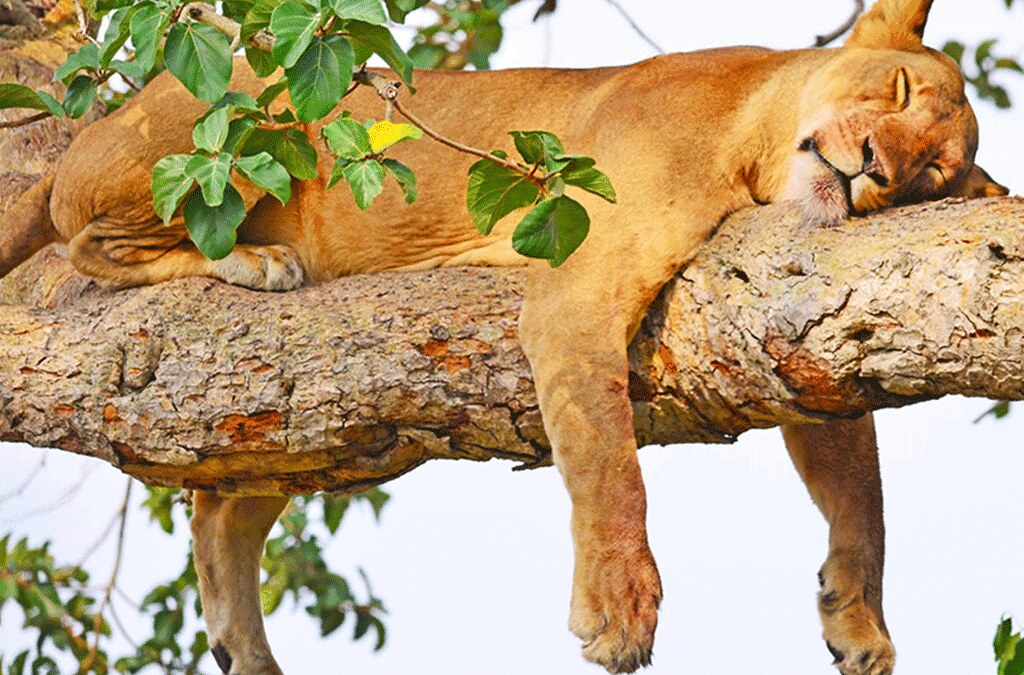
Do you know the excitement that roars when you make a sight in a fig tree and view a lion, sleeping, eating or staring back down at you. No fence between each other, Uganda and Tanzania bring reality to you with out panic since you are on a self drive safari.
No guide narrating the moment. Just you, your vehicle, and one of Africa’s most unusual wildlife spectacles playing out at eye level. That is what a self-drive safari in East Africa can deliver and for those willing to do the homework and take the wheel, it is an experience that even luxury lodge safaris rarely match.
Tree climbing lions are not a myth, or a once-in-a-decade sighting. They are a documented, recurring behaviour found in specific locations in East Africa, and if you know where to go and when, your chances on a self-drive are genuinely excellent.
This guide covers everything you need: the best parks, the exact areas to patrol within them, the right vehicle and gear, seasonal timing, and the practical logistics that make the difference between a successful self-drive and a frustrating one.
Why do Some Lions Climb Trees and Why It Matters for Where You Search
Understanding the behaviour helps you predict it. Across most of Africa, lions do not regularly climb trees. The populations that do so in East Africa are thought to do it for a combination of reasons: escaping the biting tsetse flies and insects near the ground, accessing cooler breezes at elevation during the heat of the day, gaining a vantage point over the landscape, and possibly a learned behaviour passed down through generations within specific prides.
This last point is critical for the self-drive traveler. Because tree climbing is a pride-specific, location-specific habit, the lions that do it tend to do it repeatedly in the same trees and the same general areas. Once you know those areas, the tracking becomes manageable even without a professional guide.
Queen Elizabeth National Park, Uganda (The Premier Destination)
Queen Elizabeth National Park is un doubtedly one of the best destinations for sighting the tree climbing lions. Tree climbing lions are spotted from Ishasha sector deep in the southern parts of the park.
This is the most reliable location on the continent for this behaviour and thousands of travellers including the self-drive safaris visit Queen Elizabeth in search of the tree climbing lions.
The lions of Ishasha are famous for lounging in the branches of large fig trees, particularly the Ficus natalensis, which grow in scattered clusters across the open grasslands south of the Ntungwe River. The trees are wide-branched and low-forking, making them easy for lions to access and easy for you to scan from the road.
Where exactly to drive in Ishasha: The main circuit track that runs south from the Ishasha River Camp toward the Ntungwe sector is your primary hunting ground. Drive slowly no faster than walking pace and spend time scanning the mid-canopy of every large fig tree you pass.
The lions are often invisible from a distance because their colouring blends into the dry bark and dappled light. Stop, switch off the engine, and look hard. The bulk of sightings happen between 09:00 and 16:00 when the animals retreat from the heat.
Getting to Ishasha on a self-drive: From Kampala, the drive to Ishasha takes approximately six to seven hours via Mbarara and Rukungiri on largely tarmac roads, with the final stretch on gravel. A 4×4 is strongly recommended, not optional. The Ishasha sector is separated from the northern part of Queen Elizabeth National Park by a gap in the park boundary, so plan your itinerary accordingly you cannot simply drive between Ishasha and the Kasenyi plains track in a single morning.
Park entry fees (check current UWA rates before travel):Uganda Wildlife Authority charges per person per day, with a separate vehicle fee. Foreign visitors pay in USD. Entry is managed at the Ishasha gate.
Lake Manyara National Park, Tanzania (The Original Tree Climbing Legend)
Where to see tree climbing lions on a self drive safari:This park is one of the legendary habitats of tree climbing lions in east Africa it was described as lake shore “the most beautiful in Africa, “by Ernest Hemingway. In this place
lions were observed climbing acacia and sausage trees long before Ishasha became famous. The behaviour at Manyara is less predictable than Ishasha today lion numbers have fluctuated over the years but sightings still happen regularly and the park itself rewards a self-drive in ways that go far beyond lions alone.
Where to focus your search in Manyara: The groundwater forest near the park entrance gives way to open acacia woodland, and it is in this middle section of the park roughly between the hippo pool and the Endabash River where tree climbing sightings are most frequently reported. Large flat-topped acacias and sausage trees (Kigelia Africana) with low horizontal branches are your target trees. Drive the main track slowly and spend time looking up rather than across the ground.
Self-drive logistics for Manyara:The park has a single main track that runs north to south, making navigation genuinely straightforward. Entry is through the main gate near Mto wa Mbu town. TANAPA (Tanzania National Parks) requires entry fees paid in USD. A 4×4 is helpful but the main track is passable in a capable 2WD during dry season. The park is compact you can cover it in a single long morning but the depth of wildlife along the lake shore means most visitors benefit from a full day.
Serengeti National Park, Tanzania ( The Bonus Sighting)
The Serengeti is not specifically known as a tree climbing lion destination in the way that Ishasha and Manyara are, but sightings do occur, particularly in the Western Corridor and in areas with large kopjes (rocky outcrops) surrounded by flat-topped trees. If you are already self-driving the Serengeti and you absolutely should be then knowing this adds another layer of purpose to your game drives.
The Western Corridor around the Grumeti River area, and the central Seronera Valley where trees are denser and the resident lion prides are large and habituated, give the best odds. Do not make the Serengeti your primary tree climbing destination, but treat every large acacia as a potential lookout post worth a few minutes of patient observation.
Kidepo Valley National Park, Uganda (The Hidden Gem)
Kidepo Valley, in Uganda’s remote northeast near the South Sudan border, is one of the least-visited parks in East Africa and one of the most spectacular.
Tree climbing lion sightings have been recorded here, and the sheer density and diversity of wildlife in the Narus Valley make it a compelling self-drive destination for experienced adventurers.
The road to Kidepo is long roughly eight to ten hours from Kampala on roads that vary dramatically in quality and the park sits at altitude with unpredictable weather. This is not a destination for first-time self-drivers.
But for those with the right vehicle, the right preparation, and a few East Africa self-drives already under their belt, Kidepo offers something genuinely rare: a park where you may drive for hours without seeing another vehicle, while the wildlife viewing rivals anything in the continent’s most famous parks.
Advantage for Finding Tree Climbing Lions on a self drive.
Guided safaris in East Africa are excellent, but they operate on fixed schedules and shared priorities. As a self-drive traveler, you can park under a fig tree in Ishasha for ninety minutes waiting for the light to change and the lions to shift position.
You can return to the same tree three mornings running. You can arrive at first light before any other vehicle reaches the area. These freedoms are what produce exceptional wildlife encounters, and because they stay in the same trees for hours reward patient, repeated attention in a way that few other wildlife experiences do.
Vehicle Requirements for These Parks
Do not attempt Ishasha, Kidepo, or the wet-season tracks of Manyara with out a proper 4×4 with high ground clearance. The standard choice for East Africa self-drive is a Toyota Land Cruiser or Toyota Prado, with a roof hatch or pop-up roof for standing game viewing. A raised roof is not essential but significantly improves both visibility and photography when you are parked under a tree with lions overhead.
Additional essentials for tree climbing lion country:
A quality pair of 8×42 or 10×42 binoculars you will be scanning the mid-canopy of trees from a distance before you decide whether to approach, and standard vehicle-distance eyeballing is not adequate.
Recovery gear including a high-lift jack, traction boards, and a tow rope is non-negotiable for remote tracks. Carry more fuel than you think you need; jerry cans are standard on any serious self-drive. Download offline maps via Maps.me or Avenza before you leave mobile data coverage is unreliable in all of these parks.
Best Time to Go
Ishasha (Queen Elizabeth NP):Tree climbing lions are resident year-round, but sightings are easiest during the drier months of June through August and December through February when the grass is shorter and visibility under the trees improves. The wet seasons (March to May and September to November) bring lush scenery and fewer visitors but tracking becomes harder and some tracks become genuinely impassable.
Where to see tree climbing lions on a self drive safari:
Lake Manyara: The dry season from June to October is optimal. The short rains in November can actually produce excellent wildlife conditions with green scenery, but the park’s single track holds up well in all but the heaviest downpours.
General rule for self-drivers:Arrive at the park gate at opening time (06:00 or 07:00 depending on the park), target the known tree areas within the first two hours of daylight, and again in the final two hours before gate closing. Midday is when the lions are most likely to be up in the trees and least likely to be moving which means it is actually a productive time to search, even when conventional safari wisdom suggests otherwise.
Practical Planning Checklist for First-Time Self-Drive Visitors
Before you leave for any of these parks, confirm current park entry fees directly with Uganda Wildlife Authority (UWA) or Tanzania National Parks (TANAPA) both regularly adjust pricing.
Book accommodation inside or adjacent to the park well in advance, especially for Ishasha where options are limited. The Ishasha Wilderness Camp and Ishasha River Camp both sit within easy reach of the best lion territory
In Manyara, Mto wa Mbu town has a wide range of accommodation at every price point, and there are several good options inside the park itself.
Carry a printed or downloaded park map from the relevant authority the in-park track networks are more complex than they appear on general maps and wrong turns waste precious game drive time.
Study the specific tree species mentioned in this guide (Ficus natalensis, flat-topped acacias, Kigelia Africana sausage trees) so you can identify them in the field and know which trees deserve your closest attention.
Finally, register your self-drive itinerary with your accommodation and leave a copy with someone at home. Remote parks like Ishasha and Kidepo have limited emergency infrastructure, and simple precautions cost nothing.
Responsible Wildlife game Viewing
Where to see tree climbing lions on a self drive safari:Tree climbing lions are habituated to vehicles but they are wild animals in wild habitats. Maintain a minimum distance of fifteen metres from any tree with lions in it. Do not rev your engine, honk, or attempt to disturb the animals to get a reaction.
Never get out of your vehicle. Keep noise to a minimum. The sightings that last longest and produce the best photographic results are always the ones where the lions remain relaxed and undisturbed which only happens when drivers show patience and restraint.
East Africa’s tree climbing lions are one of the continent’s true wildlife anomalies, and a self-drive encounter with them achieved on your own terms, in your own time, in a vehicle you control is the kind of experience that does not fade. Plan carefully, drive patiently, and look up.
Company
Gorilla Safaris Africa is one of the leading experts to trust while you are seeking for unforgettable and gorillas safaris with in Africa.
Features
Most Recent Posts
- All Post
- Combined Safaris
- East Africa
- Gorillas
- Luxury Safaris
- Primates Safaris
- Wildlife