
Top Things to Do in Kisoro, Uganda
Located in the e extreme southwest corner of Uganda, lies Kisoro a destination unlike any other on the African continent. It sits at an altitude of over 1,800 meters above sea level, cradled by ancient volcanoes, shimmering crater lakes, and misty bamboo forests that feel like they belong to another world entirely.
For the traveler who has grown tired of the ordinary, Kisoro delivers the extraordinary quietly, authentically, and without apology.
Whether you are drawn here by the legendary mountain gorillas, the drama of volcanic peaks, or the warm and unhurried pace of local life, this guide covers everything you need to know. Here are the top things to do in Kisoro, Uganda.
Trekking Mountain Gorillas in Mgahinga Gorilla National Park
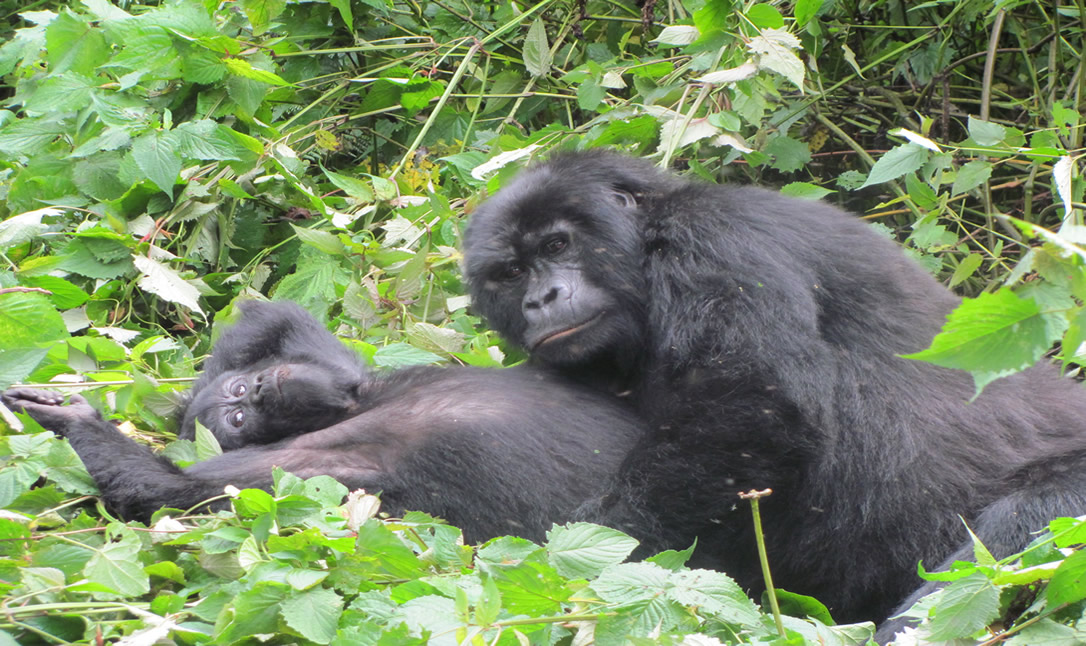
Nothing on this list nothing in East Africa, arguably compares to standing ten metres from a mountain gorilla in its natural forest home. Mgahinga Gorilla National Park, one of Uganda’s smallest yet most precious protected areas, sits right on the doorstep of Kisoro town and protects a critical section of the Virunga Volcanic Chain shared with Rwanda and the DRC.
The park is home to the Nyakagezi gorilla family, a habituated group that has been the subject of long-term conservation work by the Uganda Wildlife Authority. Trekking permits cost USD 800 per person, granting you one precious hour in the presence of these gentle giants. Groups are limited to eight visitors per day, making this one of the most intimate and exclusive wildlife encounters anywhere in Africa.
You set out with a ranger team in the early morning, pushing through layers of bamboo, hagenia forest, and moss-draped undergrowth as your trackers communicate ahead by radio.
When you finally arrive when a silverback turns and holds your gaze the silence of that moment carries a weight no camera can fully capture. Book your permit well in advance through a licensed operator like Gorilla Safaris Africa.
Practical tip: Start the trek in good physical condition. Trails can be steep, muddy, and physically demanding. Bring waterproof hiking boots, a rain jacket, and gardening gloves for gripping vegetation.
Trek the Golden Monkey in Mgahinga
Less talked about than gorilla trekking, the golden monkey trek is one of Kisoro’s hidden gems and one that should not be overlooked.
The golden monkey (Cercopithecus kandti) is an endangered and vibrantly colored primate found only in the Virunga Massif. They are acrobatic, social, and endlessly entertaining bounding through bamboo in vivid flashes of orange and black.
Permits for golden monkey trekking cost USD 100 per person, making this significantly more accessible than gorilla permits. The trek itself is generally shorter and less strenuous, and the monkeys’ playful behaviour makes for outstanding photography. Families and travellers with moderate fitness levels will particularly enjoy this experience.
Climb the Virunga Volcanoes
Mgahinga Gorilla National Park contains three of the eight Virunga volcanoes: Mount Muhavura (4,127m), Mount Gahinga (3,474m), and Mount Sabyinyo (3,645m), which straddles the triple border of Uganda, Rwanda, and DRC. All three offer guided hiking experiences that reward the effort with breathtaking panoramas.
Mount Muhavura is the highest and most challenging of the three. The summit rewards climbers with views of all eight Virunga volcanoes, Lake Edward, and on clear days the snow capped Rwenzori Mountains far to the north. The hike takes six to eight hours round trip.
Mount Gahinga is the most accessible and is surrounded by swamps of giant lobelia and senecio trees that look like something from a prehistoric landscape. The shorter hike makes it suitable for visitors with moderate fitness.
Mount Sabyinyo is arguably the most dramatic, with jagged ridge lines and the unique distinction of allowing you to stand simultaneously in three countries at its summit. The climb is technical in places but deeply rewarding.
All hikes are conducted with armed park rangers and experienced guides. Hiking fees apply, and bookings should be made through the Uganda Wildlife Authority or a registered tour operator.
Visit the Batwa Cultural Experience
The Batwa people often called the “Keepers of the Forest” were the original inhabitants of the Bwindi and Mgahinga forests before conservation laws required their resettlement. Their intimate, generational knowledge of the forest, its plants, animals, and medicines, is unlike anything accumulated by any other community in this region.
The Batwa Cultural Experience, offered in partnership with the Batwa Development Programme, takes visitors deep into the forest with Batwa guides who demonstrate traditional hunting techniques, medicinal plant use, honey harvesting, fire-making, and many more.It is not a performance it is a living history lesson delivered by the people who lived it.
The experience closes at the Garama Cave, a sacred site where the Batwa once gathered and held ceremonies. Inside, traditional songs echo off the walls in a moment that is quietly extraordinary. The revenue from these experiences goes directly to Batwa community development.
This is a must-do activity in Kisoro for any traveler interested in cultural heritage and human history.
Explore Lake Mutanda
Lake Mutanda is one of the most visually stunning bodies of water in all of Uganda. Framed by the Virunga volcanoes on one side and green hills rolling into Rwanda on the other, the lake is a patchwork of small islands, papyrus swamps, and fishing villages that have barely changed in generations.
A canoe trip across Lake Mutandais an experience of calm and beauty. Local fishermen paddle dugout canoes across mirror-still water in the early morning, and the reflection of the volcanoes in the lake creates scenes that feel almost too perfect to be real. Several islands on the lake are accessible by boat, and some offer simple picnic spots and bird watching opportunities.
Kayaking is also available and is a wonderful way to explore at your own pace. Accommodation options along the lake, including the well-regarded Mutanda Lake Resort, offer some of the best sunset views in the entire region.
Birdwatchers note: Lake Mutanda and its surrounding wetlands are rich in waterbirds, including grey crowned cranes, African fish eagles, African jacanas, and various kingfisher species.
Hike the Kisoro Landscape and Countryside
Away from the parks and lakes, the countryside around Kisoro town itself is remarkably beautiful and deeply underrated as a hiking destination. The hills are terraced with smallholder farms, patches of natural forest, and traditional homesteads. Walking trails wind through communities where children wave from doorways and farmers pause to greet passing visitors.
Community-guided walks from Kisoro town cover the surrounding hills, offering views across the Virunga Massif and into Rwanda. These walks are gentle enough for most fitness levels, last two to four hours, and often include stops at local farms, banana plantations, or craft workshops.
For something more immersive, ask your guesthouse or lodge to arrange a walk through one of the rural communities around Lake Chahafi or towards the Bunagana border. These walks reveal a Uganda that most safari visitors never see quiet, agricultural, and profoundly human.
Birdwatching in Mgahinga and the Surrounds
Kisoro is part of the Albertine Rift one of the most biodiverse regions on Earth and Africa’s single most important area for endemic bird species. Mgahinga Gorilla National Park alone harbours over 180 recorded bird species, several of which are Albertine Rift endemics found nowhere else on the continent.
Sought-after species in and around Kisoro include the handsome francolin, Rwenzori turaco, strange weaver, Kivu ground thrush, and the elusive African green broadbill. Early mornings in the bamboo zone are particularly productive, and the park’s varied altitude zones mean birding in different habitats within the same morning is entirely possible.
Whether you are a dedicated lister or a casual bird enthusiast, the avian life around Kisoro will not disappoint.
- Relax and Unwind — Kisoro as a Base.
Kisoro town itself is small, friendly, and genuinely welcoming. The central market is a good place to pick up fresh produce, locally made crafts, and to simply sit and observe the rhythm of daily life. Several good restaurants and guesthouses line the main streets, offering everything from simple Ugandan meals of matoke, beans, and groundnut stew to international dishes aimed at visiting travellers.
The town serves as an excellent base for exploring both Mgahinga and the southern section of Bwindi Impenetrable National Park (the Rushaga and Nkuringo sectors), which are within easy driving distance.
Getting to Kisoro
Kisoro is approximately 540 kilometres from Kampala by road a journey of roughly eight to ten hours depending on road conditions. The route passes through Mbarara and Kabale and offers spectacular scenery in the final stretch.
Alternatively, charter flights operate from Entebbe International Airport to Kisoro airstrip. Several scheduled charter operators serve this route, cutting the journey to under two hours. Most reputable Uganda safari operators, including Gorilla Safaris Africa, can arrange road or air transfers as part of a package.
Best Time to Visit Kisoro
Kisoro can be visited year-round, but the drier months of June to August and December to February are generally the best for trekking, hiking, and photography. The long rains fall between March and May, and the short rains in October and November. Even in the wet season, gorilla trekking continues the forest is strikingly beautiful in the rain, and permits are easier to secure.
Morning temperatures in Kisoro are cool (often around 12–15°C), and nights can be genuinely cold at altitude. Pack warm layers regardless of what month you travel.
Final Thoughts
Kisoro is not a destination that shouts. It does not have the crowds of Bwindi’s Buhoma sector or the infrastructure of Kampala or Entebbe. What it has is something rarer: a landscape of staggering beauty, wildlife encounters of genuine depth, and a cultural heritage that is living and breathing rather than curated for display.
For the traveler willing to go a little further and slow down a little more, Kisoro is one of Uganda’s most rewarding destinations and one of the most remarkable corners of the African continent.
Frequently asked questions.
Do I need a permit to trek gorillas in Kisoro? A: Yes. A gorilla trekking permit costs USD 800 per person and must be booked in advance through the Uganda Wildlife Authority or a licensed operator. Gorilla Safaris Africa can secure permits on your behalf.
How fit do I need to be to trek gorillas in Mgahinga? A: A moderate level of fitness is recommended. Trails can be steep and muddy. Most healthy adults complete the trek successfully with the help of guides and optional walking sticks provided at the trailhead.
What is the best time of year to visit Kisoro?
The dry seasons (June–August and December–February) offer the best trekking and hiking conditions, though Kisoro and gorilla trekking are rewarding year-round.
How far is Kisoro from Kampala?
Kisoro is approximately 540 kilometres from Kampala about 8 to 10 hours by road. Charter flights from Entebbe to Kisoro airstrip are available and take under two hours.
Can I combine a Kisoro trip with Rwanda?
Kisoro borders Rwanda at the Cyanika crossing, and day trips to Musanze (Ruhengeri) are possible with appropriate documentation and operator support.
Company
Gorilla Safaris Africa is one of the leading experts to trust while you are seeking for unforgettable and gorillas safaris with in Africa.
Features
Most Recent Posts
- All Post
- Combined Safaris
- East Africa
- Gorillas
- Luxury Safaris
- Primates Safaris
- Wildlife