
The 7 Wonders of the World: (Old vs New) according to experts.
The 7 wonders of the world (old vs new) according to experts.Have you ever looked at a photograph of Machu Picchu and felt something shift inside you? That quiet awe, that feeling of being small in front of something enormous, is exactly what the Wonders of the World are supposed to do. They remind us of what humans are capable of when they dare to dream beyond ordinary limits.
This guide covers both the 7 Wonders of the world: (old vs New) according to experts, giving you history, fast facts, surprising details, and everything your curiosity deserves, all in one place.
What Are the Seven Wonders of the World?
The term Wonders of the World” is not new. It gives you a replica of the history of the Greeks,who wanted to record the most breathtaking human-made structures of their time. The philosopher Herodotus is among those believed to have compiled early versions of the list, dating back to the 5th century BC.
The number seven was chosen deliberately. The ancient Greeks believed it represented perfection and completeness; it also matched the number of known planets at the time (five) plus the Sun and Moon.
Centuries later, in 2001, a Swiss organisation called the New 7Wonders Foundation launched a global campaign to choose a modern list. More than 100 million votes were cast from around the world, and on July 7, 2007, the New Seven Wonders of the World were officially announced. Here is a compiled list of the 7 wonders of the world (old vs new) according to experts.
There are now two important lists to know:
- The Ancient 7 Wonders (compiled over 2,000 years ago)
- The New 7 Wonders (voted on globally and announced in 2007)
The Ancient 7 Wonders of the World
These were the marvels that defined civilisation in the ancient world. Tragically, only one still stands today. The rest were destroyed by earthquakes, fire, or simply the passage of time.
The Great Pyramid of Giza, Egypt (The Only Survivor)
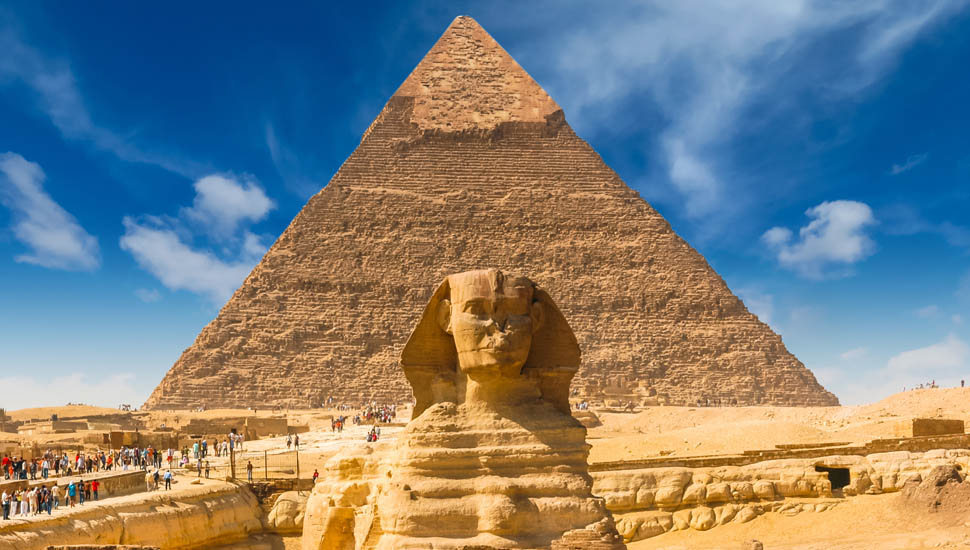
This is one of the oldest ancient wonders of the world. It was built around 2560 BC as a tomb for Pharaoh Khufu. It’s believed that it was built using a total of 2.3 million stone blocks, with a towering original height of 146 meters (480 feet), thus being the world’s tallest building in the past years.
What makes it truly remarkable? Research says that its dimensions were calculated using advanced astronomical and mathematical knowledge related to Earth’s circumference. To this day, no one knows with absolute certainty exactly how it was built.
Fast Fact: The pyramid is part of the larger Giza complex, which also includes the famous Great Sphinx.
The Hanging Gardens of Babylon, Modern-Day Iraq
One of the ancient 7 wonders of the world is the Hanging Gardens of Babylon. It’s believed that this magnificent attribute was built by King Nebuchadnezzar II around 600 BC as a gift for his homesick queen. It was built using terraced gardens, allegedly to be rose flowers.
Amytis, these terraced gardens allegedly rose 75 feet into the air with lush plants cascading down like a green waterfall in the middle of a desert city.
Here is the twist: no physical evidence has ever been found. Some historians believe the gardens never existed in Babylon at all, or that they may have been located in a different city entirely. They remain the most mysterious of all the Ancient Wonders.
The Statue of Zeus at Olympia (Greece )
Created by the legendary sculptor Pheidias around 435 BC, this seated statue of the king of the Greek gods stood approximately 13 meters (43 feet) tall inside the Temple of Zeus at Olympia. It was decorated with gold, ivory, and precious stones. Ancient visitors reportedly wept at the sight of it.
The statue was eventually moved to Constantinople and is believed to have been destroyed by fire sometime in the 5th or 6th century AD.
The Temple of Artemis at Ephesus (Modern-Day Turkey))
Dedicated to the Greek goddess of the hunt, this magnificent marble temple was not built; it was built three times. The final version, completed around 323 BC, was four times the size of the Parthenon in Athens. It was burned down by a man named Herostratus in 356 BC simply so his name would be remembered forever.
Only scattered ruins remain near the Turkish city of Selçuk, but portions have been preserved and are accessible to visitors today.
The Mausoleum at Halicarnassus (Modern-Day Turkey)
Built around 350 BC as a tomb for King Mausolus of Caria, this structure was so grand and so magnificent that the word “mausoleum”, now used for any grand tomb, comes directly from his name. Standing at roughly 45 meters (148 feet) tall, it was adorned with beautiful sculptures on every side.
It survived relatively intact until the 15th century, when earthquakes finally brought it down. It was the last of the original wonders to fall.
The Colossus of Rhodes (Greece)
This giant bronze statue of the sun god Helios once stood at the entrance to the harbor of Rhodes, on the Greek island of the same name. Built around 280 BC, it stood approximately 33 meters (108 feet) tall, about the same height as the Statue of Liberty from base to crown.
It stood for only 56 years before being toppled by an earthquake in 226 BC. The ruins reportedly lay on the ground for centuries before being sold as scrap metal.
The Lighthouse of Alexandria (Egypt)
The 7 wonders of the world (old vs new) according to experts: Built on the island of Pharos, off the coast of Alexandria, this lighthouse stood between 100 and 140 meters tall, one of the tallest structures in the ancient world. Built around 280 BC, it guided sailors safely into one of the busiest ports on Earth for over a thousand years.
It was damaged by multiple earthquakes between 956 and 1323 AD and eventually collapsed entirely. Today, some of its remains are believed to lie submerged beneath the Mediterranean Sea.
The New 7 Wonders of the World
The 7 wonders of the world (old vs new) according to experts: Chosen by over 100 million voters across the globe, these are the living, breathing wonders of our modern era, places you can actually visit today.
The Great Wall of China (China)
This is one of the most popular 7 wonders of the world: Old and new, stretching across 13,170 miles (21,200 km) of northern China, the Great Wall is one of the largest construction projects in human history. Work began as early as the 7th century BC and continued for two full millennia, with the famous sections most tourists visit today built during the Ming Dynasty (1368–1644).
Originally constructed as a military fortification against invasions ordered by Emperor Qin Shi Huang, the wall also served as a transportation corridor and communication highway. It is a UNESCO World Heritage Site and one of the most visited places on Earth.
Don’t Miss: The Mutianyu and Badaling sections offer stunning views, especially in autumn when the surrounding mountains turn golden.
Petra (Jordan)
Nestled in the rose-red sandstone canyons of southern Jordan, lies the ancient city of Petra. Pera is one of the most cinematic places on the planet. It was founded by the Nabataean people in the early years of 400 BC. It was a very powerful trade hub that connected plenty of people, such as the Arabs, Egyptians and the Mediterranean.
One of its attributes that makes it iconic is the Al-Khazanah (The Treasury) that was carved directly into the cliff side with breathtaking precision. Petra is composed entirely of temples, tombs, a Roman-style amphitheatre, and hidden pathways that wind through narrow rock corridors called “Siqs.” Petra was largely unknown to the Western world until Swiss explorer Johann Ludwig Burckhardt rediscovered it in 1812, disguised as an Arab traveller.
Fun Fact: You may recognise Petra from Indiana Jones and the Last Crusade, the Treasury served as the exterior of the “Temple of the Holy Grail.”
- Christ the Redeemer (Brazil)
Situated at the summit of Mount Corcovado lies one of the 7 wonders of the world, known as Christ the Redeemer. This epic building stretches 30 meters (98 feet) tall with arms spanning 28 meters (92 feet) wide, hence being the largest Art Deco sculpture in the world.
Construction began in 1926 and was completed in 1931. The statue was born from a fear among some Brazilians after World War I of what they called “a tide of godlessness.” It was designed by Heitor da Silva Costa and sculpted by French artist Paul Landowski. The outer surface is covered in approximately six million soapstone tiles.
Today, over 2 million people visit Christ the Redeemer every year, and it has become the defining symbol of both Rio de Janeiro and Brazil itself.
- Machu Picchu (Peru)
One of the world’s unique places that really gives you a reason to wonder is the Machu Picchu. Perched in the clouds at 2,430 meters (7,972 feet) above sea level in the Andes Mountains of Peru, Machu Picchu.
It was built during the 15th century under Emperor Pachacuti. The site features breathtaking stonework, agricultural terraces, and precise astronomical alignments all without the use of mortar, wheels, or iron tools.
Its exact purpose remains a mystery. Was it a royal retreat? A sacred religious site? A city for training young priestesses? Historians still debate this.
In 1572, the site was abandoned after the Spanish conquest. It remained hidden from the outside world until an American historian, Hiram Bingham, discovered it in 1911.
Visitor Tip: Entry is strictly controlled to protect the site. You need to book tickets months in advance, especially for the popular Inca Trail trek.
Chichén Itzá (Mexico)
It’s completely arguable that Chichén Itzá is among the 7 new wonders of the world that completely offer exceptional memories. This wonderful cabin is located deep in the jungles of Mexico’s Yucatán Peninsula. It’s among the greatest cities of the ancient Maya civilisation. At its heart is El Castillo (The Temple of Kukulkan), a pyramid that doubles as a giant astronomical calendar.
Every year, on the spring and fall equinoxes, the setting sun throws a shadow along the pyramid’s staircase that resembles a serpent writhing downward, a purposeful optical deception designed with great mathematical precision over 1,000 years ago.
For religious believers, the site contains a Sacred Cenote, a massive natural sinkhole that is used for offerings. Additionally, it’s the largest ancient ball court in Mesoamerica, with temples, platforms, and an astronomical observatory known as El Caracol.
- The Roman Colosseum (Italy)
Built in the heart of Rome around 80 ADS under Emperor Vespasian, the Colosseum is the largest amphitheatre ever constructed. It’s said that at its peak, between 50,000 and 80,000 spectators gathered to view gladiatorial battles, wild animal hunts, mock sea battles, and public executions.
Despite period of centuries of earthquakes, stone robbers, and general neglect, two-thirds of the original structure remains intact and untouched today. This cabin is composed of a firm, retractable roof and a complex underground system of tunnels and cages.
Sobering Fact: It is estimated that over 400,000 humans and more than 1 million animals lost their lives in the Colosseum during its active years.
The Taj Mahal (India)
This is one of the most romantic structures ever built, the Taj Mahal in Agra, India. It’s a white marble mausoleum that was constructed by Mughal Emperor Shah Jahan for his beloved wife, Mumtaz Mahal.
In the years of 1632 and 16 53, the Taj Mahal building was constructed, over 20,000 were employed as craftsmen from across Asia and Europe. Its marble changes colour depending on the time of day, soft pink at dawn, pure white in daylight, and golden by candlelight at night. It is considered the finest example of Mughal architecture, which blends Persian, Islamic, and Indian styles.
In 1983, it was inscribed as a UNESCO World Heritage Site, hence being referred to as “the jewel of Muslim art in India.”
The Bonus: The Great Pyramid’s Special Status
When the New 7 Wonders were announced in 2007, the Great Pyramid of Giza was not technically a winner, but it was given honorary candidate status out of deep respect for its age and survival. It remains the only structure to appear on both the ancient and modern lists.
The Key Differences Between the Old and New 7 Wonders
The 7 wonders of the world (old vs new) according to experts: Many people assume the two lists are simply an old version and an updated version of the same thing. They are actually very different in origin, purpose, geography, selection method, and survival. Here is a clear, detailed breakdown.
When They Were Created
The Ancient Wonders were recorded by Greek historians and poets as far back as the 5th century BC, with the canonical list taking shape by the 2nd century BC. These were not voted on; they were simply written down by scholars of the time who considered them the greatest human achievements visible from the Mediterranean and Near East.
The New Wonders were selected in the modern era. The campaign began in 2001 and the final results were announced on July 7, 2007, after a global public vote involving over 100 million people across the world. Here is how the 7 wonders of the world (old vs new), according to experts.
How They Were Chosen
This is one of the biggest differences between the two lists.
The Ancient Wonders were chosen by a small group of educated Greek thinkers. There was no formal voting system, no global input, and no set criteria written down in one place. Different ancient writers had slightly different versions of the list. It was, essentially, the opinion of a few well-travelled scholars.
The New Wonders were chosen by the entire world. Anyone with access to a phone or the internet could vote. Over 200 monuments from across the globe were nominated, narrowed to 21 finalists by a panel of experts, and then put to a public vote. The result was one of the largest votes in human history at that time.
Where in the World They Come From
The Ancient Wonders were almost entirely concentrated in one region the Mediterranean and the Near East. Six of the seven were located in what is now Greece, Egypt, Turkey, and Iraq. This reflects the limited geographical reach of the Greek scholars who created the list. The world beyond their known borders simply did not make the cut.
The New Wonders, by contrast, span six continents and represent a far more diverse range of civilisations from the Maya of Mexico to the Mughal Empire of India, from the Inca of Peru to the Roman Empire of Italy, and from the ancient kingdoms of Jordan to imperial China.
Survival and Physical Existence
Of the Ancient 7 Wonders, only one still exists today, the Great Pyramid of Giza. The other six were destroyed by earthquakes, fire, floods, or deliberate demolition over the centuries. Most of them exist only in ancient texts, partial ruins, or artistic reconstructions based on historical descriptions.
All 7 New Wonders are still standing and can be visited today. They are maintained, protected, and most are designated UNESCO World Heritage Sites. This is not a coincidence; the New Wonders were chosen specifically from surviving structures, meaning physical existence was a built-in requirement.
Purpose and Function
The Ancient Wonders were chosen to celebrate extraordinary architectural or artistic achievements of the Greek world. They included statues, tombs, temples, gardens, and even a lighthouse selected largely for their size, beauty, and the sheer ambition required to build them.
The New Wonders were selected with a broader set of values in mind: cultural significance, historical importance, universal appeal, and architectural achievement. The New7Wonders Foundation’s stated mission was to protect and promote the world’s shared human heritage — making the list more about meaning and legacy than just size or grandeur.
Geographic and Cultural Representation
The Ancient list reflects the worldview of ancient Greece. Cultures outside the Mediterranean, such as the Maya, the Inca, the Chinese, or the Mughals, had no voice in it, not because they lacked remarkable structures, but simply because Greek scholars had no knowledge of them.
The New list corrects this imbalance. It includes wonders from South America, Central America, Asia, the Middle East, Europe, and South Asia — representing a far more inclusive vision of human achievement across all civilisations.
The Role of Democracy
The Ancient Wonders were not democratic. They were the curated opinion of an elite intellectual class from one part of the world, at one moment in history.
The New Wonders are arguably the most democratically chosen cultural list in history. Every vote mattered equally, whether it came from a school student in Uganda, a professor in Japan, or a farmer in Brazil. This open participation gave the New Wonders a kind of global legitimacy that no previous list of wonders had ever achieved.
Why These Wonders Still Matter
The 7 wonders of the world (old vs new ), according to experts, matter a lot. Six of the seven Ancient Wonders are gone forever. What remains are stories, paintings, and the imagination of historians piecing together descriptions from ancient texts. That loss should make us hold the New Wonders even more carefully.
These places are not just tourist attractions. They are shared memories of the human race, proof of what we have been capable of across thousands of years of civilisation. Every stone in the Great Wall, every carved corridor in Petra, every tile on Christ the Redeemer is a message from people who lived and died centuries ago, saying: We were here. We built something beautiful. Remember us.
Whether you are planning to visit, studying for an exam, or simply feeding your curiosity, knowing the 7 wonders of the world (old vs new )according to experts is a piece of what it means to be human.
Company
Gorilla Safaris Africa is one of the leading experts to trust while you are seeking for unforgettable and gorillas safaris with in Africa.
Features
Most Recent Posts
- All Post
- Combined Safaris
- East Africa
- Gorillas
- Luxury Safaris
- Primates Safaris
- Wildlife