

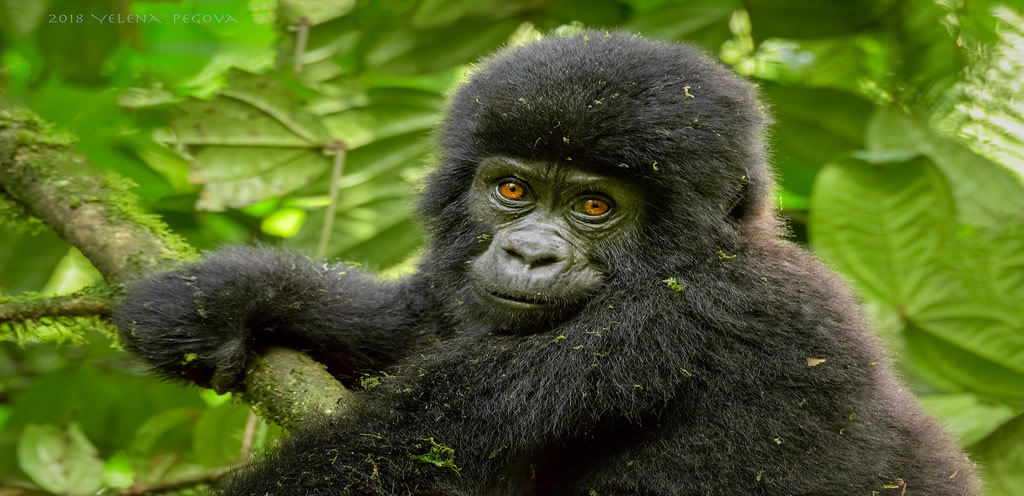
Gorilla Trekking Permits: Uganda, Rwanda & DR Congo A Detailed Reflection
The Cost Landscape at a Glance
As of 2026, Uganda charges USD 800 per permit, Rwanda USD 1,500, and the DR Congo USD 400. These figures represent only the permit itself the gateway to an hour with one of the world’s most endangered primates.
The permit covers entrance to the relevant national park, the guided trek, and a maximum of one hour with the gorillas. It does not include porter fees, tips to trackers and guides, or any costs relating to accommodations, transport, meals, or other activities.
In Uganda, lower fees are charged to East African citizens (around USD 80), holders of other African passports (USD 500), and foreign residents (USD 700). Rwanda similarly offers a discounted rate of USD 200 for its own citizens and other East African nationals, and USD 500 for foreign residents and citizens of other African countries.
In general, 15% of money collected from gorilla permits goes to the government, 10% to local communities, and 75% to gorilla conservation. This formula applies across all three countries and is the moral foundation of the entire permit system — your fee is not merely a ticket price but an act of conservation financing.
Bwindi Impenetrable national Park
Bwindi has the total number of the gorillas remaining in the whole world. It offers both Gorilla trekking and Habituation experiences.
Volcanoes national park
The park is a home to plenty of habituated gorilla families.
Virunga National park
Congo still offers cheap gorilla trekking safaris in Virunga national park
Why Rwanda Charges More Than Uganda and DR Congo
This is perhaps the most debated question in East African safari circles, and the honest answer is: Rwanda charges more because it can, and because it has engineered a world-class rationale for doing so.
- The High-Value, Low-Volume Model
Rwanda deliberately positions itself as a premium safari destination. The country follows a high-value, low-volume tourism model. Instead of increasing visitor numbers, Rwanda keeps daily permit allocations limited and maintains a higher price point. This strategy reduces crowding in Volcanoes National Park and protects gorillas from excessive human exposure. It also generates strong conservation revenue per visitor.
Rwanda has deliberately crafted itself as a premium, luxury tourism destination, targeting high-end travelers willing to pay more for exclusive experiences and superior convenience. This positioning strategy permeates every aspect of the gorilla trekking experience, from permit pricing to accommodation standards and accessibility.
- Unmatched Accessibility
One of Rwanda’s most compelling selling points is sheer geographic convenience. From Kigali International Airport, it is possible to reach Volcanoes National Park in approximately two and a half hours by road or even faster by helicopter. Compare this to Uganda, where the drive from Kampala or Entebbe to Bwindi takes roughly 8–9 hours. For the time-pressured international traveler, this alone is worth hundreds of dollars.
- Luxury Branding and Global Marketing
Rwanda has invested heavily in tourism through partnering with global brands like Arsenal Football Club in England and PSG Football Club in France, with the aim of boosting its tourism industry and gorilla trekking is the cornerstone of this marketing strategy.
Rwanda is branded as a luxury, high-end travel destination, given that it hosts luxury lodges such as the One&Only, where a single night can go for USD 8,000 and above. When the surrounding ecosystem is this premium, the permit price fits naturally within the overall spend.
- Exclusivity as a Conservation Tool
Rwanda’s government has strategically marketed the country as a high-end tourism destination, positioning gorilla trekking as a luxury adventure that is not only about observing wildlife but also about experiencing the culture, beauty, and hospitality of Rwanda. The high permit price thus functions both as a revenue tool and as crowd control keeping the forest experience intimate and ecologically responsible.
- Limited Competition and Market Structure
Uganda, with a higher number of tour operators, experiences intense competition that results in lower gorilla trekking package prices. In Rwanda, where tour operators are fewer, the lack of competition allows for higher pricing.
Company
Gorilla Safaris Africa is one of the leading experts to trust while you are seeking for unforgettable and gorillas safaris with in Africa.
Features
Most Recent Posts
- All Post
- Combined Safaris
- East Africa
- Gorillas
- Luxury Safaris
- Primates Safaris
- Wildlife
Category
Why DR Congo Charges the Least
The DRC intentionally keeps mountain gorilla permit prices low to encourage tourism and fund conservation in a region rebuilding after years of instability. It makes gorilla trekking accessible to budget travelers. The low price is essentially a market development strategy an acknowledgment that the DRC must offer a price incentive to overcome the perception of risk and logistical complexity that surrounds travel to eastern Congo.
Bwindi Impenetrable Forest National Park — Uganda’s Crown Jewel
History and Setting
Bwindi Impenetrable Forest Reserve was set up in 1942 on the rim of the Rift Valley. The name Bwindi is derived from the Runyakitara word Mubwindi and means “a place full of darkness.” This name comes from the extensive stands of bamboo interspersed amongst the larger forest hardwoods.
The hillsides, which are mist-covered, are sheltered by one of the ancient and biologically varied rain forests in Uganda that dates back to more than 25,000 years, comprising about 400 varied plant species. In 1991, the Impenetrable Central Forest Reserve, along with Mgahinga National Park and Rwenzori Mountains National Park, was designated as a national park and renamed Bwindi Impenetrable National Park. It was subsequently inscribed as a UNESCO World Heritage Site in 1994.
Biodiversity An Exceptional Natural Phenomenon
Located in south-western Uganda at the junction of the plain and mountain forests, Bwindi Park covers 32,000 ha and is known for its exceptional biodiversity, with more than 160 species of trees and over 100 species of ferns. Many types of birds and butterflies can also be found there, as well as many endangered species, including the mountain gorilla.
It provides habitat for 120 species of mammals, 350 species of birds, 310 species of butterflies, 27 species of frogs, chameleons, geckos, and many endangered species. Floristically, the park is among the most diverse forests in East Africa, with more than 1,000 flowering plant species, including 200 species of trees and 104 species of ferns.
Remarkably, Bwindi is one of the few forests in Africa known to host both mountain gorillas and chimpanzees in the same ecosystem. This is an extraordinary distinction two of humanity’s closest living relatives co-existing in a single contiguous forest.
Gorilla Population and Trekking Structure
Bwindi protects approximately 459 mountain gorillas almost half of the world’s remaining population. The Mubare gorilla group was the first to be habituated for tourism in Uganda in April 1993, opening the door to sustainable gorilla trekking experiences. Today, Bwindi boasts 25 habituated gorilla groups, with nine available for tourism and one dedicated to research.
Trekking takes place across four main sectors: Buhoma, Ruhija, Rushaga, and Nkuringo, giving visitors a diversity of terrain and gorilla group experiences unmatched anywhere else in the world. Bwindi is also the world’s only destination offering the Gorilla Habituation Experience, a newly introduced tourism product that offers visitors the opportunity to spend all four hours face-to-face with the apes in the wild. This experience costs USD 1,500 per person — the same as a standard Rwanda permit, but for four times as long.
Competitive Advantages
Bwindi’s most decisive competitive advantage is sheer scale and choice. With more habituated gorilla families open to tourism than any single park in Africa, it offers the widest variety of trek options, terrain, and lodge settings — from the verdant valleys of Buhoma to the dramatic ridges above Nkuringo. Its status as a UNESCO World Heritage Site, its extraordinary biodiversity, and the unique cultural encounters with the Batwa and Bakiga peoples all add layers to what is, at its core, a deeply immersive wilderness experience.
Mgahinga Gorilla National Park — Where Silver Meets Gold
Overview and Setting
At just 33.7 km², Mgahinga National Park is Uganda’s smallest national park. It is located in the southwestern corner of Uganda and was gazetted in 1991. The park covers the northern slopes of the three northernmost Virunga Volcanoes: Mt. Muhavura (4,127 m), Mt. Gahinga (3,474 m), and Mt. Sabinyo (3,645 m). The park is about 10 km south of Kisoro and is bordered to the south by the Volcanoes National Park of Rwanda and to the west by the Virunga National Park of the Democratic Republic of Congo.
In altitude the national park ranges from 2,227 to 4,127 m and is part of the Nile River watershed area. It is contiguous with Rwanda’s Volcanoes National Park and the southern sector of Virunga National Park in the Democratic Republic of the Congo.
Wildlife and Unique Attractions
Mgahinga gorilla park is home to about 39 mammals including the mountain gorillas, golden monkeys, buffaloes, elephants, bushbucks, duikers, giant forest hogs, and about 115 bird species.
The park’s most singular distinction is that it is the only place in Uganda — and one of only two places in the entire world where you can see golden monkeys. The rare golden monkeys are the second most popular attraction pulling tourists to Mgahinga.
This rare Old World species of monkey can be seen in only Mgahinga and Rwanda’s Volcanoes National Park. A troop is habituated for tourist visits. This dual primate experience gorillas and golden monkeys in the same park on consecutive days — is a marketing proposition that neither Bwindi nor any other park in Uganda can replicate.
Mgahinga also harbors the legendary Garama Cave, a 342-metre-long cave that lies beneath a plateau at the northern edge of the park, 3 km from Ntebeko gate. In earlier times, the cave was occupied periodically by the Batwa, who used it as a council chamber and a retreat. Today the cave provides an atmospheric performance of Batwa music at the end of the Batwa Trail.
Gorilla Trekking Specifics
Only the Nyakagezi gorilla group is open to tourism in Mgahinga. The Nyakagezi group is one of the two largest habituated mountain gorilla groups in Uganda, Congo, and Rwanda.
The group used to be very mobile with a tendency to cross into Rwanda and even Congo, but for the past five years has settled in Uganda. Because the gorillas in Mgahinga inhabit higher altitudes, the gorillas in Mgahinga have developed more fuzzy coats than those in Bwindi Impenetrable Forest a small but delightful physical distinction.
Competitive Advantages
Mgahinga’s competitive advantage is intimacy and multidimensionality. With fewer tourists than Bwindi, the experience tends to be quieter and more personal. The addition of three hikeable volcanoes, golden monkey trekking, a rich Batwa cultural program, and proximity to both Rwanda and DRC make it an exceptionally versatile destination.
It is ideally suited for travelers who want gorilla trekking plus volcano hiking plus a cultural encounter, all within a compact geography. Its setting along the tri-country border of Uganda, Rwanda, and DRC also makes it a logical anchor for cross-border safari itineraries.
Virunga National Park — Africa’s Oldest and Most Embattled Treasure
History and Scale
Established in 1925 by the then-King of Belgium, King Albert I, it was first called Albert National Park. It was primarily gazetted to protect the endangered mountain gorillas which can also be found in Uganda and Rwanda only. In 1969, it was renamed Virunga National Park, and in 1979, it was designated a UNESCO World Heritage Site. It was listed as a Ramsar site of International Importance in 1996 by BirdLife International due to its diverse bird population.
Covering around 8,090 km² in eastern Congo, Virunga National Park is the largest of the three gorilla parks — vastly bigger than Bwindi (331 km²) and Mgahinga (33.7 km²) combined, and home to an astonishing range of ecosystems.
Biodiversity and Unique Features
Virunga’s greatest competitive distinction is the staggering diversity of its ecosystems. Inside Virunga park are two active volcanoes — Mount Nyiragongo and Mount Nyamuragira offering memorable hiking expeditions. Nyiragongo, with its permanent lava lake, is one of the most dramatic and dangerous volcanoes on Earth and represents a tourism experience found nowhere else in the gorilla-trekking world. Virunga combines primates, volcanoes, and savannah wildlife in one park, something unmatched in Africa.
The park’s wildlife extends far beyond gorillas. Other primates like eastern chimpanzees, blue monkeys, golden monkeys, red-tailed monkeys, and olive baboons can be encountered. Other prominent game animals include forest elephants, buffalos, hogs, bushbucks, hippos, and Uganda kobs.
Security — The Central Challenge
The park’s greatest liability is also the thing that makes it romantically untamed. On average, a ranger at Virunga National Park is killed each and every month. It is simply the reality of working the most dangerous wildlife job in the world. Over 200 rangers have now been killed in the line of duty in Virunga, either by poachers or rebels.
The park has experienced multiple closures between 2018 and the present because of ongoing militia operations in North Kivu Province, which endanger rangers and all visitors. A 2025 update notes that due to recent attacks on Goma and the surrounding areas, Virunga National Park is currently closed for the foreseeable future. This is an important practical consideration for anyone planning a visit — at the time of writing in March 2026, Virunga’s operational status remains uncertain and travelers must consult official advisories before making any plans.
Competitive Advantages
Despite its security challenges, Virunga holds a set of advantages no other park can claim. It is the oldest national park in Africa, a UNESCO World Heritage Site of extraordinary universal value, and the only gorilla park in the world where you can combine primate encounters with active volcano hiking in a single itinerary. Unlike the more commercialized experiences in Rwanda or the well-structured treks in Uganda’s Bwindi, Virunga feels adventurous and remote.
For the serious, risk-tolerant wildlife traveler, it is unmatched in rawness and ecological grandeur. Its permit price of USD 400 is also the lowest of the three countries, making it the most accessible financially if and when security conditions allow.
Summary: A Comparative View
Bwindi, Uganda | Mgahinga, Uganda | Virunga, DRC | |
Permit (foreign non-resident) | USD 800 | USD 800 | USD 400 |
Size | 331 km² | 33.7 km² | 8,090 km² |
Gorilla families for tourism | 9+ | 1 (Nyakagezi) | Several |
UNESCO World Heritage Site | Yes (1994) | Tentative List | Yes (1979) |
Unique selling point | Scale, biodiversity, habituation experience | Volcanoes + golden monkeys + intimacy | Active volcanoes, raw wilderness, lowest permit price |
Security | Very safe | Very safe | Unstable — currently closed |
Best for | All traveler types | Multi-activity adventurers | Risk-tolerant explorers |
The three parks form a transboundary conservation triangle of unparalleled global importance. Rwanda’s Volcanoes National Park (with its USD 1,500 permit) completes the quartet, sitting at the luxury apex of this ecosystem. Together, these four parks protect a species that came within a whisker of extinction in the 1980s — and whose tentative recovery is one of conservation’s greatest modern achievements. Every permit purchased in any of these parks, at whatever price, is a vote for the survival of the mountain gorilla.
Latest News
- All Post
- Combined Safaris
- East Africa
- Gorillas
- Luxury Safaris
- Primates Safaris
- Wildlife
Safety Tips for First-Time Travelers to Uganda Safety Tips for First-Time Travelers to Uganda Safety Tips for First-Time...
Top Things to Do Around Lake Victoria. Top Things to Do Around Lake Victoria. Lake Victoria doesn’t announce...