

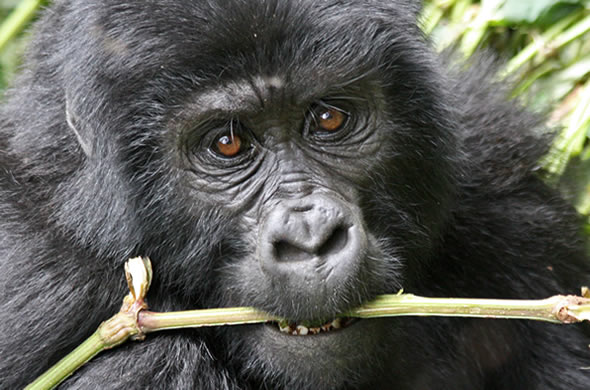
Is gorilla trekking ethical: Few wildlife encounters stir the soul quite like sitting a few meters away from a mountain gorilla in the misty highlands of Rwanda, Uganda, or the Democratic Republic of Congo. The moment a silver back meets your gaze calm, ancient, utterly unhurried something fundamental shifts in how you understand your place in the natural world. Yet behind that extraordinary experience lies a question that thoughtful travelers increasingly ask before booking: Is gorilla trekking ethical?
It is a question worth sitting with honestly. Not because the answer is simple, but because it matters to the gorillas, to the communities that live alongside them, and to the future of conservation itself.
Gorilla Safaris Africa
The State of Mountain Gorillas Today
To understand the ethics of gorilla trekking, you first need to understand where these animals stand. Mountain gorillas (Gorilla beringei beringei) occupy a razor-thin range across the Virunga Massif shared by Rwanda, Uganda, and the DRC, and the Bwindi Impenetrable Forest in southwestern Uganda. For decades, they were sliding toward extinction. Poaching, habitat loss, civil conflict, and disease had pushed their numbers to fewer than 620 individuals by the mid-2000s.
Today, that number has climbed to over 1,000 the only great ape subspecies whose wild population is actually growing. That recovery did not happen by accident. It happened, in significant part, because of gorilla trekking implying that gorilla trekking is ethical
Rules and Regulations of Trekking gorillas.
You’ll be given a detailed briefing by your guide before your gorilla trek. During the briefing, your guide will outline the rules you must follow. These include:
To reduce the chance of illness transmission, we urge you to stay seven meters away from the gorillas at all times.
Don’t go on a hike if you’re sick.
Avoid eating or drinking in presence of the gorillas.
Don’t feed the gorillas.
Take care not to drop any trash.
Avoid touching the gorillas.
Avoid staring them in the eye since it can be interpreted as a challenge, which could make them charge.
Look down, squat gently, and be silent if gorillas charge.
Don’t make any loud noises.
Avoid buying mementos created from wildlife goods.
Avoid using flash photography as it may frighten them.
Always pay attention to your guide’s instructions.
How Trekking Revenue Funds Conservation
Gorilla trekking permits are deliberately expensive. In Rwanda’s Volcanoes National Park, a single permit costs $1,500. In Uganda’s Bwindi Impenetrable Forest, permits run $700. These are not arbitrary luxury price tags they are a calculated conservation mechanism.
A substantial portion of this revenue flows directly into park management, anti-poaching patrols, veterinary care, and habitat protection. Rwanda’s Rwanda Development Board channels a significant share of permit revenue into community development projects surrounding the park — schools, health centers, and agricultural support for families who might otherwise view the forest as a resource to exploit rather than protect.
The logic is straightforward but profound: when local communities benefit financially from gorillas being alive and visible to tourists, those gorillas acquire economic value that competes directly with the value of poaching them or clearing their forest for farmland. This model — making wildlife worth more alive than dead has been one of the most effective conservation tools of the past three decades.
Anti-poaching units staffed with rangers whose salaries come from trekking fees have dismantled snares, monitored family groups daily, and responded to medical emergencies that would otherwise go unaddressed. Veterinary teams, funded substantially by tourism income, have treated gorillas for respiratory infections, snare injuries, and other conditions that would have been fatal without intervention. The connection between tourist dollars and gorilla survival is not theoretical. It is documented and direct.
The Genuine Ethical Concerns
None of the above means gorilla trekking is without ethical complexity. Responsible travelers deserve an honest account of the risks and tensions involved.
Disease transmission is the most significant and well-documented concern. Mountain gorillas share approximately 98% of their DNA with humans, which means they are susceptible to many of the same pathogens we carry. A human cold can become a life-threatening respiratory illness for a gorilla. This is not a hypothetical risk there have been documented cases of respiratory outbreaks in habituated gorilla groups linked to human contact.
In response, conservation authorities have established strict protocols. Trekkers are required to maintain a minimum distance of seven meters from the gorillas, a rule that the gorillas themselves often ignore by approaching out of curiosity. Face masks are mandatory. Anyone showing signs of illness is turned back. These measures reduce but do not eliminate the risk.
Habituation: This refers to the process of slow lying introducing mountain gorillas to huma presence with out fear. This implies that these gorillas will become more tolerant of rangers and researchers, which aids monitoring, but also potentially more vulnerable to poachers who know how to exploit that familiarity. Conservation organisations aim at preserving gorillas to the next future terms.
The stress question:This still deserves attention too. Studies examining gorilla behaviour during tourist visits have produced mixed results. Some habituated groups show minimal behavioural change during visits; others demonstrate elevated stress indicators in the presence of large or noisy groups. This is why regulations cap trekking groups at eight visitors per gorilla family, limit visits to one hour, and restrict access to one visit per family group per day. Whether these limits are sufficient is an ongoing question among researchers.
Tourism inequality: This is among the real concerning while considering if gorilla trekking is ethical or not. Both Uganda and Rwanda have revenue sharing programs it still shows that local people tend to get a little of the amount.
Company
Gorilla Safaris Africa is one of the leading experts to trust while you are seeking for unforgettable and gorillas safaris with in Africa.
Features
Most Recent Posts
- All Post
- Combined Safaris
- East Africa
- Gorillas
- Luxury Safaris
- Primates Safaris
- Wildlife


Explore Our Services
Whether you dream of tracking mountain gorillas through mist-covered jungle or exploring the sweeping savannahs of East Africa, we craft bespoke safari experiences tailored to your vision.
Gorilla Trekking
What Makes Gorilla Trekking Ethical or Not
The ethical quality of a gorilla trek is not fixed. It depends heavily on the choices travelers make and the operators they support. Ethical gorilla trekking can still be enhanced by booking through tour operators who prioritise conservation certified accommodations which means your money flows where it is most needed.
Lodges: Select lodges that completely employ local guides, which source food locally and that fully invest in community programs that amplifies the conservation impact of your visit. Make sure you still follow the rules and regulations of trekking gorillas.
Traveling with a group that includes a trained, experienced guide who genuinely understands gorilla behaviour makes a difference. Treating the hour with the gorillas as a privilege rather than an entertainment product makes a difference. The mindset you bring into the forest matters.
The Comparison Worth Making
Critics of gorilla trekking sometimes propose alternatives supporting gorilla conservation through donation without visiting. This is genuinely valuable and should not be dismissed. But the evidence from the field consistently shows that the presence of responsible tourism creates accountability, transparency, and political will that remote charitable giving alone has not historically sustained.
Countries whose gorilla populations are watched closely by the international tourism community have stronger incentives to enforce anti-poaching laws and resist logging encroachments. When gorillas generate foreign exchange, governments protect them with legal frameworks and armed rangers. The political economy of conservation is imperfect, but it is real.
A Considered Verdict
Is gorilla trekking ethical? The honest answer is: it can be, and when conducted responsibly, it is not merely permissible it is one of the most direct ways a private individual can contribute to the survival of one of our closest relatives on earth.
The growth of the mountain gorilla population over the past two decades is one of conservation’s genuine success stories, and gorilla tourism has played a central role in that success. The risks are real and deserve ongoing scrutiny. The protocols in place are imperfect and require continued refinement. The community benefit programs need strengthening. Researchers must continue monitoring gorilla stress and disease exposure rigorously.
But the alternative a world in which mountain gorillas hold no economic value to the communities and governments that share their landscape is not a safer world for gorillas. History has shown us what that looks like.
Go, if you can. Go thoughtfully. Go with a responsible operator. Follow every rule. Spend your money locally. And when that silverback looks at you across the ferns, understand that your presence there, done right, is part of what is keeping him alive.
Latest News
- All Post
- Combined Safaris
- East Africa
- Gorillas
- Luxury Safaris
- Primates Safaris
- Wildlife
Is Gorilla Trekking Ethical Is gorilla trekking ethical: Few wildlife encounters stir the soul quite like sitting a...
Top Things to Do After Your Conference in Rwanda. Rwanda the Land of a Thousand Hills is one...
How long should you plan for a classic combined Uganda safari? Uganda is one of Africa’s most underrated...