
Bwindi National Park -Gorilla Trekking Sectors
Situated in the south western parts of Uganda, lies a fascinating jewel known as Bwindi impenetrable national park. Just enough for you to see a silverback mountain gorilla observing you with serene, ancient wisdom from three meters away. In that moment, everything you invested in reaching that point the planning, the permits, the effort of the hike itself vanishes entirely.
However, arriving at that moment starts with a choice that many visitors overlook: which sector of Bwindi Impenetrable National Park will you trek? The four sectors Buhoma, Rushaga, Ruhija, and Nkuringo. Bwindi is a home to four sectors harbouring half the total number of the population of gorillas in the whole world.
This guide examines all the four sectors of Bwindi impenetrable national park.
Buhoma is where the story of gorilla tourism in Bwindi began. When Uganda Wildlife Authority opened the very first gorilla trekking experience in 1993 making the Mubare family the first in the world to receive paying visitors they chose Buhoma for a reason. The terrain is more accessible, the trails more manageable, and the logistical infrastructure more reliable than anywhere else in the park.
Located in the northwestern part of the park in Kanungu District, Buhoma sits at the original park headquarters. It has been developed and refined by decades of tourism experience, and it shows. Trails are better maintained here than in any other sector, lodges are more numerous and diverse, and the general organization of trekking operations runs smoothly. For a visitor who has never trekked gorillas before, this matters enormously.
The terrain at Buhoma begins with a relatively gentle passage through farmland and lighter forest before the real jungle begins. The inclines are real Bwindi is never flat but compared to Nkuringo’s brutal descents or Ruhija’s cold, high ridges, Buhoma’s topography is genuinely more forgiving. This is partly because the gorilla families here tend to roam at lower elevations within the park, meaning trackers often locate them without descending into the most punishing. famous for being one of the easiest to reach in all of Bwindi. It regularly range to the park
Gorilla families in Buhoma
Mubare Family:The oldest habituated gorilla group in Uganda, opened for tourism in 1993. Named after the Mubare hills where the group was first sighted, it has a remarkable history its founding silverback Ruhondeza led the family for almost two decades before his death in 2012. The dominant silverback today is Malaya.
Rushegura Family:The most accessible family in all of Bwindi. Born from a peaceful split with the Habinyanja family in 2002, led by Silverback Mwirima until his death in 2019. Now led by a blackback called Kabukojo. The Rushegura family is famously calm and has been known to wander into the gardens of Gorilla Forest Camp sometimes greeting guests before the official trek even begins.
Habinyanja Family:Habituated in 1997 and first visited by tourists in 1999. The name derives from the Rukiga word “Nyanja,” meaning a body of water the group was first sighted near a swamp inside the forest. Led today by Silverback Makara, this is a large, lively family that has been the source of several memorable power struggles among competing silverbacks over the years.
Katwe Family:The most recently habituated family in Buhoma, successfully opened for trekking in 2018. Led by Silverback Mahaane, this is a younger, smaller group that offers a more intimate encounter and is ideal for visitors interested in observing a tighter-knit gorilla social structure.
Muyambi Family:The newest addition to Buhoma, opened for trekking in 2019. Muyambi was once a member of the Mubare family before breaking away to form his own group. A rare opportunity to observe a freshly formed gorilla family unit in its early stages of establishing a home range and social hierarchy.02
Bwindi Gorilla trekking sectors
Rushaga
Buhoma is where gorilla trekking history was made, Rushaga is where its future is being written. Located in the southern part of the park, straddling the districts of Kisoro and Kanungu, this sector has grown dramatically over the past fifteen years and now hosts more habituated gorilla families than any other area in Bwindi.
It is also the only sector in Uganda where visitors can participate in the gorilla Habituation Experience an extended, four-hour encounter with semi-habituated gorilla families that is genuinely one of the most profoundwildlife experiences in Africa.
The terrain in Rushaga is classified as moderate — noticeably more demanding than Buhoma but without the near-vertical challenge of Nkuringo. Rolling hills and forested ridges characterize the landscape, and while the trails can be steep and muddy in places, the overall trekking experience is manageable for travellers with reasonable fitness. The sector’s dramatically scenic setting — with uninterrupted views across to the Virunga mountain ranges in Rwanda and the volcanic skyline of the Democratic Republic of Congo — adds a visual grandeur that no other sector matches.
Rushaga’s greatest practical advantage is permit availability. With the largest concentration of gorilla families in the entire park, the sector can accommodate more trekkers per day than Buhoma, which means securing a permit on your preferred date is significantly easier — a real benefit for travellers planning at shorter notice or visiting during peak season
Gorilla families in Rushaga
Nshongi Family:Once the largest habituated gorilla family ever recorded in Bwindi initially 36 members. Named after the Nshongi river where it was first seen by trackers. Over the years, the group divided as ambitious silverbacks broke away, and it now has approximately 7 to 25 members depending on recent splits.
Kahungye Family:Named after Kahungye Hill where the family was first encountered. Initially habituated with 27 members, it later split, giving rise to both the Busingye and Rwigi families. Now led by the dominant silverback Gwigi (meaning “door”), it comprises around 13 members including multiple silverbacks.
Busingye Family:The name “Busingye” means peace in the local language an irony given that the dominant silverback is one of Bwindi’s most combative. Busingye is known to launch raids on other gorilla families to expand his group, which makes encounters with this family particularly dynamic and dramatic.
Bweza Family:One of the most interesting families to observe in the field. Split from Nshongi following internal conflict, the Bweza family is known for frequently foraging in community areas just outside the park boundary giving visitors a fascinating perspective on how gorilla families interact with the human landscape.
Mishaya Family:Born from the Nshongi family in 2010, this family carries the name of its fierce founding silverback who was legendary for his fighting ability. After Mishaya’s death in 2014, his son Mwine took leadership. The family’s resilience through leadership changes and membership losses makes it one of Bwindi’s most compelling stories.
Bikingi, Mucunguzi, Rwigi & Kutu:Four additional habituated families all with fascinating individual stories of splits, silverback ambition, and family expansion. The Mucunguzi family, led by the silverback whose name means “savior,” is particularly unique for its predominantly female composition. Kutu is led by Silverback Ndugu with 20 members
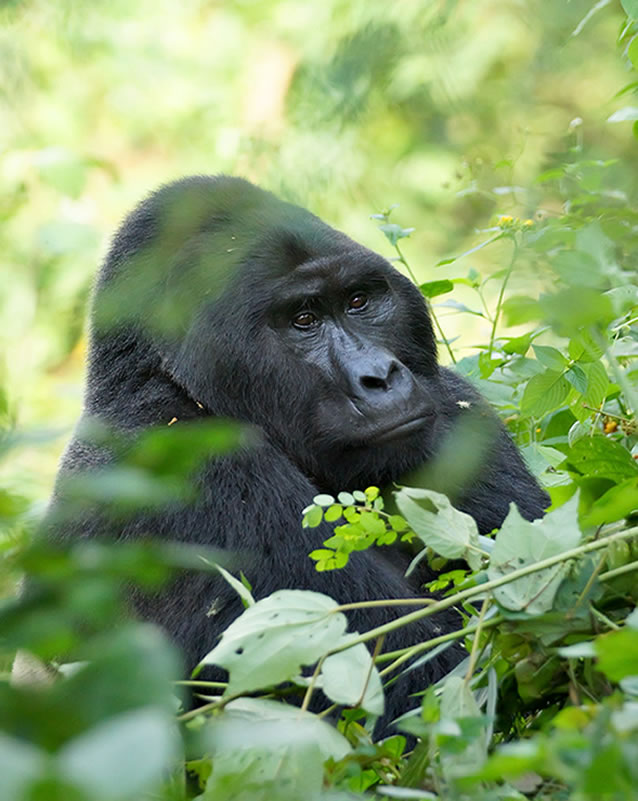
Ruhija sits higher than any other sector in Bwindi — and everything that follows from that geographical fact shapes the entire experience. Higher altitude means cooler temperatures (sometimes strikingly cold at night, even in the dry season), more dramatic misty conditions, genuinely tougher hiking terrain, and a remoteness that feels distinctly different from the polished tourist experience of Buhoma. This is a sector for travellers who want to earn their gorilla encounter and are rewarded by the quiet intensity of a more raw, unmediated forest experience.
The trekking in Ruhija is classified as moderate to hard. The elevation means that altitude can affect some visitors, and the combination of steep slopes, cold and damp conditions, and longer potential trail distances makes this sector genuinely more demanding than either Buhoma or Rushaga. That said, experienced hikers and nature enthusiasts consistently describe Ruhija as their favourite sector for precisely these reasons — the landscape is staggeringly beautiful, and the absence of crowds amplifies every encounter.
Ruhija also stands apart as arguably the finest sector in the entire park for birdwatching. The Albertine Rift endemic species that birders travel from around the world to find including the African Green Broadbill, Grauer’s Rush Warbler, and Rwenzori Turaco are most reliably encountered here. For those combining gorilla trekking with serious birding, Ruhija is an exceptional choice.
Gorilla families in Ruhija
Bitukura Family:One of the most celebrated families in Bwindi, widely known for its unusually large and playful group of juveniles and infants young gorillas who provide some of the most entertaining and endearing wildlife encounters in the park. Led by a dominant silverback, this is a highly recommended group for photographers seeking expressive, dynamic subjects.
Oruzogo Family:Led by the dominant silverback Tibirikwata, the Oruzogo family was opened for tourism in 2011 and quickly became one of the most popular groups in the sector. It is one of the largest families in Ruhija and is particularly beloved by visitors for the sheer drama of watching multiple silverbacks and blackbacks navigate their social hierarchy in real time.
Mukiza Family:A medium-sized gorilla family in the Ruhija sector, offering a more intimate encounter than the larger groups. The Mukiza family ranges in the higher-altitude sections of the sector’s trail network and is typically encountered in terrain that offers spectacular views over the eastern fringes of the park.
Kyaguliro Family (Research Only):This unique family is not available for standard tourist trekking. Instead it is dedicated exclusively to scientific research — monitored daily by teams from the Dian Fossey Gorilla Fund and Max Planck Institute. Its presence in Ruhija contributes vital data to global gorilla conservation science.
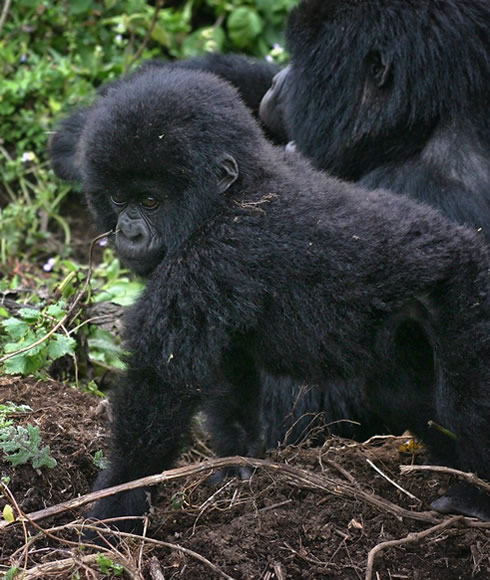
Bwindi Impenetrable ForestThere is no sector in Bwindi that earns your gorilla encounter quite like Nkuringo. Sitting on the southern ridge of the park above the Nteko and Rubuguri communities, Nkuringo is defined by topography that is ruthless in its beauty: dramatic ridge-top vistas, near-vertical descents into deep forested valleys, and ascents on the return journey that push even experienced trekkers to their limits. This is a sector for people who find meaning in the effort and who want their gorilla encounter to feel genuinely hard won.
The defining physical characteristic of Nkuringo is the descent. The trek typically begins at high altitude along the ridge and drops steeply into the valley to find the gorilla families which is thrilling on the way down and genuinely taxing on the return uphill climb.
Trek reports consistently describe the ascent back to the trailhead as the most physically demanding section of any gorilla trek in Uganda. The total trek duration typically ranges from three to seven hours, and the combination of elevation change and dense vegetation makes every hour count. What Nkuringo offers in return for this physical investment is extraordinary.
The sector’s relative inaccessibility means visitor numbers are lower and the atmosphere more intimate. The gorilla families here including the newly habituated Posho family, the largest of the four with nineteen members have a depth of wildness and character that reflects the more remote nature of their home territory. And the ridge-top views before you descend into the valley across Uganda’s rolling hills towards Rwanda and the Congo are among the most spectacular in the entire country.
Gorilla Families in Nkuringo
Nkuringo Family:The original habituated family of the sector, opened for trekking in 2004. The family is named after the sector itself and is led by a strong dominant silverback. This group was among the first in the southern region of Bwindi to be habituated and played a key role in establishing the sector as a viable trekking destination.
Bushaho Family:A medium-sized family that ranges across the more remote interior of the Nkuringo sector. Encounters with the Bushaho family are particularly valued for the deep forest setting in which they typically occur far from any evidence of human habitation, in ancient, mossy forest that feels genuinely primeval.
Christmas Family:Named for the time of year during which this group was first encountered and identified by researchers. A smaller family that provides a more intimate trekking experience. Despite its smaller size, the Christmas family’s silverback is known for his commanding presence and the protective attentiveness with which he monitors the group’s movements.
Posho Family (Newly Habituated):The newest and largest habituated family in the Nkuringo sector, opened for trekking in recent years. With nineteen members at last count, the Posho family offers exceptional opportunities to observe the full complexity of gorilla social dynamics multiple generations, competing young males, and the steady, authoritative presence of the dominant silverback.