
Bwindi National Park
Gorilla Habituation Experience in Bwindi Impenetrable National Park
Gorilla Habituation Experince, one of the thrilling activity you can add on your safari list. For most travellers planning a gorilla safari in Uganda, the standard gorilla trekking experience is the goal — an hour in the forest with one of the world’s most endangered primates. But deep in the mist-drenched hills of southwestern Uganda, Bwindi Impenetrable National Park offers something far rarer: the chance to spend an entire half-day alongside mountain gorillas who are still learning to trust humankind. This is the Gorilla Habituation Experience (GHE) — and it is available nowhere else on earth. A UNESCO World Heritage Site and home to nearly half of the world’s remaining mountain gorillas, Bwindi Impenetrable National Park is the centrepiece of any serious gorilla safari in Uganda. Whether you are a first-time wildlife traveller or a seasoned safari enthusiast, understanding the gorilla habituation process — and how to access it — will transform how you plan your trip.
How Much Does the Gorilla Habituation Experience Cost in Uganda?
The gorilla habituation permit is one of the most premium wildlife permits in Africa. A portion of every permit fee is channelled directly into mountain gorilla conservation, anti-poaching operations, and community development initiatives — including schools, health clinics, and local employment — in villages surrounding Bwindi.
| Visitor Category | Gorilla Habituation Permit Fee |
|---|---|
| Foreign Non-Resident (International Tourist) | USD 1,800 |
| Foreign Resident (Uganda-Based Expat) | USD 1,000 |
| East African Citizen (EAC Member States) | UGX 750,000 (~USD 70) |
The gorilla habituation experience transcends mere tourism — it is an act of conservation, placing visitors at the very frontier where science and wilderness meet, and where the future of an endangered species is being quietly negotiated, one cautious encounter at a time. How to book: Permits are issued by Uganda Wildlife Authority on a first-come, first-served basis. Given that only four slots per group per day are available, early booking is critical. During peak gorilla trekking seasons (June–August and December–February), permits should be secured at least six months in advance. During the low season (March–May), bookings as close as three months prior may still be possible. Permits are available through UWA-registered tour operators or directly via UWA reservations.
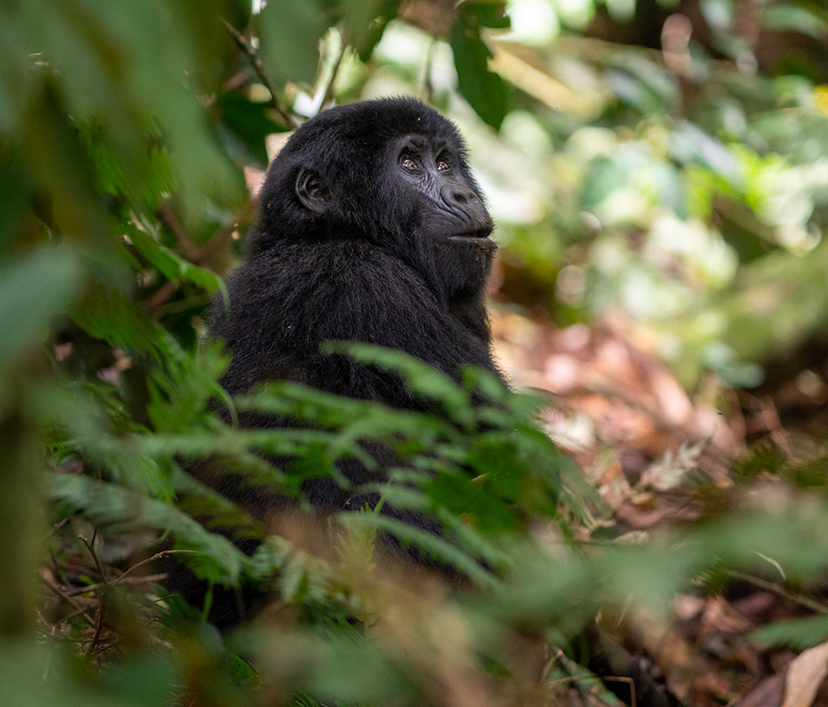
Understanding the day-by-day experience is essential for anyone planning a gorilla safari in Bwindi’s Rushaga sector:
6:30 AM — Participants gather at the Rushaga sector headquarters for a briefing by UWA park officials.
7:30 AM — Orientation session with the on-ground research team.
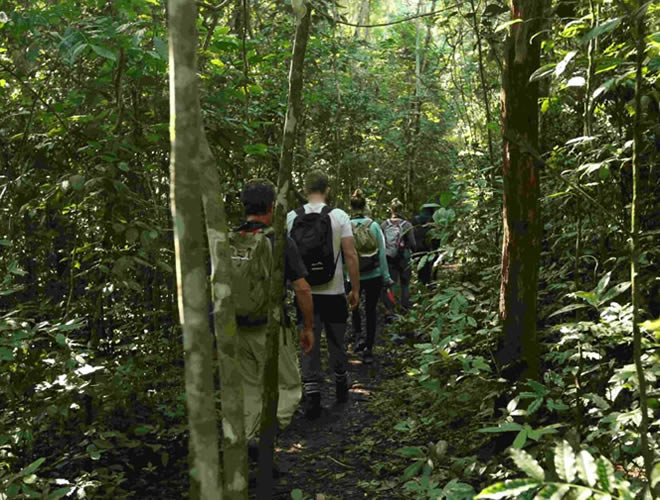
8:00 AM — Trek begins into the forest. Depending on the gorillas’ overnight ranging, locating the family can take one to three hours.
Up to 4 hours — Once the gorillas are found, participants observe them feeding, playing, grooming, nursing, and moving through the forest. Every session contributes behavioural data to the gorillas’ ongoing research profiles.
Active African Vacations
For context, a habituation permit commands a premium that reflects four-plus hours of access, a much smaller visitor group, and the privilege of witnessing a live conservation process.
Planning a gorilla safari in Uganda? Secure your gorilla habituation permit well in advance to guarantee your spot at one of the most extraordinary wildlife experiences in Africa.
- Minimum age of 15 years — younger visitors are not permitted
- Strictly 4 visitors maximum per gorilla group, per day
- Anyone with an infectious illness (cold, flu, COVID-19) must not participate
- Photography is permitted; flash photography is strictly prohibited
- Waterproof, ankle-supporting hiking boots are essential — terrain is steep, muddy, and physically demanding
- Permits must be booked through a UWA-registered tour operator or directly via UWA reservations
What Is the Gorilla Habituation Experience in Uganda?
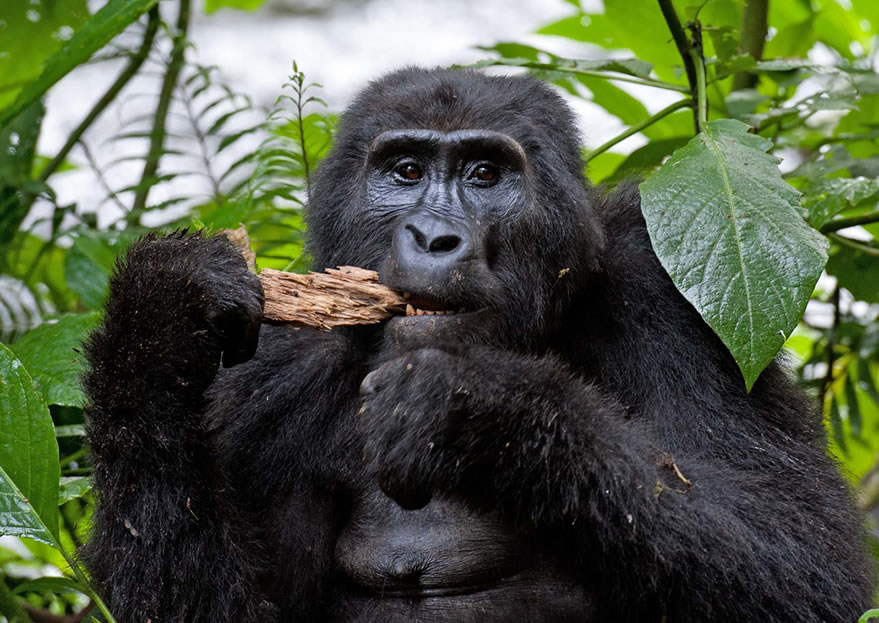
The Gorilla Habituation Experience in Uganda is a conservation-driven wildlife immersion programme in which wild mountain gorillas are gradually introduced to human presence over a period of two to three years. Each day, a dedicated team of Uganda Wildlife Authority (UWA) researchers, park rangers, and expert trackers visits an identified wild gorilla group, building trust through consistent, non-threatening contact.
Unlike standard gorilla trekking in Uganda — which limits visitors to a single hour with already-habituated families — the GHE allows up to four participants to spend up to four continuous hours with a semi-wild gorilla group. You become, in effect, a temporary member of the research team, witnessing a living conservation project in real time. The Uganda Wildlife Authority officially launched the Gorilla Habituation Experience on 1st January 2014, making Bwindi the sole location globally where tourists can participate in this process.
Where in Bwindi Is the Gorilla Habituation Experience Available?
Bwindi Impenetrable National Park covers 331 square kilometres and is divided into four gorilla tourism sectors. The gorilla habituation experience is exclusive to the southern sectors of Bwindi:
Rushaga — The Primary Gorilla Habituation Hub in Uganda
Rushaga is the heart of gorilla habituation in Uganda. As the most active base for UWA’s habituation research programmes, Rushaga hosts the highest concentration of gorilla families in the entire park. The terrain here is rugged and densely forested — making it some of the most demanding trekking in all of East Africa, and some of the most rewarding. The Bikingi gorilla family is among the groups currently undergoing the habituation process in the Rushaga sector.
Nkuringo — A Highland Gorilla Safari Experience in Southern Bwindi
Sitting at over 2,000 metres above sea level, Nkuringo offers a dramatically different landscape for your Uganda gorilla safari. Expansive highland ridgelines give way to dense valley forests, and on clear days, trekkers are treated to sweeping views across the Virunga volcanoes and the Albertine Rift Valley. Nkuringo serves as the secondary base for the habituation experience and provides a complementary trekking environment to Rushaga.
Getting to the Southern Bwindi Sectors
Both Rushaga and Nkuringo are accessible by road from Kampala in approximately 8–9 hours, via the Kabale–Kisoro Road, turning off at Muko. For travellers with limited time, chartered and scheduled domestic flights depart from Entebbe International Airport and Kajjansi Airfield to Kisoro Airstrip, which serves both southern sectors. Travellers planning a gorilla safari combining Uganda and Rwanda can reach the southern Bwindi sectors in as little as four hours from Kigali — making a cross-border itinerary an increasingly popular option.
Which Gorilla Families Are Currently Under Habituation in Bwindi?
Bwindi is has only two dedicated gorilla families under designated for habituation experience at any given time:
Bikingi Gorilla Family — Located in the Rushaga sector, this is one of the primary habituation groups accessible from Rushaga park headquarters.
Bushaho Gorilla Family — Located in the Ruhija gorilla tourism sector, also part of UWA’s dedicated habituation programme.
UWA strictly caps visits to four people per group per day, a deliberate policy that minimises human impact on semi-wild animals, limits disease transmission risk (mountain gorillas share approximately 98% of human DNA), and protects the integrity of the scientific habituation process. Once a gorilla family reaches full comfort with human presence — typically after two to three years — it graduates to standard trekking, and a new wild group begins the habituation cycle.
Habituation vs. Trekking — What's the Difference?
Both experiences involve tracking great apes in the wild, but they differ significantly in depth, duration, and purpose.
Gorilla Trekking is the classic safari experience. You join a small group, hike through forest to locate a habituated gorilla family, and spend exactly one hour with them before heading back. It’s structured, time-limited, and designed for minimal disturbance. Most destinations — Bwindi in Uganda, Volcanoes NP in Rwanda, Virunga in DRC — offer this format.
Gorilla Habituation takes you a step further. Instead of visiting an already-habituated family, you join researchers and rangers working to accustom a wild group to human presence — a process that takes 2–4 years. You spend up to 4 hours with the gorillas, observing far more natural, unguarded behaviour since the family is still learning to tolerate humans. It’s rawer, more unpredictable, and genuinely immersive.
| Trekking | Habituation | |
|---|---|---|
| Time with gorillas | 1 hour | Up to 4 hours |
| Group size | Up to 8 | Up to 4 |
| Gorilla family | Fully habituated | Semi-wild, in training |
| Behaviour observed | Calm, accustomed | Natural, unfiltered |
| Permit cost | $800 (Uganda) / $1,500 (Rwanda) | ~$1,800 (Uganda only) |
| Where available | Uganda, Rwanda, DRC | Bwindi, Uganda only |
| Best for | First-timers, shorter trips | Serious wildlife enthusiasts |
The bottom line: Trekking is the right choice for most visitors — accessible, well-managed, and still life-changing. Habituation is for those who want to go deeper, sit longer in the forest, and witness gorilla life with far fewer filters. If time and budget allow, it’s one of the most extraordinary wildlife experiences on the planet.
Best Time to Visit Bwindi for a Gorilla Safari in Uganda
The gorilla habituation experience is available year-round — gorilla families do not migrate, and permits are accessible in every season. That said, the two dry seasons offer the most comfortable trekking conditions for a Uganda gorilla safari: – Long Dry Season: June to August — The most popular period for gorilla trekking in Uganda. Forest trails are more navigable, humidity is lower, and early-morning starts feel crisp and energising. Permits sell out fastest during this window. – Short Dry Season: December to February — A second peak season, ideal for combining a Bwindi gorilla safari with other Uganda wildlife experiences such as chimpanzee tracking in Kibale Forest National Park or a game drive in Queen Elizabeth National Park. – Wet Season: March to May — Heavy rains make trails slippery and can extend trekking times. However, this is a favourite period among wildlife photographers, who prize the mist that settles over the forest canopy and the luminous quality of light after a downpour — conditions that render Bwindi’s ancient forest in an almost mythical atmosphere. Permits are easier to secure and rates at some lodges may be lower. Temperatures in Bwindi remain pleasantly mild year-round, typically between 20°C and 25°C.