
🦍 From the Brink: The Gorilla Population Recovery
A Remarkable Turnaround
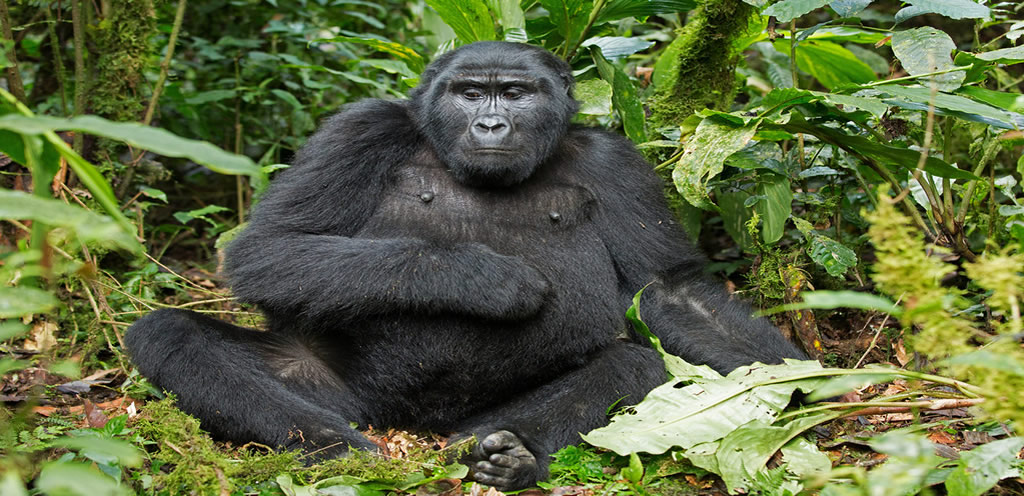
Mountain gorillas represent one of the most celebrated wildlife recoveries in modern conservation history. As of the most recent estimates, the global mountain gorilla population stands at approximately 1,063 individuals in the wild — a figure that reflects a remarkable conservation success story, given that the species was teetering on the brink of extinction with as few as 254 individuals recorded in 1981.
In the Virunga Massif, the population has grown to 604 individuals, up from 480 in 2010, while the Bwindi-Sarambwe ecosystem is home to 459 gorillas, an increase from 400 estimated in 2011. The mountain gorilla is currently the only great ape known to be increasing in number. In the face of conflict and instability, cross-border conservation efforts have led to a 73% increase in the global population of mountain gorillas since 1989. The subspecies has since been reclassified from critically endangered to endangered by the IUCN.
Gorilla Safaris Africa
The 2025 Census
A new Bwindi-Sarambwe census began in 2025 — the sixth comprehensive count — led by the International Gorilla Conservation Programme (a coalition of Conservation International, Fauna & Flora, and WWF) and carried out collaboratively by scientists and park authorities. The census will be conducted in two sweeps, with the next phase scheduled for October 2025 and results expected in 2026.
What is Driving Conservation Success?
Transboundary Cooperation
This conservation accomplishment arises from intense collaboration between state actors, civil society, and the private sector across the three countries: the Democratic Republic of Congo (DRC), Uganda, and Rwanda. At the heart of efforts is the tireless work of more than a thousand park rangers, who for 40 years have enabled close daily monitoring of the species, even in the midst of the region’s most violent events.
The Greater Virunga Transboundary Collaboration (GVTC) is the umbrella framework coordinating this work, bringing together the Rwanda Development Board (RDB), Uganda Wildlife Authority (UWA), and the Institut Congolais pour la Conservation de la Nature (ICCN).
Anti-Poaching and Veterinary Interventions
In Uganda’s Bwindi, UWA’s “Stop the Snares” project, backed by The Gorilla Organization, reduced snares from 800 to near zero in four years. GPS collars on select gorillas are used for real-time tracking, and drones deployed by WWF and IGCP scanned vast terrains for illegal camps.
In the Virunga’s gorilla sector alone, approximately 2,200 patrols take place per year — six patrols every day on average. Over the past five years, rangers have patrolled 250,000 km and climbed 2,500 km — the equivalent of climbing Everest each month.
Habituation and Community Engagement
Strict ethical tourism guidelines ensure that visitor presence does not harm gorillas. Treks are limited to one hour per gorilla family, with a mandatory 7-metre distance, small group sizes, and mask use to reduce disease transmission.
Community engagement transforms locals from potential threats into guardians. Since 2005, Rwanda’s revenue-sharing scheme has empowered over 10,000 residents, with community-owned lodges like Sabyinyo Silverback employing locals as guides.
Tourism: The Economic Engine of Conservation
Rwanda🇷🇼
Rwanda has positioned gorilla trekking as the centrepiece of its national tourism strategy, pursuing a deliberate high-value, low-volume model.
Rwanda Development Board data confirms the country welcomed more than 1.36 million visitors in 2024, generating $647 million in tourism revenue, with gorilla tourism alone contributing about $200 million — a 27% increase on the previous year. According to the Rwanda Development Board, tourism contributed over $500 million to the national economy in 2023, with gorilla tourism accounting for approximately 60% of that figure.
The sector supported just under 386,000 jobs in 2024, while international visitors’ spend reached a record Fr1 trillion. WTTC forecasts that by 2035, the sector will contribute Fr3.1 trillion to the economy — a 10% share of GDP — and support more than 545,000 jobs.
Rwanda’s tourism industry generated over $600 million in revenue in 2023, accounting for nearly 11% of GDP, and is expected to surpass $1 billion by 2028/2029.
A gorilla trekking permit in Rwanda currently costs $1,500 per person, with 10% of gorilla tourism revenue shared directly with surrounding communities, funding schools, health facilities, and local enterprises.
Company
Features
Most Recent Posts
- All Post
- Combined Safaris
- East Africa
- Gorillas
- Luxury Safaris
- Primates Safaris
- Wildlife
Explore Our Services
Whether you dream of tracking mountain gorillas through mist-covered jungle or exploring the sweeping savannahs of East Africa, we craft bespoke safari experiences tailored to your vision.
Bwindi Impenetrable National Park
Bwindi is the more extensive destination, sheltering over half the global mountain gorilla population across four trekking sectors (Buhoma, Ruhija, Rushaga, and Nkuringo)
Uganda 🇺🇬
Uganda holds a strategic position as the most affordable gorilla trekking destination, home to more than half the world’s remaining mountain gorillas. Uganda Wildlife Authority has achieved remarkable success in growing the Bwindi mountain gorilla population from 302 individuals in 2005 to 459 in 2019. Uganda gorilla trekking permit fees were raised to $800 per person for foreign non-residents in July 2024.
In 2023, gorilla tourism generated approximately $35 million USD in direct permit sales. Bwindi accounted for over 90% of this revenue, given its larger number of habituated gorilla families. Twenty per cent of park entry fees are disbursed annually to local governments in districts surrounding Bwindi and Mgahinga, targeting tangible community needs such as education, health facilities, water supply, and small-scale enterprise support. In 2024, Bwindi Impenetrable National Park welcomed more than 40,000 gorilla-tracking visitors, generating millions of dollars in permit fees, taxes, and tourism services. Most recently, Uganda introduced discounted low-season permits for gorilla Trekking Tours and chimpanzee tracking, allowing tour operators to design more competitive itineraries and positioning Uganda as a more accessible destination while maintaining its premium wildlife appeal.
Democratic Republic of Congo 🇨🇩
The DRC’s situation is the most complex of the three countries — carrying the conservation burden of Virunga, Africa’s oldest national park, while grappling with severe armed conflict. The gorilla population in DRC’s Virunga was estimated at 350 individuals in mid-2021, with a species growth rate of 4.7% per year — exceeding the natural rate of the species (3%) — a testament to the success of conservation efforts led by Virunga’s rangers.
However, the escalating violence from armed groups, including M23 rebels, has severely disrupted conservation and tourism in Virunga. Poaching, habitat destruction, and human disturbance are at greater risk, with rangers unable to effectively monitor and protect habitats. Tourism, the park’s key economic lifeline, has been deeply impacted. Over 200 rangers have died protecting Virunga National Park since 1996. Park closures during unrest — such as in 2018–2019 — cut critical funding.
Despite this, conservation has continued with remarkable resilience. In October 2024, four female gorillas were reintroduced at Mount Tshiaberimu to revitalize a declining population, and collaboration with Uganda continued to monitor ecological corridors and key species. The Virunga Alliance program was established to create more than 100,000 jobs and draw people out of armed militias into productive society as an innovative approach to peacebuilding, with long-term development of a 105-megawatt renewable energy program and agricultural investment to alleviate poverty.
Ongoing Challenges
Despite the success, significant risks remain:
- Disease: Gorillas share 98% of their DNA with humans, making them highly susceptible to respiratory illnesses. COVID-19 and Ebola led to park closures in both DRC and Uganda.
- Climate Change: Altered rainfall patterns in the Virunga Mountains and Bwindi affect bamboo and fruit availability, critical gorilla foods. Droughts reduce nutrition and weaken immunity, while rising temperatures may force gorillas into higher, unsuitable zones.
- Conflict in DRC: The M23 conflict continues to constrain conservation operations, close tourism corridors, and endanger rangers in Virunga.
- Habitat Pressure: Over 60% of the Virunga landscape has been affected by human activity, with farmers clearing land for crops like potatoes and tea, fragmenting gorilla habitats and forcing families to venture into risky areas.
The gorilla conservation story across Virunga and Bwindi is one of extraordinary collaborative achievement — turning a species from the edge of extinction into an anchor for some of East Africa’s most dynamic tourism economies, while proving that sustainable conservation and community benefit are deeply intertwined.
Latest News
- All Post
- Combined Safaris
- East Africa
- Gorillas
- Luxury Safaris
- Primates Safaris
- Wildlife
🦍 From the Brink: The Gorilla Population Recovery A Remarkable Turnaround Mountain gorillas represent one of the most...
🦍 Gorilla Tours, the Undisputed Climax of Safaris in Rwanda and Uganda Why Gorilla Trekking Is the Crown...
Top Common Mistakes to Avoid on Rwanda Gorilla Trekking Tours One of the most humbling wildlife experiences on...